dailynewsnblog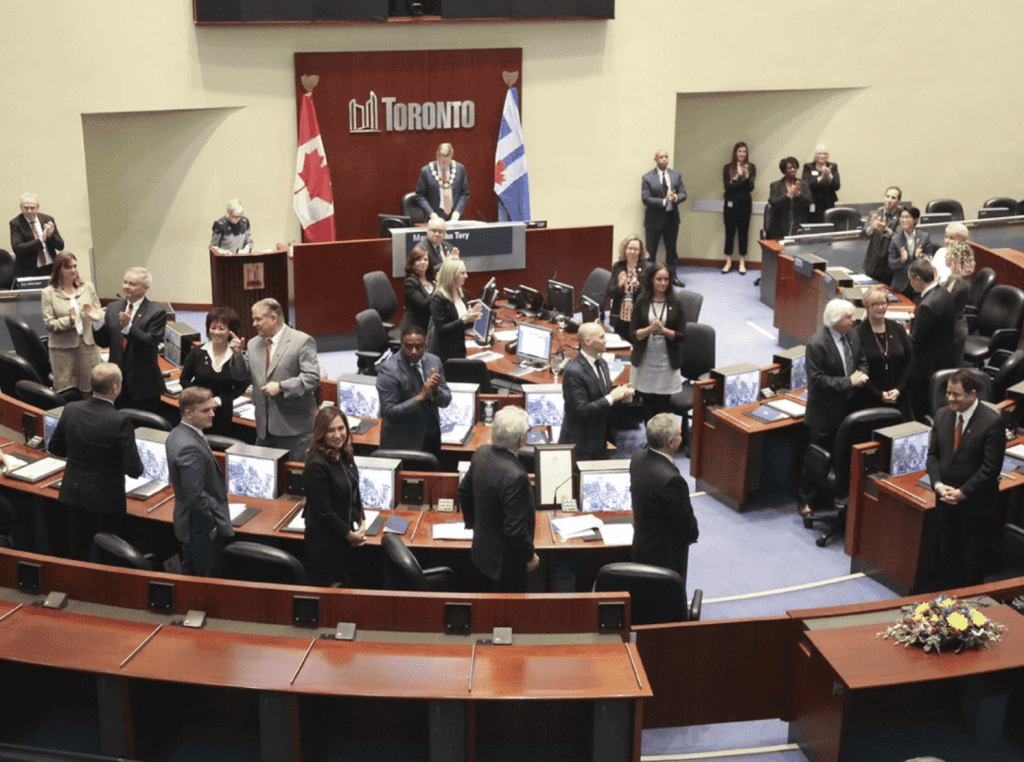
There’s a running joke in municipal politics that councils are expected to “do more with less.” Lately, it feels more like do everything with nothing, and smile while doing it. The smile, as you might imagine, is optional.
Most Canadians don’t think much about municipal governance architecture. Why would they? People just want the snow plowed, the taxes reasonable, and the drinking water not to be contaminated. All fair asks. But underneath that everyday normalcy, there’s a quiet reshaping of local democracy happening — and it’s starting to matter.
It comes down to three questions: who decides, who pays and who protects the things we actually rely on.
Let’s start with who decides.
Over the last few years, there’s been a steady trend of provinces deciding that local governments could be more “efficient” if they were merged, consolidated, restructured, or placed under some new model with an optimistic acronym. Conservation authorities, school boards, health units, even municipalities themselves — nothing seems immune from the itch to centralize.
And look, I get the logic: bigger systems, consistent rules, fewer meetings. But anyone who has tried to get a stormwater pond updated or a floodplain reviewed, knows that distance doesn’t make decisions better. It just makes them less accountable. Local government works because it’s local. You can’t outsource knowing an area.
Then there’s who pays.
Municipal budgets are where Canada’s value choices get made, whether we admit it or not. You want climate resilience, affordable housing, transit that runs more than once a week, or infrastructure that doesn’t crumble? It all shows up in the municipal budget.
And here’s the plot twist: municipalities, unlike senior governments, can’t run deficits. We have the revenue tools of the 1800s trying to manage the infrastructure needs of the 2020s. Development charges swing wildly, insurance costs have exploded, interest rates are up and capital projects certainly haven’t become cheaper. Yet the expectation remains: “just make it work.”
Meanwhile, property taxes climb and residents reasonably ask why. Often the answer isn’t political at all — it’s arithmetic. The system isn’t built for the responsibilities we’ve piled onto it.
And finally, who protects what matters.
The most conservative idea in the world is stewardship — protecting what you can’t replace. That’s wetlands, rivers, drinking water, shorelines. The stuff you actually notice when something goes wrong.
This work happens on the ground: technicians in hip waders, planners reading hydrology reports, engineers designing culverts that don’t become geysers during a July rainstorm. When provinces reorganize or supersize the agencies doing this work, it’s not that the people get less smart. It’s that the system loses the local knowledge that makes the difference between a community that floods and one that doesn’t.
Here’s the twist tying all of this together: at exactly the moment municipalities are being asked to shoulder more, politics itself is getting louder and less serious.
If you’ve sat through a municipal meeting recently (my condolences), you’ve probably noticed the creeping rise of performance politics: the clipped soundbite, the indignant monologue, the sudden discovery that fiscal responsibility matters. Somewhere along the line, the culture shifted from “let’s solve this” to “let’s perform this”
The irony is that the real work of local government — planning, budgeting, permitting, infrastructure, environmental protection — is hyperspecific, technical, and mostly thankless. It’s also where all the big national issues actually land.
So what do we do?
We start with honesty.
Local decision-making should be local because that’s where accountability lives.
Municipal finance needs a 21st-century update, not a yearly ritual of stretching pennies past the breaking point.
Environmental stewardship should stay rooted in local science, not in a seven-watershed-wide org chart.
And councils need to treat process not as red tape, but as the thing that keeps the whole enterprise legitimate.
None of this is ideological. It’s common sense. Every Canadian lives in a municipality. Every Canadian depends on decisions made around the council table, even if they’ve never watched a meeting (and bless them for that).
Local government is where the country actually happens. It’s time we gave it the tools to match the job — and maybe stopped taking the ones it already has.
The views, opinions and positions expressed by columnists and contributors are the author’s alone. They do not inherently or expressly reflect the views, opinions and/or positions of our publication.