dailynewsnblog
Airbus enters the second half of the 2020s from a position of remarkable industrial and commercial strength. After navigating supply-chain turbulence, post-pandemic demand surges, and geopolitical uncertainty, the European manufacturer manages to consolidate its leadership successfully. Airlines around the world are investing heavily in modern fleets, and Airbus sits at the center of that transformation, with a broad product portfolio and a global production footprint across several continents.
Over the past several years, we have observed confidence in Airbus’s strategy, resilience in complex markets, and growth prospects across regions. In our article, we will analyze six structural, strategic, and product-driven reasons why Airbus might dominate the global aircraft market in 2026, based on production capacity, order backlog, fleet relevance, technological maturity, and market positioning, using Airbus’s official data and industry reports.
A Manufacturing Network Built For Scale
Airbus Is Expanding Where Demand Is Strongest

At the heart of Airbus’s growth potential is its global production infrastructure, meticulously designed to support escalating demand for commercial aircraft — particularly the most popular Airbus A320neo family. By 2026, Airbus will be operating one of the most geographically diversified final assembly networks in aerospace history, spanning Europe, North America, and Asia.
One of the most significant milestones in this expansion was the launch of a second A320 family final assembly line (FAL) in Tianjin, China, scheduled to reach full operation early in 2026. This new line complements existing facilities in Hamburg, Toulouse, Mobile (Alabama), and the original Tianjin site, giving Airbus ten final assembly lines globally and serving the industry’s most commercially successful airplane family.
China remains one of the fastest-growing aviation markets in the world, and deepening manufacturing ties, especially local assembly, reduces logistical complexities and enhances Airbus’s presence where demand is strongest. Tianjin’s expanded footprint exemplifies this strategy: it not only increases production capacity near key customers but also reinforces Airbus’s political and industrial resilience amid shifting global trade dynamics.
This is very important for the A320neo family, which accounts for most of the global aircraft demand. Airbus has reaffirmed its goal to produce 75 A320-family planes per month by 2027, and expanding final assembly capacity is a key step toward that. In practical terms, this expansion allows Airbus to respond more quickly to airline needs, reduce delivery times, and spread production risk across continents — all crucial as we move into 2026.

Multinational Manufacturer: A Brief History Of Airbus
The European plane manufacturer has grown to be one of the largest in the world.
Delivery Momentum That Builds Airline Confidence
Exceeding Targets Reinforces Airbus’s Credibility

Aircraft deliveries are the clearest metric of aerospace execution. In 2025, Airbus delivered 793 commercial aircraft to 91 customers, a 4% increase year-on-year and slightly above its revised guidance of about 790 jets.
This sustained delivery pace — up from 766 aircraft in 2024 — reflects Airbus’s ability to execute amid ongoing supply-chain complexity and quality-control challenges that affected late-year output.
Airlines plan aircraft acquisitions years in advance, and when a manufacturer consistently meets or exceeds delivery targets, it boosts confidence across the industry. Steady deliveries indicate fleet stability, reliable financial planning, and the tangible achievement of airline growth strategies.
The 2025 delivery total was led by Airbus’s most commercially strategic platforms, especially the A320neo family, which accounted for 607 of the 793 delivered jets, and continued to drive Airbus’s dominance in single-aisle aircraft.
Airbus Aircraft Deliveries (2023–2025)
|
Aircraft Family |
2023 |
2024 |
2025 |
|---|---|---|---|
|
A220 Family |
68 |
75 |
93 |
|
A320 Family |
571 |
602 |
607 |
|
A330 Family |
32 |
32 |
36 |
|
A350 Family |
64 |
57 |
57 |
|
Total |
735 |
766 |
793 |
Source: Airbus
Importantly, Airbus’s delivery program continues to emphasize its most in-demand models, including the A321neo variants. The A321neo not only accounts for a large share of deliveries but also reflects airline preferences for high-capacity, lower-cost aircraft with better per-seat economics. This trend supports Airbus’s delivery strength heading into 2026.
A Backlog That Extends Deep Into The 2030s
Orders That Lock in Long-Term Dominance

Airbus’s order backlog remains one of its most powerful competitive advantages. According to official Airbus orders & deliveries data, Airbus had recorded 25,559 gross orders and 16,776 deliveries by the end of January 2026, leaving an active order backlog of more than 8,700 aircraft — a record high.
This backlog extends well beyond the immediate future and into the early 2030s, securing Airbus production lines and commercial relevance for years to come. A major reason for this is the dominance of the A320neo family, which continues to drive the bulk of orders. Within that group, the Airbus A321neo and its long-range variants are among the most coveted, reflecting airlines’ preference for flexible capacity and long-range single-aisle operations.
The Airbus A321XLR (eXtra Long Range), which is the most advanced A321neo variant, dramatically extends the operational capabilities of single-aisle jets. With a maximum range of up to 4,700 nautical miles (8,700 km) and seating for up to 244 passengers in high-density configurations, the A321XLR allows carriers to operate routes once the sole preserve of widebodies, such as transatlantic and long-thin routes.
Airbus Orders & Deliveries Overview
|
Program |
Total Orders |
Deliveries |
|
A320 family |
20,632+ |
12,972+ |
|
A350 family |
1,529 |
700 |
|
A330 family |
1,954* |
1,660* |
*Legacy models included for completeness.
This extensive backlog gives Airbus two key advantages as it approaches 2026. First, it guarantees production stability even during economic downturns: the engines are already on order, and the supply chain is secured through the next decade. Second, it locks airlines into Airbus’s products, strengthening pilot commonality, training programs, maintenance support networks, and long-term fleet planning thereby committing carriers to Airbus aircraft for years.
Single-Aisle Supremacy Led By The A321neo
The World’s Most Important Commercial Aircraft Family

Arguably, the most significant factor in Airbus’s potential to dominate 2026 is the continued dominance of the A320neo family, and within it, the A321neo and A321XLR variants.
The A321neo is the cornerstone of modern airline fleet strategy. With its combination of high capacity (up to about 244 passengers), excellent fuel efficiency, and a range of roughly 4,000 nautical miles in its standard configuration, the A321neo allows airlines to replace older jets and improve route economics with fewer aircraft and lower operating costs.
For airlines operating densely populated domestic and regional routes, the A321neo offers a compelling revenue-per-seat advantage, and for carriers pursuing network expansion, its extended range variants, such as the A321LR and A321XLR, break new ground.
The A321XLR, in particular, is a game-changer. With its impressive range we previously mentioned — equivalent to 11-hour flights — airlines can connect distant city pairs economically on a single-aisle jet, such as transatlantic segments or long intra-Asia routes that would otherwise require larger aircraft.
For low-cost carriers, the A321neo and A321XLR deliver lower cost per seat and greater flexibility. For network carriers, they enable direct, long-range routes without the traditional widebody cost burden, keeping unit costs competitive while expanding global reach.
By 2026, the A321neo family will likely represent an even larger share of Airbus’s narrowbody output, driven by airline demand for more capacity and flexibility, combined with production prioritization. This trend places Airbus in a commanding position against Boeing, whose 737 MAX family, though competitive, does not currently offer a direct equivalent to the A321XLR’s range and efficiency combination.

Boeing 737 MAX Vs. Airbus A320neo: Which Has More Orders?
Airbus leads in narrowbody commitments.
Widebody Strength Anchored By The A350
A Mature, Efficient Long-Haul Platform

While Airbus’s single-aisle leadership is critical, its widebody portfolio, anchored by the Airbus A350 family, complements that dominance and adds strategic depth.
The A350 is Airbus’s flagship long-haul aircraft, featuring a carbon-fibre-reinforced polymer fuselage designed for optimal aerodynamics and fuel efficiency. The family comprises two main variants: the Airbus A350-900, typically seating 300-350 passengers over long ranges, and the Airbus A350-1000, often seating 350-410 passengers over ultra-long ranges.
Airlines have increasingly embraced the A350 to replace aging widebody jets such as the A330, A340, and even some Boeing 777 models. The A350’s fuel efficiency, wide cabin comfort, and advanced systems make it attractive to both full-service and hybrid carriers operating long-haul networks.
One strategic development with major implications for 2026 and beyond is the A350 Freighter (A350F). Although its first entry into service has been delayed until 2027, Airbus is actively progressing its development and testing programs, with a targeted first flight expected in Q3 2026. Once certified, the freighter variant will allow Airbus to compete directly with Boeing’s freighter offerings in the high-payload, long-range cargo segment — a part of the market poised for structural growth.
Air cargo volumes are projected to grow significantly in the coming decades, and a modern freighter like the A350F, with its long-range, fuel-efficient engines, will be well positioned to capitalize on this trend.
The A350’s success reinforces Airbus’s credibility with premium long-haul carriers; operators such as  Qatar Airways,
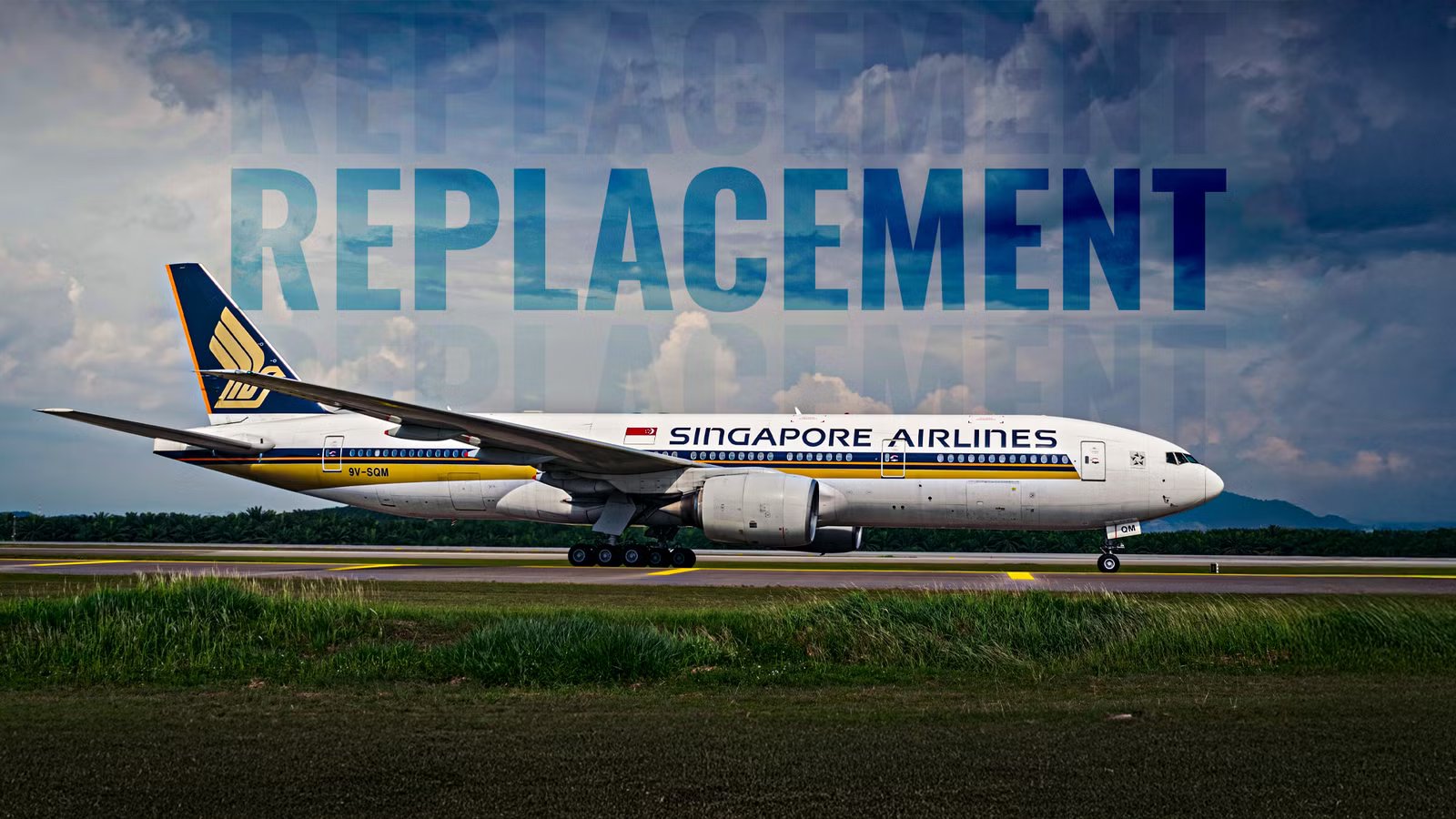
  Singapore Airlines,
  Lufthansa, and
  Air France rely on the type for flagship routes, signaling its strength across global markets.
By 2026, Airbus will be offering airlines a rare combination: world-leading single-aisle dominance paired with a proven, modern widebody family, reducing its vulnerability to market swings and aligning portfolio offerings across all major segments.
Strategic Positioning In A Shifting Aerospace Market
Airbus Is Playing the Long Game — and Winning

Ultimately, Airbus’s potential dominance in 2026 comes down to its strategic positioning. The company enters the year as the largest commercial aircraft manufacturer by production and delivery volume, with a diversified product line, a deep backlog, and an industrial footprint spanning continents.
That industrial strength is reinforced by solid financial performance. In its full-year 2025 results, Airbus reported revenues of €73.4 billion, representing year-on-year growth, while Adjusted EBIT reached €7.13 billion, reflecting improved profitability across its commercial aircraft activities. The company generated approximately €4.6 billion in free cash flow and proposed a dividend of €3.20 per share, underscoring confidence in its long-term outlook. Backed by a commercial aircraft backlog of more than 8,700 aircraft, Airbus enters 2026 not only operationally strong but financially equipped to scale production, invest in new technologies, and manage supply-chain volatility.
Airbus has also benefited from competitive market dynamics. While  Boeing has faced production and certification challenges with key models, Airbus has quietly consolidated market share, particularly in the single-aisle segment that drives global airline fleet growth.
Airbus’s vision also extends beyond current products. Investments in sustainable aviation fuels ( SAF), hydrogen research, digital manufacturing systems, and next-generation propulsion concepts signal to airlines that Airbus is planning beyond the current cycle — essential when fleet decisions lock carriers into 20-year commitments.
As 2026 unfolds, Airbus may lead in deliveries or orders and may also shape the direction of commercial aviation.