dailynewsnblog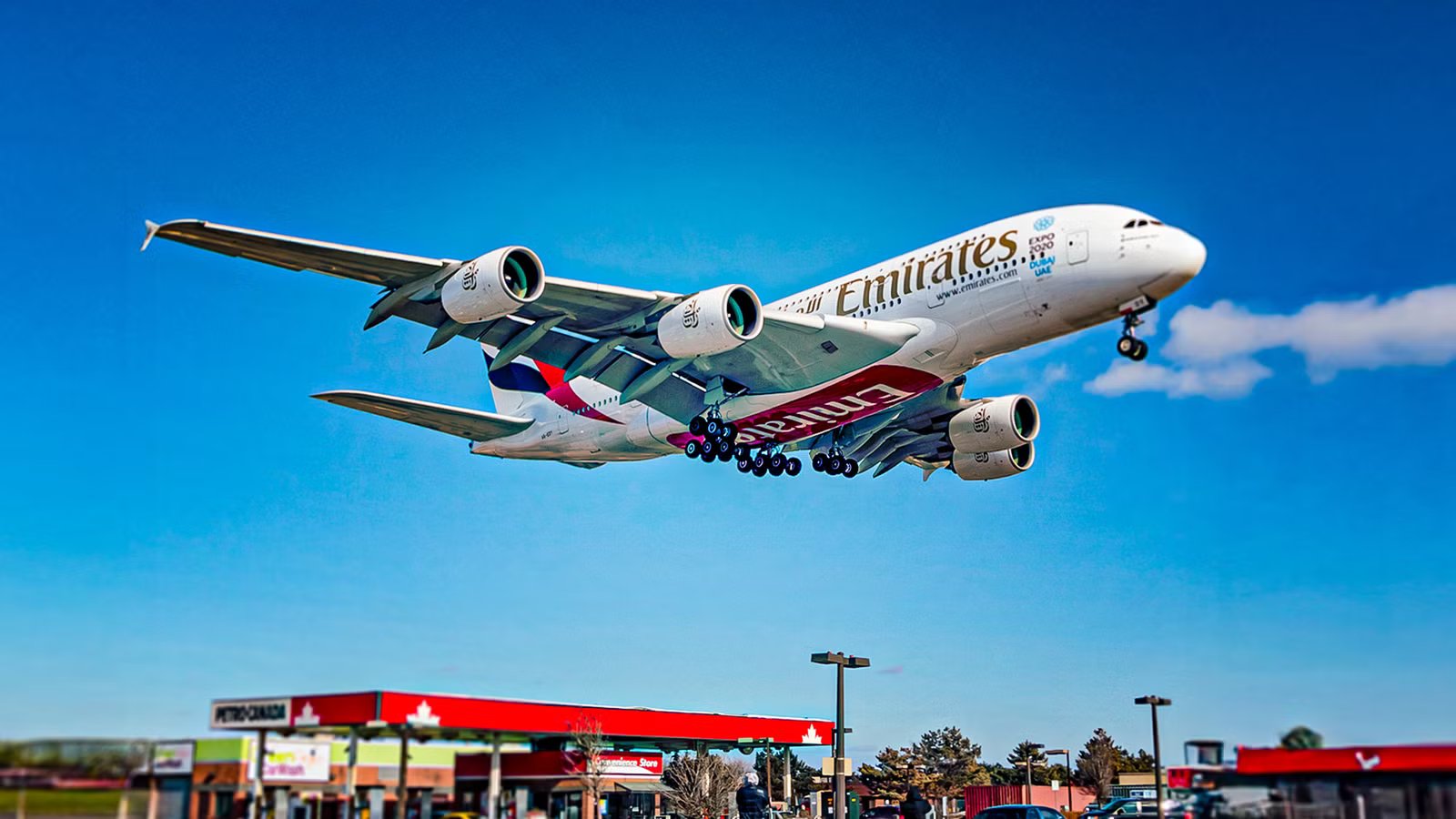
The Airbus A380 is the largest commercial passenger aircraft ever developed. The dynamic jet’s long-haul capabilities and high passenger capacity made it one of the most attractive products pitched to the market when Airbus was unveiling the concept properly in the early 2000s. The company sold around 250 A380s to establish the jet as one of the most capable and important planes of all time, but there is a major caveat that needs to be attached to this. Specifically, the aircraft quickly began to lose market share as operators became more interested in efficient narrowbody twinjets. There are a handful of major Airbus A380 operators that retired the jet far ahead of service, and others that, despite keeping the jet in service, mostly restricted it to a surgical role on a handful of routes.
There is one exception to this, however, and it is an exception that is both important to discuss and keep in mind when one evaluates the aircraft’s overall legacy. The Airbus A380 was the long-haul aircraft of choice for Emirates, a carrier that prioritized capacity and for which the jet appeared to be a perfect fit, especially given the plane’s compatibility with the Middle Eastern airline’s hub-and-spoke network. The airline invested heavily in the aircraft program, ordering more Airbus A380 models than any other carrier (and it is not even close), but why does Emirates continue to keep the jet as a marquee piece of its fleet while others have slowly shifted away?
A Brief Overview Of How The Airbus A380 Came To Be

The Airbus A380 is a widebody four-engine double-deck airliner that was designed and today serves to carry very large numbers of passengers over extended distances. The program was launched in 2000 under the A3XX title to challenge Boeing’s 747 and to serve a hub-and-spoke world where traffic was expected to concentrate at the world’s largest airports. Development of the aircraft required the careful management of manufacturing and logistics networks.
Indeed, sections of the jet were built across Europe and moved by ship, barge, and the Beluga transporter before being assembled in Toulouse. From a technical perspective, the Airbus A380 pushed scale and systems integration capabilities to an unseen level. Its full-length upper deck, advanced fly-by-wire controls, and high-lift wing let airlines configure anywhere from around 500 seats in typical layouts to well over 800 in an all-economy setup.
The aircraft also demanded airport adaptations, such as wider gates, stronger pavement, dual jet bridges, and special taxiway clearances. However, the program itself faced delays and cost overruns, notably from wiring-harness design mismatches across production sites, with cabin completion complexity also adding a new layer of friction as the jet approached entering service. The A380 entered commercial service in 2007 with  Singapore Airlines, following successful test flights in the two years prior.
The aircraft became a flagship specifically for Emirates and undoubtedly proved popular with passengers, but sales never really met analyst expectations as airlines slowly shifted toward efficient twin-engine jets and more point-to-point routes. Airbus officially ended production of the type after final delivery in 2021. Its engines were impressively efficient, but with four of them, the aircraft simply could not match the seat economics of easier-to-fill widebodies like the Boeing 787.
Who Ended Up Buying This Aircraft?

Airbus delivered 251 production A380s, and every one went to a relatively small group of carriers that ran big hubs. By far the most dominant buyer has been Emirates, which took 123 and built its network around high-capacity Dubai connections. The next-largest customers were Singapore Airlines, which bought 24 of the type, and Lufthansa, which acquired 14 models. Other major European and Asia-Pacific buyers included Air France (which bought 10 A380s),  British Airways (which bought 12), Qantas (which bought 12), Korean Air (which bought 10), and Asiana Airlines (which bought 6).
In the Gulf, the type also went to Qatar Airways (with 10 purchased) and Etihad Airways (which bought 10), primarily for slot-constrained long-haul markets and premium-heavy routes. In Southeast Asia, Malaysia Airlines bought six jets, and Thai Airways also bought six to anchor its flagship services. China Southern bought five of the type and was the only mainland Chinese customer for the European-built jet. Much later, ANA in Japan became the final new customer with just three aircraft, which were used exclusively for leisure flights to Hawaii.
A few aircraft were technically purchased by leasing vehicles and then placed with airlines, but in practice, the Airbus A380’s buyer list is best thought of as these hub-focused operators. Several airlines flirted with orders (namely Virgin Atlantic, Skymark, and Kingfisher), but none ever actually wrote checks for the type.

Why Airlines Don’t Want Their Airbus A380s Anymore
A look at the challenges of operating a fleet of Airbus A380s today, and the future outlook on the type.
What About Emirates?

Emirates’ relationship with the Airbus A380 is basically the aircraft’s commercial story. The Dubai-based carrier supported the program from its start, and, after the jet entered service in 2008, it steadily built the world’s largest Airbus A380 operation around a hub-and-spoke model that benefits from very high-capacity departures. Over time, Emirates turned the Airbus A380 into its brand signature, fitting many aircraft with hallmark premium features such as an onboard lounge and a first class shower spa.
This helped the type become a customer draw rather than a strictly seat-count asset. As airport slots tightened at many major European cities, Emirates often used the Airbus A380 to add capacity without adding frequencies, especially on trunk routes to Europe, Australasia, and North America. Emirates also repeatedly influenced the program’s production arc. In January 2018, it agreed to buy 20 more Airbus A380s with options for 16 more, a deal widely seen as keeping the assembly line intact for several more years.
But as industry demand shifted toward efficient twinjets, Emirates later scaled back outstanding commitments, and Airbus confirmed Airbus A380 production would subsequently end in 2021. The airline ultimately took over its 123rd aircraft on December 16, 2021. The jet had registration A6-EVS and was the final new-build A380 delivered to any customer.
How Does Emirates Deploy The Airbus A380?

Emirates deploys the Airbus A380 as a capacity-and-brand tool built primarily around its hub at Dubai International Airport (DXB). The jet is scheduled primarily on long-haul trunk markets where demand is consistently huge, and airport slots are relatively scarce, letting Emirates add hundreds of seats without adding extra frequencies. This is why you most often see it on flagship, high-yield routes into constrained hubs like major European capitals and Asia-Pacific gateways.
These are all places where premium cabins and the onboard lounge and shower product function as a differentiator that helps Emirates price for quality. Operationally, the Airbus A380’s size shapes everything from turnaround planning to gate selection and connecting-bank timing. Emirates banks arrivals and departures at DXB, so Airbus A380 flights feed one another and its broader widebody network. The airline also uses the type in a tactical manner, allowing it to upgauge for seasonal peaks, special events, and, at times, short regional sectors to position aircraft or absorb demand spikes, according to commentary from the carrier.
For example, the airline has even operated one-off Airbus A380 flights on the sector from Dubai to Medina Airport (MED) using a high-density configuration. This illustrates how Emirates flexes the jet when it needs raw overall lift. In short, Emirates does not sprinkle the Airbus A380 but rather concentrates it where scale, slots, and a premium proposition all matter most.

Seconds From Disaster: LATAM Boeing 777 Rejects Takeoff During Rotation
The aborted takeoff appears to have happened after VR, creating a potentially disastrous situation.
What Is Emirates’ Future Plan For The Airbus A380?

Emirates’ future plan for the Airbus A380 is to keep the jet as a central element of the airline’s network for well into the next decade by extending the fleet’s usable life, refreshing the product so it can continue to command flagship price premium, and lock in continued engine support. The backbone of this operation is a multi-year modernization effort. Emirates says it is investing $5 billion in order to refurbish 219 aircraft, including 110 Airbus A380 jets.
The airline has already cycled dozens through heavy interior work while maintaining a steady output cadence. The airline has also signaled that it wants more of the fleet active again. Emirates senior executive Tim Clark has spoken about growing the operational Airbus A380 count to around 110 by the end of 2026 as more aircraft complete retrofit programs and return to service.
Looking ahead, Emirates is lining up the next phase of onboard upgrades from August 2026, with new cabin features, IFE, and connectivity improvements, all of which effectively treat the A380 as a hotel in need of periodic refurbishments. On the technical side, a key enabler will be maintenance.
What Is Our Bottom Line?

The Airbus A380 is undoubtedly an incredibly unique and one-of-a-kind aircraft. However, there are a few things to keep in mind about the model and its capabilities. The aircraft is incredibly expensive to operate, and when carriers are not able to fill all of its many seats, operating economics can slip fast.
Emirates is a unique kind of operator due to the way it engages directly with the market. The airline operates services through a single hub, catering to all kinds of demand but competing for passengers by offering a premium experience that comes along with the cost of a layover in Dubai.
For certain kinds of routes, this kind of itinerary is not competitive. Nonstop flights from London to Singapore, for example, are better catered to by the premium airlines on either end. However, for the unique part of the market that Emirates serves, a massive jet like the Airbus A380 really just has and continues to make a lot of sense.