dailynewsnblog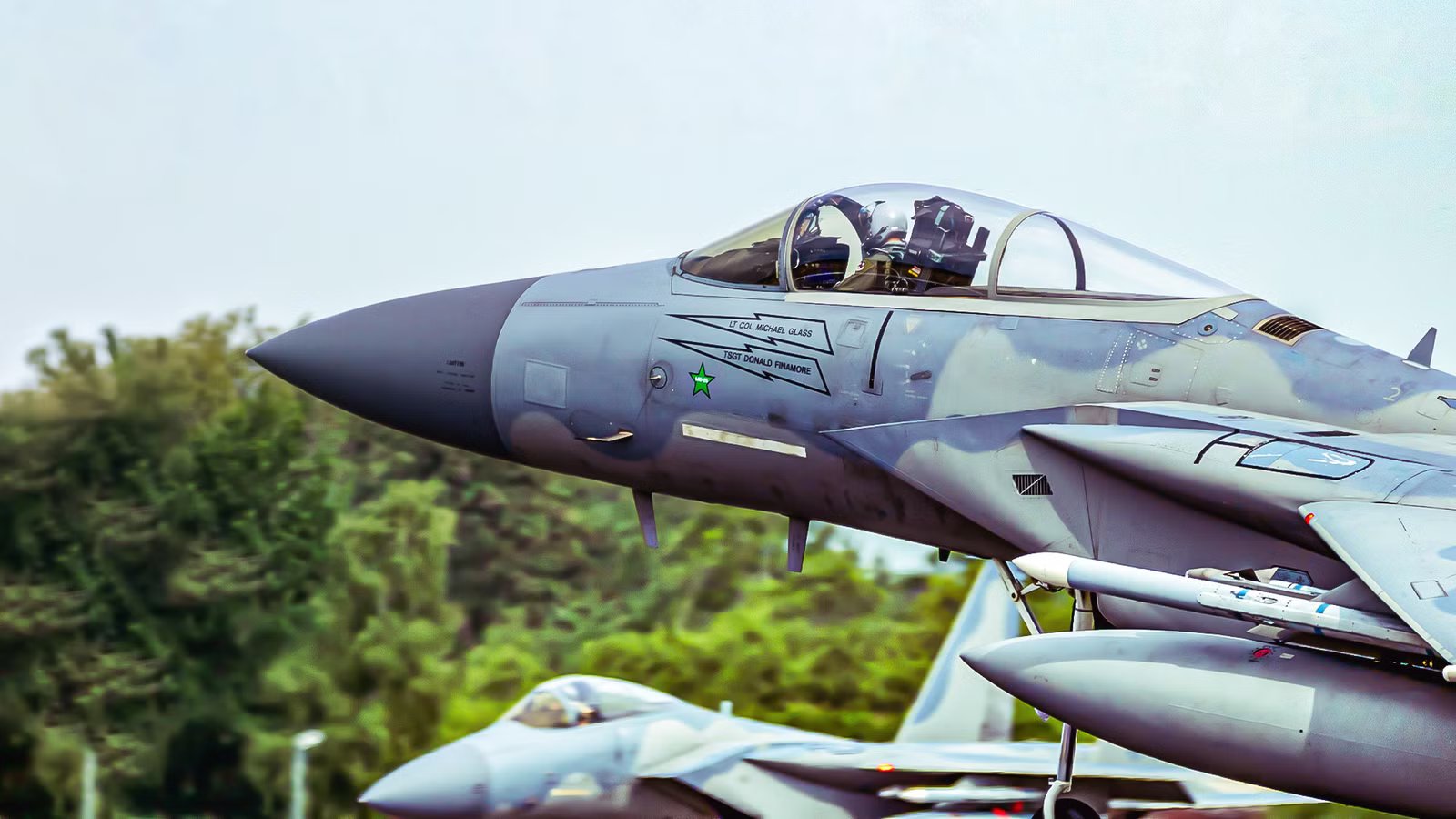
Finding up-to-date information on the cost of training United States Air Force pilots is difficult, but it is possible to provide reasonable figures for 2026. Pilot training is one of the most expensive parts of operating air forces and accounts for much of the time flown. The Air Force also needs to maintain vast fleets of specialized trainers as well as simulators to effectively train its new pilots.
Poor pilot training and a shallow higher-end trained fighter jet pilot pool were among the reasons credited to Russia’s failure to establish air superiority over Ukraine in 2022. This hasn’t changed in the four years since, with initial attrition of its higher-trained pilots biting. The cost of properly training pilots is so high that many underfunded air forces just can’t do it, or at least do it unevenly. Maintaining a large pool of highly trained military pilots is just one area where the USAF builds resilience into its structure.
The 2019 Rand Report

One of the best breakdowns for estimating the costs of training US pilots is still a now-old Rand report published in 2019, using 2018 figures. The Rand Corporation is an American nonprofit global policy think tank and research institute, and it found that the cost of training a basic qualified fighter jet pilot ranges from $5.6 million for an F-16 Fighting Falcon pilot to $10.9 million for an F-22 Raptor pilot.
The report also found training for strategic bomber pilots was high, ranging from $7.3 million for a B-1B Lancer pilot to $9.7 million for a B-52 Superfortress pilot. It was comparatively cheap to train pilots to fly transports like the C-17 Globemaster III and the C-130J Super Hercules. C-17 pilots cost around $1.1 million to train, while Super Hercules pilots cost around $2.5 million.
Rand added that “training cost per pilot for command, control, intelligence, surveillance, and reconnaissance operations (eg, the RC 135) is about $5.5 million.” One of the takeaways from Rand’s analysis is that it is worthwhile for the Air Force to focus on retaining its pilots after it trains them. One of the issues the Air Force faces is that it has constant competition from the commercial sector, where pilot salaries tend to be higher.
Adjusting To 2026 Dollars For Fighter Pilots

The costs of training pilots have likely increased since 2018, mostly due to inflation. It is also possible that the costs have increased in real terms, but without an updated publication, it is difficult to assess that. One way to get a better idea of how much it costs to train fighter pilots is to use the US Bureau of Labor Statistics inflation calculator. However, McKinsey & Company states the defense inflation rate is around 20% greater than the national inflation rate.
As such, we will adjust the 2018 dollars into 2026 dollars using both CPI-adjusted indexes and defense inflation. These numbers are to offer defensible ballpark figures, and the real numbers could differ somewhat. From the list, it is clear that A-10 Warthog pilots are comparatively more affordable to train, although these are being phased out, and the training pipeline will now be winding down.
|
Fighter jet pilot training costs (per Rand) |
2018 dollars (in millions) |
2026 CPI-adjusted (millions) |
2026 Defense-inflation-adjusted (millions) |
|---|---|---|---|
|
A-10 Warthog |
$6.0 |
$7.7 |
$9.3 |
|
F-15C Eagle |
$9.2 |
$11.9 |
$14.3 |
|
F-15E Strike Eagle |
$5.6 |
$7.2 |
$8.6 |
|
F-16 Fighting Falcon |
$5.6 |
$7.2 |
$8.7 |
|
F-22 Raptor |
$10.9 |
$14.1 |
$16.9 |
|
F-35A (basic) |
$10.2 |
$13.1 |
$15.7 |
|
F-35A (transition) |
$9.5 |
$12.2 |
$14.7 |
High-end fifth-generation fighter jets, like the F-22 and F-35, tend to be much more expensive to train, which is perhaps to be expected. The lowest cost aircraft is the F-16, which makes sense as the aircraft was designed to be a smaller, affordable, less capable fighter for the USAF, with the F-15 being the larger and more capable jet. However, the massive price difference between legacy F-15C Eagles and newer F-15E Strike Eagles is an interesting quirk.

What Is The Typical Salary For A Fighter Jet Pilot In The US?
Fighter pilots are exceptionally well-paid.
Adjusting To 2026 With USAF Pilots Of Other Aircraft

The United States Air Force operates much more than just fighter jets. Fortunately, Rand’s table also includes the costs to train bombers, transport, tankers, and specialized AWACS aircraft. The cost of training B-52 pilots is almost the same as the cost of training B-2 Spirit pilots. This seems strange, given that the B-2 Spirit has much greater flight hour costs than the comparatively affordable to fly B-52.
What really stands out from the Rand table is that the cost of training pilots to fly the C-5M Super Galaxy is just $1.4 million in 2018 dollars. The C-5M is the largest aircraft in the United States Air Force, and it is the second cheapest for pilot training of all the aircraft types listed. The cheapest aircraft type listed to train a pilot for is the C-17 at $1.4 million. This is the strategic airlifter workhorse of the US Air Force.
|
Other USAF aircraft pilot training costs (per Rand) |
2018 Dollars (million) |
2026 CPI-adjusted (million) |
2026 Defense-inflation adjust (million) |
|---|---|---|---|
|
B-1 Lancer |
$7.3 |
$9.5 |
$11.4 |
|
B-2 Spirit |
$9.9 |
$12.8 |
$15.3 |
|
B-52 Superfortress |
$9.7 |
$12.5 |
$15.0 |
|
C-130J Super Hercules |
$2.5 |
$3.2 |
$3.8 |
|
C-17 Globemaster III |
$1.1 |
$1.4 |
$1.7 |
|
C-5 Super Galaxy |
$1.4 |
$1.8 |
$2.2 |
|
KC-135 Stratotanker |
$1.2 |
$1.5 |
$1.9 |
|
RC-135 Riverjoint |
$5.4 |
$7.0 |
$8.4 |
The cost of training pilots for the KC-135 Stratotanker (based on the Boeing 707) is also comparatively low at $1.2 million in 2018 dollars. The specialized RC-135 Rivet Joint is a premier signals intelligence (SIGINT) aircraft operated by the US Air Force (three are also operated by the RAF). These have comparatively high pilot training costs for a transport-derived aircraft, and are based on the Boeing C-135 Stratolifter.
The US’s Massive Military Pilot Depth

Many articles may focus on the number of aircraft and operational aircraft an air force may have and talk about its strategic depth in a drawn-out conflict. However, the number of trained pilots is arguably even more important, as trained pilots can be more difficult and take longer to replace than the aircraft themselves. Here, the US military once again punches above its weight.
Not only does the US have more military aircraft than any other nation, but it is also estimated to have an even greater share of the world’s trained military pilots than its share of military aircraft would suggest. Some estimates suggest the US has as many as 37,000 military pilots, likely including cadets, although that figure might be exaggerated.
The USAF is believed to have 13,000 military pilots, the US Navy/Marine Corps around 10,000, and the US Army is reported by Task and Purpose as having 7,300. For reference, the Indian Air Force had 3,834 pilots in 2021 (plus around 1,200 navy and army pilots). The Russian Air Force is thought to have 4,000 to 5,000 pilots, plus army and navy. The Royal Air Force is believed to have around 1,500 pilots, plus around 1,000 more for the Army and Royal Navy.

Which Country Has The Most Superior Fighter Jets In The World?
The best overall fighter jet is arguably the F-35, while the F-22 is the best at its specialized role.
USAF Pilot Salaries

Simple Flying has previously reported that total compensation for US Air Force fighter pilots ranges from around $75,000 during the earliest career stages to over $200,000 for senior officers who have extensive aviation service and allowances. Second Lieutenants (O-1) or First Lieutenants (O-2) can expect a base pay of around $50,000, although this grows when other allowances and benefits are included.
Mid-career Captains (O-3) can expect to earn around $100,000 to $140,000 in total. This grows with Majors (O-4), Lieutenant Colonels (O-5), and Colonels (O-6) in senior roles to incomes of over $150,000 and can sometimes surpass $200,000 once incentives and allowances are factored in.
These incomes are similar to what military pilots in leading Western European air forces tend to earn. Fighter pilots of Switzerland seem to stick out with incomes around double those of anyone else in Europe. Norway is also an exceptionally wealthy country in Europe, but its military pilots are paid something similar to those of other Western European countries.
Time To Train US Air Force Pilots

It takes years to train a US Air Force pilot. They typically complete their Undergraduate Pilot Training (UPT) in around 12 months with T-6 primary and advanced tracks in T-1 or T-38 trainers. This is followed by the Introduction to Fight Fundamentals (IFF) for fighter tracks and then Formal Training Unit (FTU) for aircraft qualification, before finally completing Mission Training (MT) for operational readiness.
As such, across all aircraft types, it generally takes around 12 months to complete UPT. For fighter jet pilots to become combat-ready, it typically takes two to three years or more years. It takes the end of that range for fifth-generation fighter jet pilots to become mission-ready due to simulator load and sensor training complexity. This can range from 2.5 to four years for strategic bombers.
For cargo transports and tankers, the period typically lasts around two to 2.5 years. Training intensity is typically lower for these pilots than for fighter jet pilots. Over in the US Navy and Marine Corps, fighter jet training is a little longer, around three to four years, due to the complexities of carrier operations. US Army helicopter pilots may be combat-ready in just 1.5 to 2.5 years.