dailynewsnblog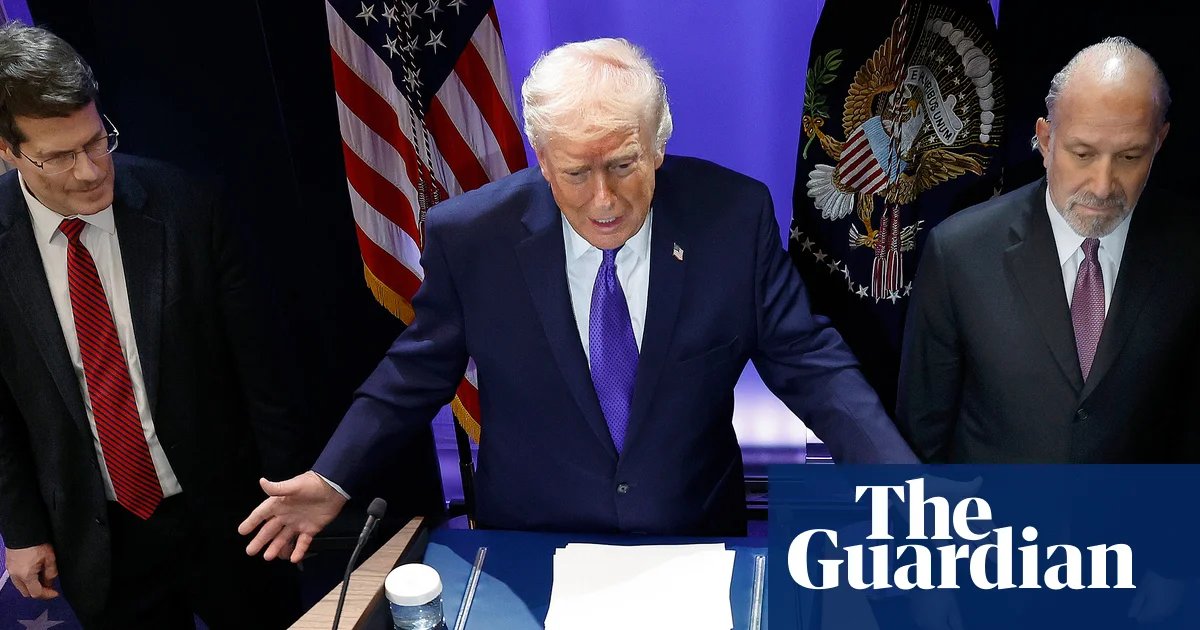
It is refreshing to witness the US supreme court recover its spine and stand up to Donald Trump’s most extreme caprices. The 6-3 decision on Friday to strike down his barrage of tariffs on imports from virtually everywhere based on the preposterous argument that they addressed national emergencies will reassure the world that the US’s system of government – based on the separation of powers, checks and balances, and the rule of law – has not collapsed entirely.
But let’s hold the (imported) champagne. The court’s ruling will not restore the United States to its former place as a reasonable, trustworthy player in the world economy. The rules-based economic architecture that underpinned the integration of the world economy over the decades that followed the second world war remains fractured. Trump is still intent on its disintegration. And he retains power to do so.
The court’s decision is good news, for sure, grounded on the fact that the International Emergency Economic Powers Act (IEEPA) invoked by Trump does not, in fact, give him the power to raise tariffs. These are a form of taxation, over which, per the constitution, Congress has sole authority.
The ruling explicitly referred to tariffs justified by the “public health crisis”, due to illegal drugs from Canada, Mexico and China, and those to counter trade deficits the administration claimed “led to the hollowing out” of American manufacturing. But it will stop all the other supposed “national emergency” duties, including the one Trump attributed to the Brazilian government’s tussle with Elon Musk’s X and its jailing of former president Jair Bolsonaro for attempting a coup.
The Swiss-based Global Trade Alert estimated the supreme court’s call will reduce the United States’ average, trade-weighted tariff, to 8.3% from 15.3%, which will come as very good news for harried American consumers as well as businesses who rely on imported components.
Barring any countervailing action by the White House, the average tariff against imports from China will fall from 36.8% to 21.2%, on a trade-weighted basis. It will fall from 26.3% to 6.8% on Brazilian imports and decline from 14.9% to 9.9% on Japanese goods.
But before anybody calls this a win, it is worth noting that 8.3% is an extraordinarily high tariff, by recent historical standards. More importantly, the court had little to say about the corruption at the heart of Trump’s trade war: the incongruous, bullshit arguments Trump has deployed to justify aggression against the world.
The court said nothing about whether the president should justify how tariffs would remedy the emergencies he claims they address. (The blanket “reciprocal tariffs” he imposed on “Liberation Day” last April notably failed to curb the trade deficit, which grew by 2% in 2025, fuelled by a surge in imports to a record high of $4.33tn.)
The Court did not limit the president’s ability to justify government action by saying whatever he wants, however mendacious it may be. Apparently, it’s fine for him to say that Bolsonaro’s arrest or the international criminal court’s investigation of US and Israeli officials is a “national emergency”. He just can’t use that argument to impose a tax.
The court’s decision, in fact, adds to economic uncertainty, as deals Trump struck with other countries are upended by the decision. He needs another source of revenue to fill the budget hole created by the foregone custom duties. Capital Economics estimates that levies collected so far under the now invalidated national emergency pretext amount to about $120bn, or half a percent of gross domestic product.
And as Justice Brett Kavanaugh noted in his dissent, the supreme court did nothing to remove all the other weapons Trump has to continue on the offensive.
“We have very powerful alternatives,” a visibly frustrated president said in a rambling press conference after the decision was announced. “We’ll take in more money.” He immediately announced a 10% blanket global tariff “over and above our normal tariffs already being charged”, under section 122 of the 1974 Trade Act, which allows temporary tariffs to address “large and serious” balance-of-payments deficits.
So here we go again but maybe there is reason to cheer. Perhaps the court’s ruling will protect the international economic architecture from Trump’s tantrums. Section 122 requires congressional approval to extend the tariffs beyond 150 days, and must not discriminate among countries – meaning Trump can’t tweak them in the pursuit of bilateral deals.
Trump could resort to section 301 of the 1974 Trade Act, which permits tariffs to retaliate against unfair trade practices, and which he deployed against China in his first term. He could invoke section 232 of the 1962 Trade Expansion Act, which he used to put levies on steel, aluminum, lumber, semiconductors and autos on national security grounds. But these also come with limits.
Before retaliating under section 301, for instance, the US trade representative must perform an investigation, consult with the country in question and publish its proposed action and the factual findings on which it is based.
Even if he can eventually replace the tariffs that the court struck down, Trump can no longer credibly threaten tariffs every other day to advance this or that foreign policy objective.
Who knows whether world trade has been granted a true reprieve. What is certain is that Trump will not simply eat this defeat. Many countries around the world must now negotiate some new trade deals with the United States. It’s unclear whether the supreme court’s decision will make that process any easier.