dailynewsnblog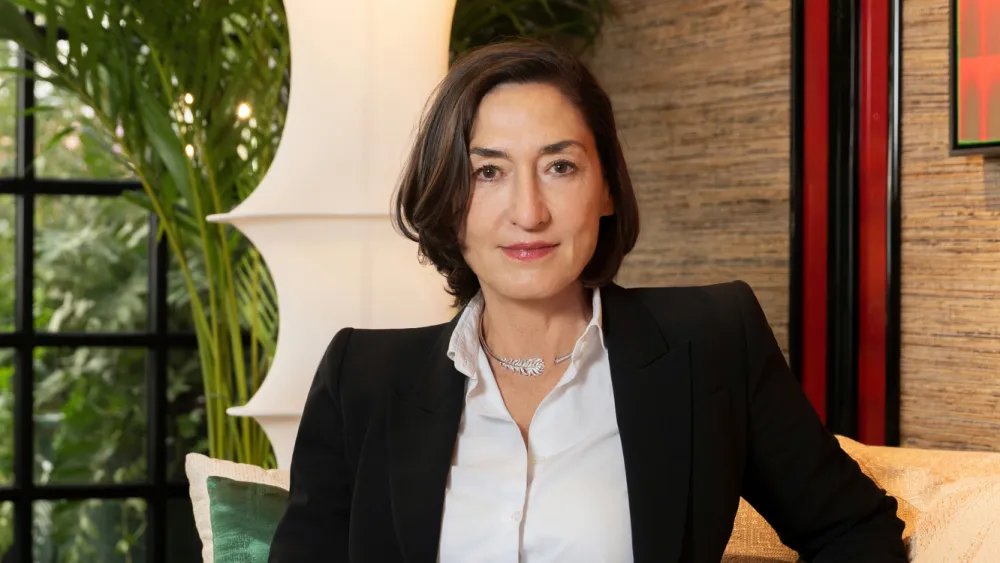
PARIS — Ask Hélène Poulit-Duquesne about gemstones, and her eyes light up with the joy of the longtime aficionado as she speaks of diamonds set in Boucheron designs or her personal hankering for sapphires.
The same passion and energy come through when she talks about her tenure as chief executive officer of the French house, the previously slumbering grandee of Place Vendôme that she turned into a vibrant jeweler in the space of a decade after joining from Cartier International.
Quarter after quarter, the brand is a bright spot in the results of its parent Kering, thanks to a focus on its design signatures while also tapping a vein of creative innovation.
Most visible in its two high jewelry collections — January’s dive into heritage and July’s no-holds-barred carte blanche — this also unfurls in its pillar lines, such as the 20-year-old Quatre collection.
Meanwhile, the house is steadily expanding into territories such as the U.S., where it landed in 2024, and China, where the latest of its 17 stores is a recently opened flagship in Shanghai’s buzzy downtown neighborhood of Xintiandi.

Boucheron Xintiandi boutique.
Courtesy of Boucheron
Poulit-Duquesne also is keeping a sharp gaze on existing markets. Take Japan, which remains the leader for Boucheron, having operated a transformation from bridal-centric small player to sizable high jewelry house.
On the way, the CEO built something rarer than any jewel in the vaults of Place Vendôme: an all-female executive quartet that includes creative director Claire Choisne, chief communications officer Aurélie Boué and chief marketing officer Ombeline Palluat-de-Besset.
Here, Poulit-Duquesne talks about betting on jewelry over watches, why destination shows aren’t on the cards and what the focus is now that Boucheron’s awakening phase is complete.
WWD: How do you account for the vibrancy of the business today?
Hélène Poulit-Duquesne: My analysis is that it’s really about consistency, in the proposition and the fact that I set a vision, a real platform, that we never deviated from.
You have to accept that it takes between five and 10 years for a brand image to really switch in jewelry, from the moment you try to tell a story to the moment [consumers] truly understand it. In fashion, you change the designer and suddenly everyone knows, and things can move fast. In jewelry, it’s extremely slow.
What I did was focus on our salient points as there’s no point chasing the very big players and doing the same thing as them, because we’ll always be smaller.
Looking at the history of the house, the archives, the depth of the maison, over decades, you realize that innovation was really at the heart of Frédéric Boucheron’s proposition back in the day. On top of that, Claire [Choisne] and I are also both obsessed with progress, innovation and pushing limits.
That gave us a different proposition on the market — a different story to tell, our duo, our innovation — and it also gave us a kind of visibility that was bigger than the size of our budgets. If we had told the same story as everyone else with the same budget, we would’ve gone unnoticed.
WWD: Has there been an acceleration, in particular due to the so-called jewelry “super cycle”?
H. P-D.: When you enter a category that’s growing strongly, the market gives you a baseline of growth and then you add extra growth because you’re a brand in redevelopment on top of that. If the market had been flat, I think we would’ve really struggled. So yes, it clearly helped us.

Boucheron’s The Untamed high jewelry necklace.
Courtesy of Boucheron
[Focusing on jewelry first] was a super difficult choice I made when I arrived, because if there’s one luxury brand that’s also legitimate in watchmaking, it’s Boucheron. Like Cartier, we have a watchmaking past — in 1947 we filed a patent for the Reflet [model].
With my background, many thought I’d arrive and push watches — I did the exact opposite.
My intuition was that jewelry had much more potential, because intrinsically it’s a less “branded” market. When I arrived, only about 20 percent of the market was branded — today, it’s more 30 percent — and it’s easier to take market share in the non-branded market. On the other hand, the watch market is by nature 100 percent branded.
I made a similarly strong decision by choosing Asia, by saying we can succeed faster [there], we’ll get return on investment faster than with the U.S., which takes a long time — we only started expanding there recently. I had to stand firm and say if we do both at the same time, we’ll dilute investments and team energy and we risk doing nothing well.
WWD: Are you planning to reaccelerate in watchmaking?
H. P-D.: We have a horizon of the next five years. Today, the offer is minuscule — around 5 percent — with Reflet watches and Serpent Bohême models that work very well in the Middle East.
WWD: Where is Boucheron seeing the strongest growth?
H. P-D.: We’re growing strongly in two countries: Japan and [South] Korea. They are our growth strongholds. Europe had a tougher year. The Middle East is doing pretty well. China is positive, which is very nice, given how complicated the market is. But we’re new there. And the U.S. has extremely strong growth, but that’s purely a perimeter effect, since we weren’t there a year ago.
If we are talking geography, the biggest market is Japan, but in terms of nationality, the four that really drive our business today are Japanese, [South] Korean, Chinese and Middle Eastern clients.
WWD: China is another market where you’re ramping up. Can you tell us about the flagship that opened in Shanghai?
H. P-D.: For Shanghai, we only had small-format boutiques and spent years trying to find a place where we could tell our story. It’s hard to explain who you are in a 650-to-900 square-foot mall shop. When the opportunity came for this [late 19th century] building, I said “yes” right away because it’s an iconic, historic building. That’s exactly what we did at Vendôme: take a piece of architectural history and invest in it.

Boucheron Xintiandi boutique.
Courtesy of Boucheron
At 3,000 square feet, it gave me the space to really tell our story while paying tribute to Chinese culture. That’s why we decided to do a French garden and a Chinese garden, because we had two entrances. We integrated artworks by French and Chinese artists, such as Claire Nicolet, who is a laureate of the Yishu 8 [art] prize and painted the cupola in the boutique directly; and Peng Yong, who I also discovered through the prize.
And there’s something I’m really proud of: we don’t use external architects to create a concept we “plug” into our boutiques. Everything is done in-house by our store design team. For all boutiques worldwide, we built a kind of framework as the base of our concept. There are recurring elements — furniture, rugs, and so forth that you’ll find everywhere — but we adapt to each location. We decide the storytelling upfront, what I call the “why,” the story we want to tell in this store.
WWD: Where next?
H. P-D.: Miami is coming as we’re rolling out the American plan. We did New York and Las Vegas in 2024, and Los Angeles last year. We will also have an opening in South Korea coming up.
But now, the base of our geographic expansion will mainly be in the U.S., where we’re starting from zero. Elsewhere, I’d say we are in a cruising phase because we’ve covered territories pretty well.
Growth in the coming years isn’t supposed to come from geographic expansion. Now it’s more about upgrading existing boutiques: making them bigger, moving to better locations. Retail is always moving.
WWD: Are there any territories where you consider that you’re maxed out?
H. P-D.: In surface size, no. In number? Yes, in Japan, for example.
When I arrived, we already had 20 boutiques. We still have 20 today, but not a single one is the same. We had to do what I called a “scrap and build” policy. It was a long process of renegotiating with all the department stores to get the right location, size and floor alongside competitors.
That really repositioned the brand. In image and sales, we were basically seen as a small jeweler selling wedding bands, and today we’re a true major jeweler, [selling] high jewelry in Japan.
So that was remarkable work by the teams over seven years. We had a key performance indicator: the percentage of revenue coming from jewelry, and we watched it climb and climb as we moved upmarket, while we rebuilt the network at the same time.
WWD: Can you elaborate on your three-year plan and new territories of expression for Boucheron?
H. P-D.: There’s a shift we’re going to continue, which is our participation in art. Today, brands are switching from product to experience.
In the coming years, I am convinced we’ll go from experience toward culture in the broader sense — and it’s legitimate because jewelry is an art. Many product categories involve craft and the human hand, but jewelry is also truly art. It’s in museums, and we’re extremely connected to art.

Boucheron Xintiandi boutique.
Courtesy of Boucheron
More and more maisons are starting to have a broader message than just selling products — positioning themselves as cultural institutions. I find that super interesting.
We’ve been doing it instinctively in our boutiques, commissioning young artists and placing in our VIP salons their works — we have over 300. We’ve been linked to the Yishu 8 prize for eight years now and have started supporting an art fair in the Middle East last year and [support] female artists through the Her Art prize in Paris.
Another topic that will be very important in coming years is sustainability. We’ve done deep work on it out of conviction, because clients weren’t asking for it. But I think increasingly they will, and we’ll start being vocal about it.
WWD: When it comes to experience, destination shows have become a major platform for high jewelry reveals. Would you go down that route?
H. P-D.: It is indeed a question we have asked ourselves. However, we have made the decision to always launch our high jewelry collections “at home,” at 26 Place Vendôme, during Paris’ couture weeks. We love receiving our guests in our historical maison; it creates a unique intimacy and reflects the “family spirit” that sets us apart, especially when we welcome them in our private apartment.
After this initial launch in Paris, the collection travels. More than the destination, what matters is the experience. For us, the venue must always have a meaning and a strong connection with the collection’s storytelling. Our priority is to create memorable moments where our clients can not only see the pieces but participate, feel, and connect with the [Boucheron] universe. Whether it is at 26 Place Vendôme or elsewhere, the experience must always serve the emotion and the creative vision.
WWD: Women are at the heart of Boucheron today, particularly the tandem you form with Claire Choisne. Can you talk a bit about how this plays into your leadership and the support you give to organizations like the Women’s Forum?
H. P-D.: We didn’t decide “we’re about women,” it happened almost naturally. It’s just the reality of who we are. So we want to support these topics because they concern us — all of us.
When Aurélie [Boué] came to me about becoming a sponsor of the Women’s Forum, I said, “Obviously.” Likewise when we were approached about [projects around] art and women, because it’s fully part of who we are without us even deciding it.
But my deep conviction is: what’s interesting is diversity. My executive committee is 50-50 and I listen to both women and men on many topics. Both are extremely interesting.
And I was fortunate to never experience the glass ceiling; I’ve been mentored, promoted and supported by men. I recently took part in a podcast and the hosts asked me what I hope for. My hope is that the new generation will have the chance to live what I lived: not having to fight. But this topic is still deeply rooted in me.