dailynewsnblog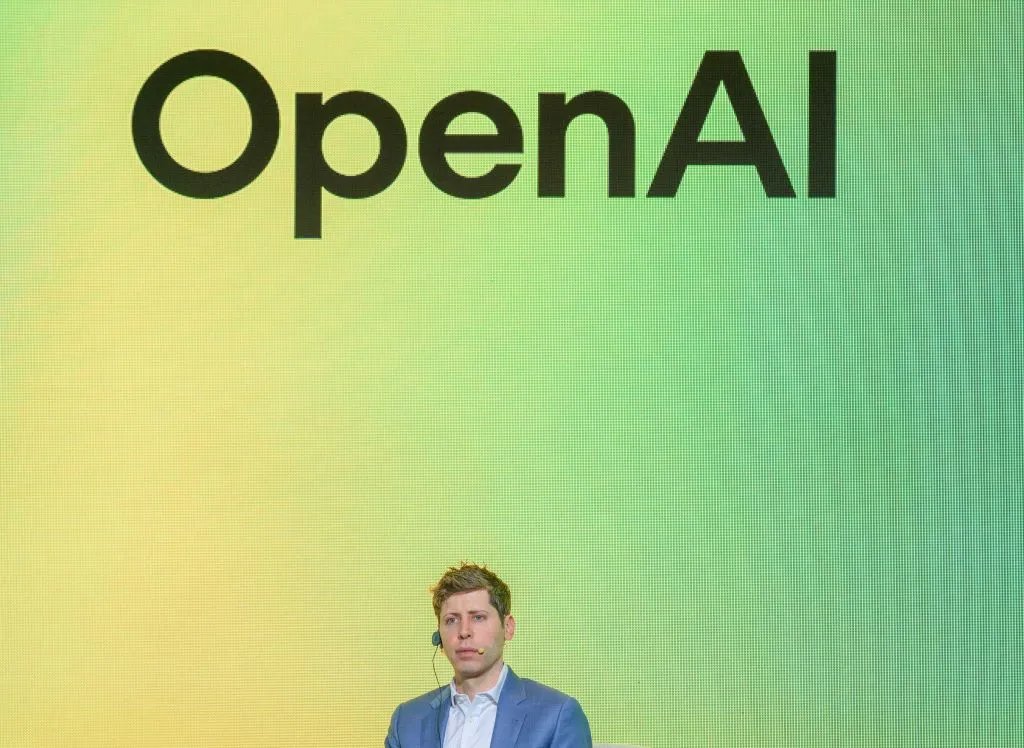
Move over, PayPal mafia: There’s a new tech mafia in Silicon Valley. As the startup behind ChatGPT, OpenAI is arguably the biggest AI player in town. The company is reportedly now in talks to finalize a $100 billion deal, valuing the company at more than $850 billion.
Many employees have come and gone since the company first launched a decade ago, and some have launched startups of their own. Among these, some have become top rivals (like Anthropic), while others, just on investor interest alone, have managed to raise billions without even launching a product (see, Thinking Machine Labs).
In January, Aliisa Rosenthal, OpenAI’s first sales leader, spoke a little bit about this growing network. She, like the other OpenAI alums who did not become founders, decided to become an investor and said she was going to tap into the ex-OpenAI founder network to look for deal flow. We know Peter Deng, OpenAI’s former head of consumer products (and now general partner at Felicis) already has.
Below is a roundup of the major startups founded by OpenAI alumni, in alphabetical order. And we are certain this list will grow over time.
David Luan — Adept AI Labs
David Luan was OpenAI’s engineering VP until he left in 2020. After a stint at Google, in 2021 he co-founded Adept AI Labs, a startup that builds AI tools for employees. The startup last raised $350 million at a valuation north of $1 billion in 2023, but Luan left in late 2024 to oversee Amazon’s AI agents lab after Amazon hired Adept’s founders.
Dario Amodei, Daniela Amodei, and John Schulman — Anthropic
Siblings Dario and Daniela Amodei left OpenAI in 2021 to form their own startup, San Francisco-based Anthropic, that has long touted a focus on AI safety. OpenAI co-founder John Schulman joined Anthropic in 2024, pledging to build a “safe AGI.” The company has since become OpenAI’s biggest rival and just raised a $30 billion Series G, nabbing a $380 billion valuation in the process. IPO rumors are also swirling, as the company reportedly prepares for a public listing that could come sometime this year. (OpenAI is also allegedly preparing for an IPO this year and is maybe even trying to beat Anthropic to the public market.)
Rhythm Garg, Linden Li, and Yash Patil — Applied Compute
Three ex-OpenAI staffers (Rhythm Garg, Linden Li, and Yash Patil) have reportedly raised $20 million for a startup called Applied Compute, as reported by Upstart Media. All three of them worked as technical staff at OpenAI for more than a year before leaving last May to launch the startup, per their LinkedIns. The startup helps enterprises train and deploy custom AI agents. Benchmark led the round, valuing the 10-month-old company at $100 million, Upstart Media reported.
Techcrunch event
Boston, MA
|
June 9, 2026
Pieter Abbeel, Peter Chen, and Rocky Duan — Covariant
The trio all worked at OpenAI in 2016 and 2017 as research scientists before founding Covariant, a Berkeley, California-based startup that builds foundation AI models for robots. In 2024, Amazon hired all three of the Covariant founders and about a quarter of its staff. The quasi-acquisition was viewed by some as part of a broader trend of Big Tech attempting to avoid antitrust scrutiny.
Tim Shi — Cresta
Tim Shi was an early member of OpenAI’s team, where he focused on building safe artificial general intelligence (AGI), according to his LinkedIn profile. He worked at OpenAI for a year in 2017 but left to found Cresta, a San Francisco-based AI contact center startup that has raised over $270 million from VCs like Sequoia Capital, Andreessen Horowitz, and others, according to a press release.
Jonas Schneider — Daedalus
Jonas Schneider led OpenAI’s software engineering for robotics team but left in 2019 to co-found Daedalus, which builds advanced factories for precision components. The San Francisco-based startup raised a $21 million Series A last year with backing from Khosla Ventures, among others.
Andrej Karpathy — Eureka Labs
Computer vision expert Andrej Karpathy was a founding member and research scientist at OpenAI, leaving the startup to join Tesla in 2017 to lead its autopilot program. Karpathy is also well-known for his YouTube videos explaining core AI concepts. He left Tesla in 2024 to found his own education technology startup, Eureka Labs, a San Francisco-based startup that is building AI teaching assistants.
Margaret Jennings — Kindo
Margaret Jennings worked at OpenAI in 2022 and 2023 until she left to co-found Kindo, which markets itself as an AI chatbot for enterprises. Kindo has raised over $27 million in funding, last raising a $20.6 million Series A in 2024. Jennings left Kindo in 2024 to head product and research at French AI startup Mistral, according to her LinkedIn profile.
Maddie Hall — Living Carbon
Maddie Hall worked on “special projects” at OpenAI but left in 2019 to co-found Living Carbon, a San Francisco-based startup that aims to create engineered plants that can suck more carbon out of the sky to fight climate change. Living Carbon raised a $21 million Series A round in 2023, bringing its total funding until then to $36 million, according to a press release.
Liam Fedus — Periodic Labs
Liam Fedus, OpenAI’s VP of post-training research, left the company in March 2025 to team up with his former Google Brain colleague, Ekin Dogus Cubuk, and launch Periodic Labs. The startup seeks to use AI scientists to find new materials, particularly new superconducting materials. It came out of stealth mode in September 2025, armed with a massive $300 million in seed-round funding with backers that included Jezz Bezos, Eric Schmidt, Felicis and Andreessen Horowitz.
Aravind Srinivas — Perplexity
Aravind Srinivas worked as a research scientist at OpenAI for a year until 2022, when he left the company to co-found AI search engine Perplexity. His startup has attracted a string of high-profile investors like Jeff Bezos and Nvidia, although it’s also caused controversy over alleged unethical web scraping. Perplexity, which is based in San Francisco, last reported a raise of $200 million at a $20 billion valuation.
Jeff Arnold — Pilot
Jeff Arnold worked as OpenAI’s head of operations for five months in 2016 before co-founding San Francisco-based accounting startup Pilot in 2017. Pilot, which focused initially on doing accounting for startups, last raised a $100 million Series C in 2021 at a $1.2 billion valuation and has attracted investors like Jeff Bezos. Arnold worked as Pilot’s COO until leaving in 2024 to launch a VC fund.
Shariq Hashme — Prosper Robotics
Shariq Hashme worked for OpenAI for 9 months in 2017 on a bot that could play the popular video game Dota, per his LinkedIn profile. After a few years at data-labeling startup Scale AI, he co-founded London-based Prosper Robotics in 2021. The startup says it’s working on a robot butler for people’s homes, a hot trend in robotics that other players like Norway’s 1X and Texas-based Apptronik are also working on.
Ilya Sutskever — Safe Superintelligence
OpenAI co-founder and chief scientist Ilya Sutskever left OpenAI in May 2024 after he was reportedly part of a failed effort to replace CEO Sam Altman. Shortly afterward, he co-founded Safe Superintelligence, or SSI, with “one goal and one product: a safe superintelligence,” he says. Details about what exactly the startup is up to are scant: It has no product and no revenue yet. But investors are clamoring for a piece anyway, and it’s been able to raise $2 billion, with its latest valuation reportedly rising to $32 billion this month. SSI is based in Palo Alto, California, and Tel Aviv, Israel.
Emmett Shear — Stem AI
Emmett Shear is the former CEO of Twitch who was OpenAI’s interim CEO in November 2023 for a few days before Sam Altman rejoined the company. Shear launched an AI company, StemAI, in 2024 (though it seems to have since rebranded as Softmax). The company, which appears to be a research company, has attracted funding from Andreessen Horowitz.
Mira Murati — Thinking Machines Lab
Mira Murati, OpenAI’s CTO, left OpenAI to found her own company, Thinking Machines Lab, which emerged from stealth in February 2025. It said at the time (rather vaguely) that it will build AI that’s more “customizable” and “capable.” The San Francisco AI startup, now valued at $12 billion, announced its first product late last year: an API that fine-tunes language models. It recently made headlines when two of its co-founders announced earlier this year that they would return to OpenAI.
Kyle Kosic — xAI
Kyle Kosic left OpenAI in 2023 to become a co-founder and infrastructure lead of xAI, Elon Musk’s AI startup that offers a rival chatbot, Grok. In 2024, however, he hopped back to OpenAI, where he remains. Meanwhile, xAI (which acquired Musk’s social media site X) was purchased by Musk’s SpaceX, giving the coalesce company a valuation of $1.25 trillion. It is looking to go public sometime in June for what could be a historic listing.
Angela Jiang — Worktrace AI
Angela Jiang left OpenAI in 2024, after working as a product manager and on the public policy team. In April 2025, she quietly launched Worktrace, which uses AI to help enterprises make business operations more efficient. It observes employee work patterns and automates workflow, according to the company’s website. The business is backed by Mura Murati, OpenAI’s former CTO, who went on to launch Thinking Labs. It is also backed by OpenAI’s startup fund, in addition to a slew of other OpenAI names, like its chief strategy officer, Jason Kwon.
Stealth Startups
In addition to these startups, a number of other former OpenAI employees have founded startups that are still in stealth mode, according to various updates TechCrunch found on LinkedIn. For instance, it seems that former OpenAI researcher Danilo Hellermark has been working on a generative AI stealth startup for the past few years. He officially left OpenAI at the beginning of 2023. There’s also one apparently in the works from Lucas Negritto, who worked on OpenAI’s technical team and left the company in 2023 after three years. Since then, he’s founded one startup and has been working on another since August 2025, according to his LinkedIn.