dailynewsnblog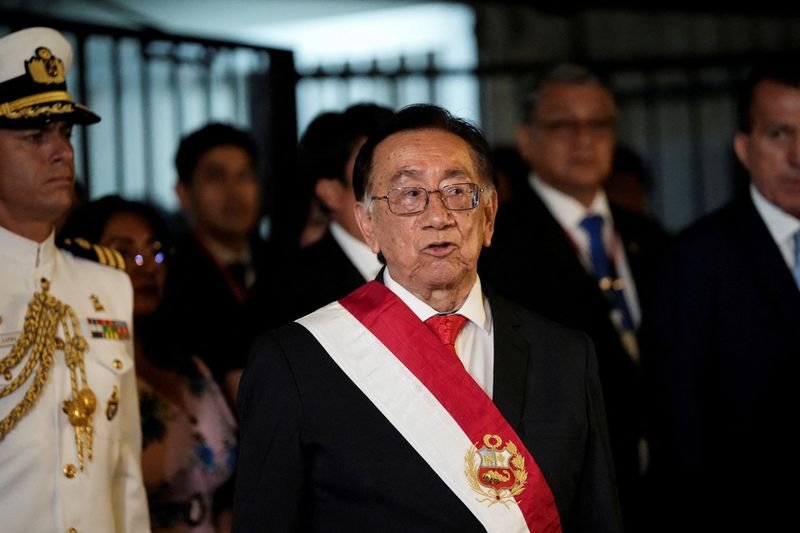
Feb 20 (Reuters) – Peru’s revolving-door presidency turned again this week, ushering out the country’s seventh leader in less than a decade, but the political churn has produced little market turbulence as investors seem unfazed by the spin.
In an unexpected move ahead of elections on April 12, Peru’s Congress voted to oust President Jose Jeri on Tuesday over a corruption scandal only four months into his term.
The body on Wednesday elected hard‑left lawmaker Jose Balcazar as interim president to serve until the next president takes office on July 28.
In a region where political upheaval often rattles markets, Peru is an outlier. This week’s turbulence has caused few ripples in the markets as the country again demonstrates resilience in the face of a crisis that would trigger sharp selloffs in other economies.
“Portfolio investors have become desensitized to Peru’s political drama,” said Eileen Gavin, head of sovereign analysis at Verisk Maplecroft. “The mining-focused economy’s macro and credit risk metrics have remained fairly exemplary throughout a near decade of instability.”
Investors still view Peru as one of the safest credit markets in the region. It is among the countries closely trailing Chile for the narrowest spreads between yields on its benchmark government debt and U.S. Treasuries, a sign that investors perceive the country as relatively low risk.
Peru’s 2060 sovereign bond dipped slightly on Thursday, changing hands at around 56 cents on the dollar, emerging‑market debt analysts said. The country’s 2032 dollar-denominated notes held steady, Refinitiv data showed.
After he was sworn in on Wednesday, Balcazar pledged he would oversee “unquestionable” elections in the world’s No. 2 copper exporter and vowed to avoid “experimenting” with economic policy — a note of continuity aimed squarely at investors.
Analysts said Peru’s commodity-driven economy and confidence in its long-serving central bank governor have historically insulated markets from political turbulence.
The combination of a copper-dependent economy and a highly credible central bank has cushioned Peru from politics before, said Jo-Marie Burt, a Peru specialist at George Mason University.
FRAGMENTED RACE
But 2026 will bring another significant test of Peru’s electoral institutions, and analysts said Balcazar’s unexpected ascent could complicate a fragmented race.
Balcazar, 83, has a controversial past. Before he entered Congress in 2021, he was dismissed as a provisional Supreme Court justice for misconduct then disbarred.