dailynewsnblog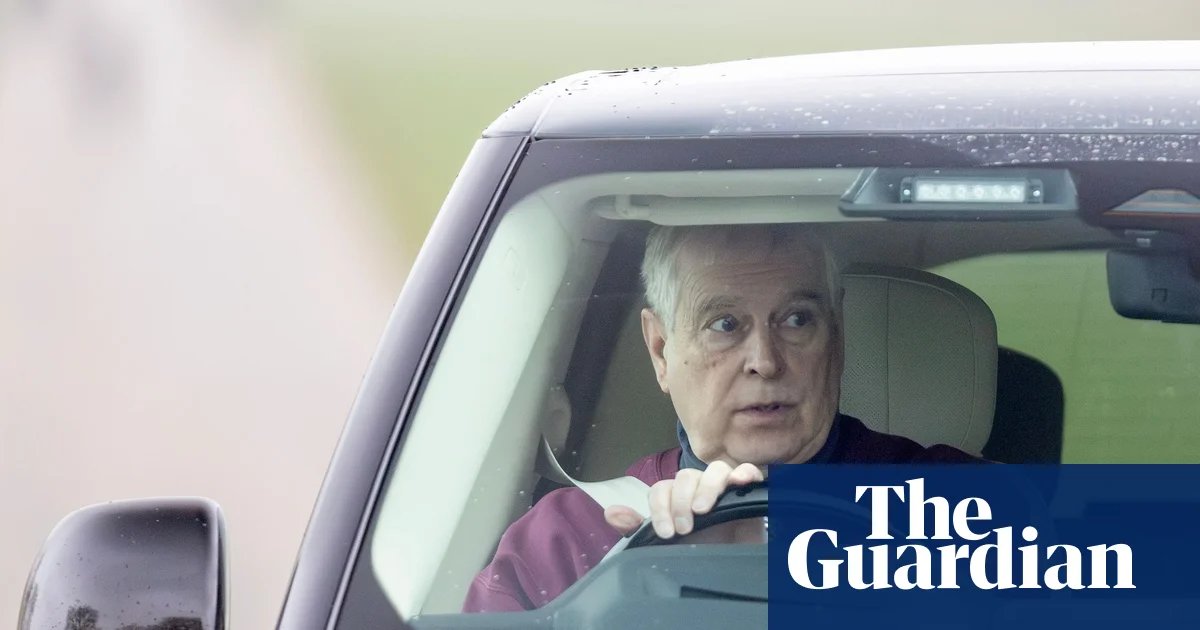
Good morning. Some days there isn’t an immediately obvious theme for what tomorrow’s newsletter should be about. Yesterday was not one of those days. As Thames Valley police confirmed early on Thursday that a “man in his 60s from Norfolk” had been arrested on suspicion of misconduct in public office, it quickly became clear who the 1,000th First Edition would feature.
The man taken into custody was Andrew Mountbatten-Windsor – formerly Prince Andrew, Duke of York – arrested at Wood Farm on the Sandringham estate, on his 66th birthday. He is the first senior royal in modern history to be arrested. By the evening, Andrew was seen leaving Aylsham police station, slouched in the back of a vehicle, having been released under investigation.
For today’s newsletter, I spoke to the Guardian’s home affairs editor, Rajeev Syal, to unpack what we know of yesterday’s events, what being suspected of misconduct in public office actually means and what could happen next. But first, the headlines.
Five big stories
-
Civil service | Keir Starmer has appointed Antonia Romeo as cabinet secretary, the UK’s most senior civil servant, the first woman to hold the post in its 110-year history.
-
Iran | Donald Trump changed his mind on supporting the Chagos Islands deal because the UK will not permit its airbases to be used for a pre-emptive US strike on Iran, the Guardian has been told.
-
Palestine | Almost 60 Palestinian journalists detained in Israeli prisons since the 7 October 2023 Hamas attack have been beaten, starved and subjected to sexual violence, including rape, a report by the Committee to Protect Journalists (CPJ) alleges.
-
Iran | A British couple have been sentenced to 10 years in jail by an Iranian court on charges of espionage – an outcome foreign secretary Yvette Cooper called “completely appalling and totally unjustifiable”.
-
Education | Children in England with special needs will receive individual support and therapy directly from their schools as part of the government’s overhaul of England’s special education provision.
In depth: ‘All we knew during the day was that Andrew was in a police station somewhere’
Yesterday’s arrest marks the most dramatic development yet in the Andrew Mountbatten-Windsor saga, which has spanned decades, as this timeline from his birth in 1960 to him being stripped of his titles last year shows.
Rajeev tells me it is “significant that he has been arrested at all”, adding that such a move might have been less likely while Andrew remained a working royal. Mountbatten-Windsor has consistently denied any wrongdoing.
A lifetime of privilege and scandal
Once second in line to the throne, Andrew might have hoped to be remembered chiefly as a Falklands veteran and, later, the UK’s special representative for international trade and investment. But his long association with the convicted sex offender Jeffrey Epstein has steadily eclipsed all else in his life – even his 1980s tabloid reputation as “Randy Andy” and “His Royal Heart-throb”.
He stepped back from public duties after that disastrous BBC Newsnight interview in 2019, in which he claimed he could not have exploited Virginia Giuffre as she had alleged because he was at Pizza Express in Woking, he was medically unable to sweat, and that he had “no recollection” of meeting her. He later settled Giuffre’s civil claim in the US for a reported £12m, without admission of liability, while expressing regret for his association with Epstein. Virginia Giuffre took her own life in 2025, after writing a harrowing memoir detailing her alleged abuse, having been trafficked by Epstein.
In 2022 and 2025 he was progressively stripped of military roles, patronages and, ultimately, his titles. Buckingham Palace eventually confirmed he would be known simply as Andrew Mountbatten-Windsor and by late 2025 he had left Royal Lodge and withdrawn from public life.
The monarchy sought distance, but the story did not fade away.
What is misconduct in public office?
Suspicion of misconduct in public office, Rajeev tells me, is a charge “usually used against police officers and prison officers, but it has occasionally been wheeled out against other public figures, including politicians”. In theory it can lead to life imprisonment but, Rajeev says, “in reality, if there is a successful prosecution, sentences tend to be much shorter.”
As I wrote in a recent First Edition looking at how the fallout from the Epstein files led to the disgrace of Peter Mandelson, misconduct in public office is a common-law offence that applies when a public official is alleged to have acted in their position in a way that seriously abuses the public’s trust. But it is also a law that has been heavily criticised and is in the process of reform.
“The Law Commission found it wasn’t being applied effectively to people who committed serious offences. So even as it stands, it’s rarely used successfully in serious cases involving corruption or abuse of position,” Rajeev explains. “The replacement legislation is now before parliament and has reached committee stage, but it is still months away from completion.”
The Epstein files connection
The immediate trigger for the police investigation appears to be the latest tranche of documents released by the US Department of Justice relating to Epstein’s crimes. British police have set up a new national group to deal with allegations involving Epstein and his associates. The allegation under investigation is not sexual assault – allegations Andrew has always denied – but whether, while holding a public office as trade envoy, he improperly shared sensitive information.
“The documents highlighted so far include material relating to Afghanistan – for example, information about mineral deposits, gold and oil that had been identified as commercially valuable – which was allegedly shared with Epstein,” Rajeev says.
“There were also details about the Treasury’s view of the Icelandic financial crash that were said to have been forwarded on to a banker friend of Andrew’s,” he adds. “Those are the sorts of documents that have been pointed to as potentially relevant and could be examined by the police in considering whether to bring a charge. Whether that is what the police are actually focusing on, we don’t yet know.”
“All we knew during the day was that Andrew was in a police station somewhere. He will have been questioned. He is entitled to legal representation”.
Thames Valley police later confirmed: “The arrested man has now been released under investigation. We can also confirm that our searches in Norfolk have now concluded.”
Why can this be reported?
Police have not formally named the arrested man, in line with national guidance. But the media can identify a suspect where there is clear, independently verifiable information and overwhelming public interest – and where reporting does not prejudice active proceedings.
Oliver Wright, one of the Thames Valley’s assistant chief constables, said after the arrest: “It is important that we protect the integrity and objectivity of our investigation as we work with our partners to investigate this alleged offence. We understand the significant public interest in this case, and we will provide updates at the appropriate time.”
King Charles, Andrew’s older brother, also acknowledged the arrest in a public statement, saying: “Let me state clearly: the law must take its course. As this process continues, it would not be right for me to comment further on this matter”.
“The police have been careful in their statement to stress that the case is active and that care must be taken in reporting allegations,” Rajeev says. There is also a potential blurring of lines which could complicate matters. Andrew, Rajeev says, might “attempt to argue that, as a private citizen now, he shouldn’t be exposed in the same way he would have been as a senior royal.”
However, Rajeev reminds me, “the alleged conduct relates to when he was a public figure and a member of the royal family acting in an official capacity”.
What could happen now?
Several paths are possible. Police have released him without charge while inquiries continue. They could take no further action or at some point submit a file to the Crown Prosecution Service for charging consideration. Given the profile of the suspect and the complexity of the allegations, this process may take months.
Rajeev notes says that the arrest itself may spark new lines of inquiry. “Once someone has been arrested, the police have access to much more material. They can examine files, computer records, phones. That potentially broadens the scope of what they are able to look at. Who knows where that might lead?”
For King Charles, who has already stripped his brother of titles and patronages, the legal process now unfolds beyond palace control. , yesterday’s arrest will be seen as a further step in a long campaign for accountability.
In a statement on Thursday, Giuffre’s family said their “broken hearts have been lifted with the news that no one is above the law – not even royalty …. He was never a prince. For survivors everywhere, Virginia did this for you.”
“In theory, it could go to a jury trial. Whether it would, depends on the seriousness of the allegations and any eventual charge. But that’s a long way down the road,” Rajeev says.
“We know the law itself has been criticised as weak,” he says. “The fact the government has acknowledged the offence is difficult to use successfully against public figures does indicate there are legal hurdles in prosecuting this kind of case. You can draw your own conclusions as to whether, in this case, it’s going to be successfully applied.”
What else we’ve been reading
-
I loved today’s picture essay on Sardinia’s ancient masked rite of mamuthones and issohadores. Poppy Noor, newsletters team
-
In Japan’s top football league the concept of the draw is being banished and replaced with penalty shoot-outs, in a move which will give football traditionalists the heebie-jeebies. Martin
-
I was tickled at Marta’s belief she can keep her scent ‘unique’ by using store-bought bottled perfume – and felt sorry for her friend Elsa who she seems to be terrorising over it, in you be the judge. Poppy
-
Those of a certain age may get a huge frisson of nostalgia reading this piece by Ryan Loftus about London’s oldest Scalextric club. Martin
-
I also thoroughly enjoyed our top ten Baftas moments — after being sucked in by the astonishing mid-motion photo we used of John Hurt for the main image. Poppy
Thank you
I mentioned earlier in the newsletter that today marks the 1,000th First Edition. I wanted to give a shout out to all the unsung heroes behind the scenes who work on the production and making sure it reaches your inbox every day, and all of the front-of-house writers we’ve had over the last four years – especially Archie, Nimo, Aamna, Karen, Phoebe, Esther and Rupert.
Most of all, I’d like to thank you, the readers, for sticking with us. If you want to support First Edition and the rest of the Guardian’s journalism, do please consider donating here.
Here’s to 1,000 more newsletters to come.
Sport
Winter Olympics | Britain’s men’s curling team secured a place in Saturday’s final against Canada after beating the undefeated Swiss team 8-5.
Football | For Nottingham Forest, an evening in Istanbul they will not forget in a hurry: a 3-0 victory over Fenerbahce in the Europa League. Celtic, though, crashed to a damaging 4-1 defeat at home to Stuttgart in the same competition.
Rugby union | Gregor Townsend expects Blair Kinghorn and Duhan van der Merwe to be fuelled by “huge determination” against Wales after they were restored to Scotland’s starting XV for Saturday’s Six Nations meeting in Cardiff.
Something for the weekend
Our critics’ roundup of the best things to watch, read, play and listen to right now
Film
Queen at Sea | ★★★★★
Recently divorced academic Amanda (Juliette Binoche) has taken a sabbatical to be closer to her elderly mother, Leslie (Anna Calder-Marshall) – who has dementia – and her stepfather, Martin (Tom Courtenay). One morning, she catches the pair having sex, a mask of incomprehension on her mother’s face. She accuses Martin of rape – the GP has already advised that Leslie can no longer give meaningful consent. Yet Martin has done his own research on the internet and claims that marital sex can comfort dementia patients. This lacerating movie from US film-maker Lance Hammer moves from one agonisingly difficult and ambiguous situation to the next, with angry, complex, brilliant late-career performances from Courtenay and Calder-Marshall. Peter Bradshaw
TV
Gisèle Pelicot: The Newsnight Interview | ★★★★☆
Interviewer Victoria Derbyshire has a steely warmth that meshes well with the innate dignity of Gisèle Pelicot, while they walk unflinchingly through her story. On 2 November 2020, the police called Pelicot and her husband, Dominique, to the station. They had found on his laptop thousands of videos and photographs of his wife unconscious and being raped by strangers. Sitting in the interview, perfectly calm, effortlessly poised, even when occasionally moved to tears, Mme Pelicot cuts an extraordinary figure. You can only gaze in admiration at her strength and grace. But questions lurk. How many people out there are reading or watching or listening not in abject horror but in thrall? How many men are thinking: “I wish, I wish …”? Lucy Mangan
Music
Mitski: Nothing’s About to Happen to Me | ★★★★★
On her thought-provoking, lol-inducing eighth album, the US musician is never far from expressing a longing to disappear. On opener In a Lake, she extols moving to the city from a small town, not in search of excitement, but obscurity. On Rules, she’ll “get a new haircut … be somebody else”. All this is set to beautifully crafted music that splits the difference between alt-rock, country-infused acoustic lamentation and grander ambition. One thing the world isn’t suffering from in 2026 is a drought of self-examining millennial singer-songwriters, publicly picking at their neuroses. But Mitski is better at this stuff than her peers: stronger with melodies and more skilled at creating atmospheres that seep out of the headphones and into your bones. Alexis Petridis
Theatre
Dreamscape, Omnibus theatre, London | ★★★★★
Tyisha Miller was 19 when she was shot dead by police officers while she lay unconscious in her car in California, in 1998, joining the long, appalling, litany of Black victims of police violence. In writer-director Rickerby Hinds’ award-winning production, she is named Myeisha Mills, still dead after an officer shoots 12 bullets into her body, but simultaneously alive or rising from the dreamscape of the title to tell us about herself. The two-hander is told entirely through beatboxing, spoken word, hip-hop and dance, and Jada Evelyn Ramsey gives an extraordinary performance filled with beauty as Myeisha. Josiah Alpher is just as charismatic as he beatboxes, raps and narrates the parts of other characters. It is a dazzling, disturbing experience. Arifa Akbar
The front pages
“King says ‘law must take its course’ after Andrew arrest” is the lead of this morning’s Guardian. The Times has “the arrest of Andrew”, the Telegraph has “Andrew arrested”. “King: my brother must face the law” leads the i paper, while the Mirror has “King: Law must take its course”.
“Now he’s sweating” is the splash of the Sun. “Taxi for Andy” leads the Star, while the Mail goes with “downfall”. The FT, meanwhile, leads on “Trump sets 10-day window to decide on Iran strikes as US builds up forces”.
Today in Focus
‘They’re not listening!’: the government’s gamble on special education reform
Political correspondent Alexandra Topping and special educational needs student Jake with his mum, Laura, explore the government’s controversial plans for reform
Cartoon of the day | Ben Jennings
The Upside
A bit of good news to remind you that the world’s not all bad
At just 18, Cesar Vasquez is protecting his California farm community from federal immigration raids. In Santa Maria – where more than 80% of farmworkers are undocumented – he scans for unmarked ICE SUVs before dawn and shares warnings to keep families safe.
He often visits families after arrests. “There have been so many occasions where I walked through the door, and a kid was expecting their father or mother,” he said. “And it was just me.”
“It’s common for children of immigrants to fill out legal forms,” he added. “But in fourth grade, I had to learn what a warrant looked like and what rights I had.”
Sign up here for a weekly roundup of The Upside, sent to you every Sunday
Bored at work?
And finally, the Guardian’s puzzles are here to keep you entertained throughout the day. Until tomorrow.