dailynewsnblog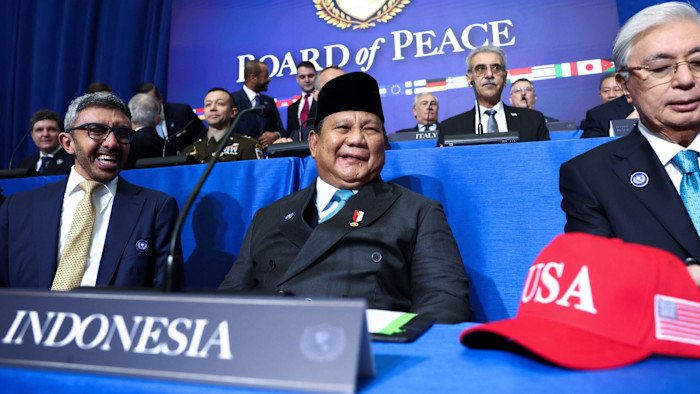
Unlock the Editor’s Digest for free
Roula Khalaf, Editor of the FT, selects her favourite stories in this weekly newsletter.
The US and Indonesia have finalised a trade deal to slash tariffs and have Jakarta purchase more than $33bn of American agriculture, energy and aviation products.
President Donald Trump and Indonesia’s Prabowo Subianto on Thursday “confirmed their strong commitment to implementing” the trade deal initially agreed in July, according to a White House statement that hailed “a NEW GOLDEN AGE” of a US-Indonesian alliance.
The agreement would “help both countries to strengthen economic security, promote economic growth, and thereby continuously lead to global prosperity”, the statement said.
The accord marked a breakthrough after the sides had been deadlocked over non-tariff barriers and what Jakarta saw as coercive clauses.
Under the agreement, Indonesia will lift tariffs on 99 per cent of US exports, including agriculture — which will also be exempt from import licensing requirements — as well as health products, seafood, auto parts and chemicals, according to a White House factsheet.
In exchange, the US will eliminate tariffs on key Indonesian products including palm oil, rubber, coffee, cacao, spices and electronic and aircraft components. Other exports will face a 19 per cent tariff, down from the 32 per cent rate initially threatened.
Indonesia agreed to buy $4.5bn of agricultural products including soyabeans, beef, rice, wheat and corn; $15bn of energy including liquefied petroleum gas; and $13.5bn in aviation purchases. Investment minister Rosan Roeslani said Indonesia would buy 50 Boeing aircraft.
Some Indonesian textiles and apparel, another critical export, will be exempt from US tariffs, based on inputs of US cotton and other fibres. The US offered similar exemption to Bangladesh, a major garment exporter.
“The philosophy of this agreement [is that] it has to be win-win . . . because we would like to achieve the golden era for both countries, not one country,” Indonesia’s co-ordinating minister for economic affairs Airlangga Hartarto said on Friday.
US trade representative Jamieson Greer said in a statement that the deal would “create commercially meaningful opportunities for American farmers and manufacturers” in Indonesia’s market of more than 280m people.
Indonesia’s trade surplus in goods with the US was $23.7bn in 2025, according to the White House.
Under the agreement Indonesia will exempt US companies and goods from local content requirements, which have long been seen as a major barrier for foreign investments and were the root cause of a ban on sales of Apple’s iPhone 16 in the country.
The agreement will come into force 90 days after being ratified by both sides.
The FT previously reported that negotiations had stalled over Indonesia’s resistance to a “poison pill” that threatened to void the agreement if Jakarta signed rival trade pacts deemed by Washington to jeopardise US interests.
China is Indonesia’s largest trading partner and the dominant investor in its crucial commodities sector, including nickel used to make stainless steel and electric vehicle batteries.
But the agreement signed on Thursday appeared to include the clause.
Habib Abiyan Dzakwan from CSIS Indonesia said it was “almost impossible” for Indonesia to completely get rid of the poison pill in light of the current “great power rivalry”.
He added that “in the current geopolitical situation”, the deal was “one of the most optimum outputs we can achieve”.
Prabowo was in Washington for the inaugural meeting of Trump’s Board of Peace, intended to oversee a ceasefire between Israel and Hamas in Gaza. The Indonesian president has previously offered to send up to 8,000 troops to support peacekeeping efforts in Gaza, the largest such commitment.