dailynewsnblog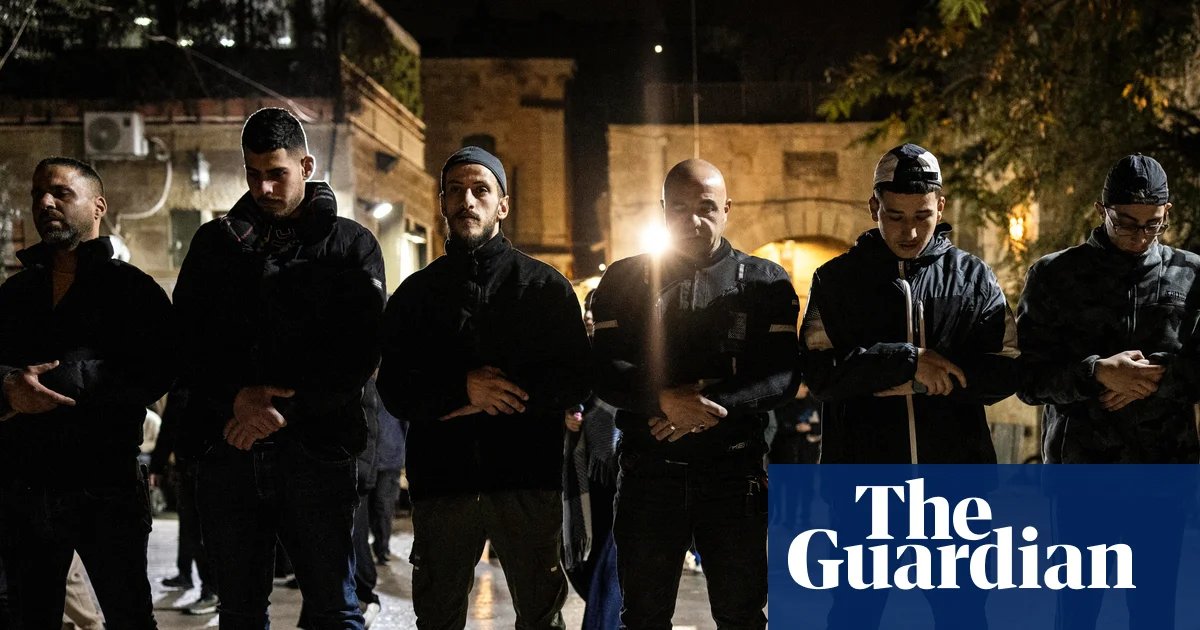
A six-decade agreement governing Muslim and Jewish prayer at Jerusalem’s most sensitive holy site has “collapsed” under pressure from Jewish extremists backed by the Israeli government, experts have warned.
A series of arrests of Muslim caretaker staff, bans on access for hundreds of Muslims, and escalating incursions by radical Jewish groups culminated this week in the arrest of the imam of al-Aqsa mosque and an Israeli police raid during evening prayers on the first night of Ramadan.
The actions by the Jerusalem police and the Shin Bet internal security force, both now under far-right leadership, represent a rupture in the status quo agreement dating back to the aftermath of the 1967 war, which stipulates that only Muslims are permitted to pray in the sacred compound around the mosque, known as the al-Haram al-Sharif to Muslims, which also encompasses the seventh-century Dome of the Rock shrine. To Jews it is the Temple Mount, the site of the 10th-century BCE first temple and second temple, which was destroyed by the Romans in 70 CE.
Changes in the status quo have historically shown the potential to ignite unrest and conflict in Jerusalem and the Palestinian occupied territories with repercussions across the world. A visit by the then Israeli opposition leader, Ariel Sharon, in 2000 ignited the second Palestinian intifada, which lasted five years, and Hamas gave the name al-Aqsa Flood to its attack on Israel in October 2023 which killed 1200 Israelis and triggered the Gaza war, claiming it was provoked by Israeli violations at the Jerusalem mosque.
“Al-Aqsa is a detonator,” said Daniel Seidemann, a Jerusalem lawyer who has regularly advised Israeli, Palestinian and foreign governments on legal and historical issues in the city. “It’s usually around the same thing – a real or perceived threat to the integrity of sacred space. And that’s what we’re witnessing. There have been provocations frequently during Ramadan, but things are exponentially more sensitive now. The West Bank is a tinderbox.”
Tensions have escalated steadily around al-Aqsa mosque as far-right Israelis have taken up key security positions. The national security minister, Itamar Ben-Gvir – who had eight criminal convictions before taking office, for supporting a terrorist organisation and incitement to racism, among other charges – has said he wanted to raise the Israeli flag at the compound and build a synagogue there.
Ben-Gvir has made inflammatory visits to the al-Aqsa site over the past year, and backed a series of unilateral changes to the status quo, allowing Jews to pray and sing in the compound. In January, he installed an ideological ally, Maj Gen Avshalom Peled, as the Jerusalem police chief, and with the reported backing of the prime minister, Benjamin Netanyahu, allowed Jews to take printed prayer sheets on to the site, in ever-more clearcut violations.
“The status quo has collapsed because there are prayers on a daily basis,” Seidemann said. “In the past, the police were very strict about preventing any kind of provocation … but these measures are displays of ‘we’re in control here, get used to it or get out of the way’.”
In the run-up to Ramadan this year, the Jerusalem Waqf, the Jordanian-appointed foundation charged with managing the al-Aqsa site as part of the status quo agreement, has come under increasing pressure. Waqf sources said as many as 17 of its staff had been put in administrative detention (detention without charge) this week by the Shin Bet, and at least 42 staff members had been banned from entering the site.
They said six Waqf offices had been ransacked in recent weeks and the staff prevented from rehanging doors or doing other repairs. The Waqf has been prevented from installing sun and rain shelters or temporary clinics for worshippers. Officials allege they have even been prevented from bringing toilet paper on to the site.
The cumulative effect, the officials said, had been to strain the Waqf’s ability to cater to the 10,000 Muslims expected to come to pray at al-Aqsa mosque over the month of Ramadan.
The Palestinian-run Jerusalem governorate provided different figures: 25 Waqf staff members banned, and four detained. Neither the Jerusalem police nor the Shin Bet responded to requests for comments on the allegations.
In the first week of Ramadan the police extended the morning visiting hours for Jews and tourists from three to five, in another unilateral change to the status quo. On Monday, the al-Aqsa imam, Sheikh Mohammed al-Abbasi, was detained inside the mosque courtyard, according to the Palestinian news agency Wafa, and social media posts showed the police raiding the compound again on Tuesday evening during the first night prayers of Ramadan.
“There are so many ingredients that make this Ramadan especially dangerous,” said Amjad Iraqi, a senior Israel/Palestine analyst at the International Crisis Group. “Last year was relatively smooth, but this year there are a confluence of so many factors on the Israeli and Palestinian sides that may incentivise the Temple Mount activists to try and create new alterations.”
“If in the past the Israeli government felt compelled to engage with regional powers, today they care much less about what they have to say and think,” Iraqi added.
“There has been a diffusion of impunity … Israelis have been able to accomplish a lot outside of the constraints they thought existed politically, militarily and diplomatically, in Gaza and the West Bank. So why would they feel bound by international opinion?”