dailynewsnblog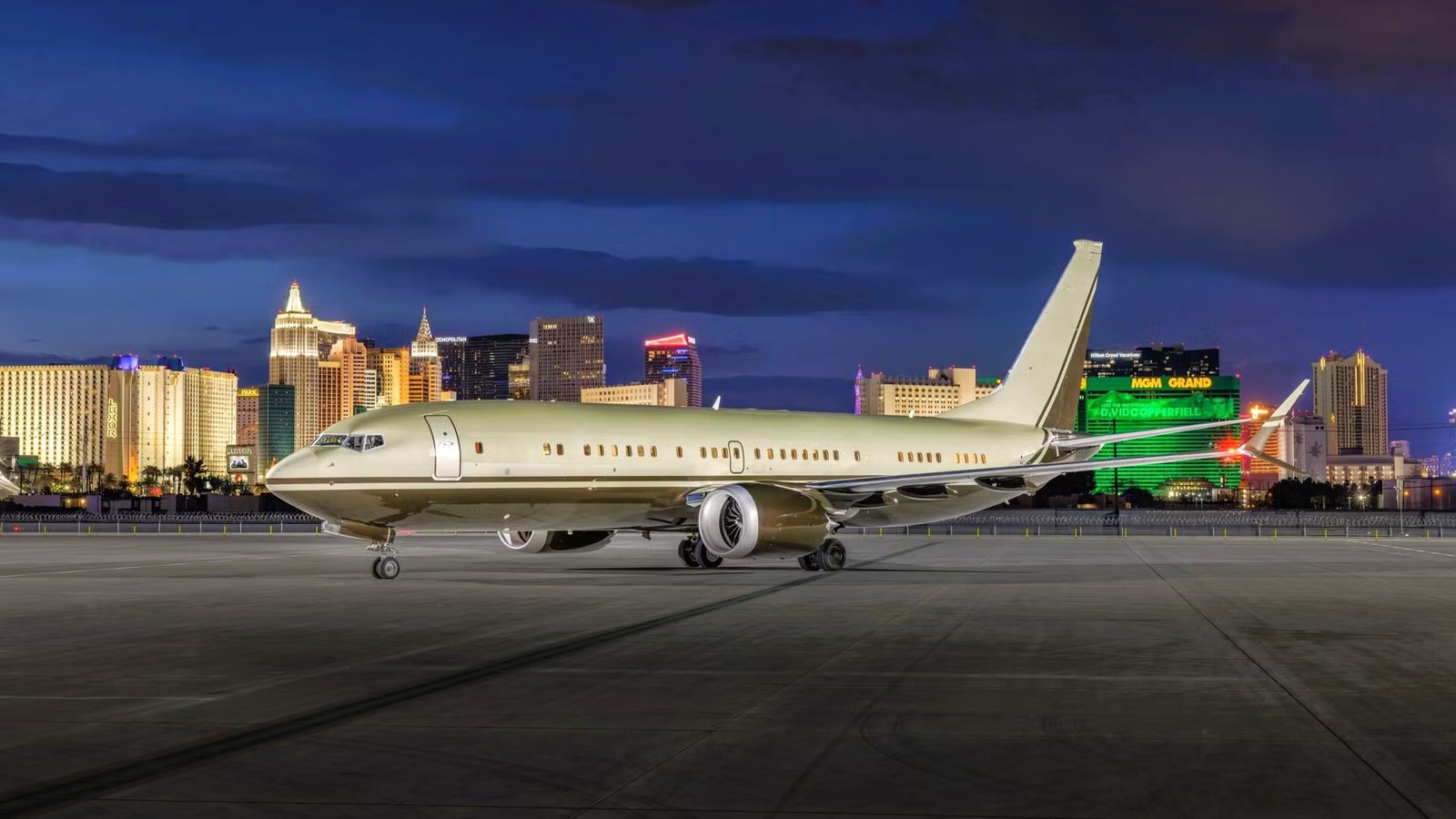
The Department of Homeland Security (DHS) is trying to turn an aircraft that was built for billionaires into a tool for mass deportations by US Immigrations and Customs Enforcement (ICE), and the optics are as jarring as the price tag. The jet in question is a Boeing 737 MAX 8, built as a Boeing Business Jet (BBJ) in 2018, which DHS has been leasing and now wants to purchase for $70 million.
According to NBC News, DHS has told the White House’s Office of Management and Budget (OMB) that the aircraft will serve a “dual mission,” supporting ICE deportation flights while also handling travel for senior officials. In practice, critics argue it’s a case study in government mission-creep: buy a luxury asset for VIP use, then retrofit a justification after the fact.
The debate isn’t really about whether DHS and ICE need access to aircraft to carry out their mission. They do. It’s about whether this specific aircraft, with its custom-designed boutique interiors, makes any operational or financial sense as a deportation platform. Unless ICE is planning to conduct luxurious deportations with first-class finery, it raises serious questions about DHS priorities.
The Jet With Two Lives: From Private Luxury to DHS Livery

The aircraft in question is currently registered as N471US, and was manufactured by  Boeing in 2018. It was sold to Fertitta Enterprises, the Houston-based company of billionaire Tilman Fertitta, which controls over 600 restaurants and casinos and owns the NBA’s Houston Rockets. There it flew for Fertitta for the next five years, with its eye-catching gold livery becoming a regular feature at
  Harry Reid International Airport in Las Vegas. Then late last year, it came up for sale with US aircraft brokerage firm AvJet Global.
|
N471US: The Details |
|
|
Aircraft Type: |
Boeing 737-8 BBJ |
|
Delivered: |
November 2018 |
|
Age: |
7.9 years |
|
Engines |
2 x CFM LEAP-1B |
|
Prior Registration: |
N702F |
|
Configuration: |
VIP with 17 seats and two queen beds |
It was subsequently acquired by Valkyrie Aviation Holdings and re-registered as N471US. It was also repainted in a new DHS livery that is remarkably similar to the revised livery for Air Force One livery that President Trump has proposed. DHS officially began leasing the aircraft in October last year, and has now moved toward a purchase proposal, looking to acquire it for $70 million.
So why the sudden attention? Because the cabin details being described are not subtle. The NBC News report shows images of a luxury jet with two bedrooms, each fitted with a queen bed, showers, expansive luxury seating, a kitchen, four large flat-screen TVs, and even a whiskey bar. The brochure for the sale of the aircraft emphasizes the luxury, saying:
“Its exceptional interior is designed by renowned New York designer Peter Marino. No expense has been spared, and every detail has been meticulously executed.”
It isn’t inherently scandalous that the US government might want to purchase an aircraft designed around comfort over capacity. Governments routinely operate VIP aircraft for senior officials. The real controversy is that DHS is trying to purchase this expensive luxury jet, yet place it under the umbrella of ICE deportation missions.
Dual Mission Or Dual Excuse?

The argument from DHS and ICE has two pillars: cost and control. DHS has said that owning aircraft, rather than relying on charters, can reduce costs through better scheduling and operational flexibility. Secondly, the ICE submission to the OMB seeking approval for the purchase of N471US argues that it can do more than one job — supporting deportation operations while also moving senior officials quickly and securely.
There is a broader policy debate here, as the DHS has signaled a shift toward an owned and controlled fleet for ICE Air operations. It recently signed a $140 million deal to acquire six Boeing 737s to operate deportation missions, a sharp shift from the charter-heavy model that has historically powered the agency’s operations. While DHS officials maintain that dedicated aircraft will “save millions of dollars”, industry experts doubt this, pointing out that ownership drags DHS into the realities of managing aircraft assets, including the need to pay for crews, maintenance, dispatch, compliance, and airport fees.
Regardless of the merits or demerits of ownership, it is the configuration of a deportation aircraft that is crucial to this discussion. The needs are simple: high seat count, easy supervision, fast turnarounds, and a cabin that tolerates hard use. As an example, Avelo Airlines, which conducted charter operations for ICE until recently, utilized Boeing 737-800s with 189 tightly-packed seats.
A VIP business jet built around suites, beds, lounges, and boutique amenities is the opposite of this. Yet a DHS spokesperson, when asked how the plane would be used for deportations, appeared to try to mitigate this by saying “one of the bedrooms is currently being converted for seating to prepare the aircraft to meet the demands of its deportation mission.” He went on to emphasize the “dual mission” argument:
“This new plane will serve dual missions, both as ICE deportation flights and for cabinet-level travel. It flies 40% cheaper than what the military aircraft flies for ICE deportation flights, saving the American taxpayer hundreds of millions of dollars.”
Yet even if DHS removes a bedroom, the economics still look backward. It would be paying for luxury amenities it doesn’t need, then paying again to remove them. And the dual mission argument creates perverse incentives. If the aircraft is supposed to serve both deportations and VIP travel, the VIP mission will inevitably win. Scheduling priority, security requirements, and reputational sensitivity will push the aircraft toward executive use, especially when the jet’s baseline configuration is already VIP.
The dual mission frame therefore appears to be nothing more than a political shield. Critics are told that the aircraft will serve the important mission of deportations, while the aircraft quietly functions as a premium executive transport most (or all) of the time.

ICE’s Costly 737 Gamble: Is A Private Air Fleet Feasible?
The answer is more complicated than you might expect.
A Pattern, Not a One-Off

Here’s where the “dual mission” pitch collapses: it asks the public to believe that DHS just happened to lease a luxury BBJ with bedrooms, showers, and a bar — and only later realized it could be a deportation aircraft too. That logic runs backward, and it lands in a political environment where DHS aircraft spending has already drawn intense scrutiny.
Within the last year, aviation procurement by DHS has repeatedly become a flashpoint. The agency was heavily criticized for purchasing two Gulfstream G700 business jets for $172 million during last year’s government shutdown, with lawmakers arguing priorities were skewed. Separately, lawmakers have called for oversight and inspector general review of DHS aircraft acquisitions, framing the purchases as potential waste.
Against that backdrop, buying a $70 million VIP-configured 737 MAX and calling it a deportation platform doesn’t look like an isolated procurement quirk. It looks like a pattern: expensive aircraft decisions justified with broad claims (“mission readiness,” “cost savings,” “dual use”) while the underlying facts invite skepticism.
If DHS wants a deportation workhorse, the playbook is not complicated. Pick a well-supported narrowbody type like the 737, choose a high-density cabin, design for supervision and durability, and justify the costs with transparent data versus charter alternatives. Unfortunately, in this case, it looks like a luxury jet searching for a mission, rather than a mission selecting the right tool.