dailynewsnblog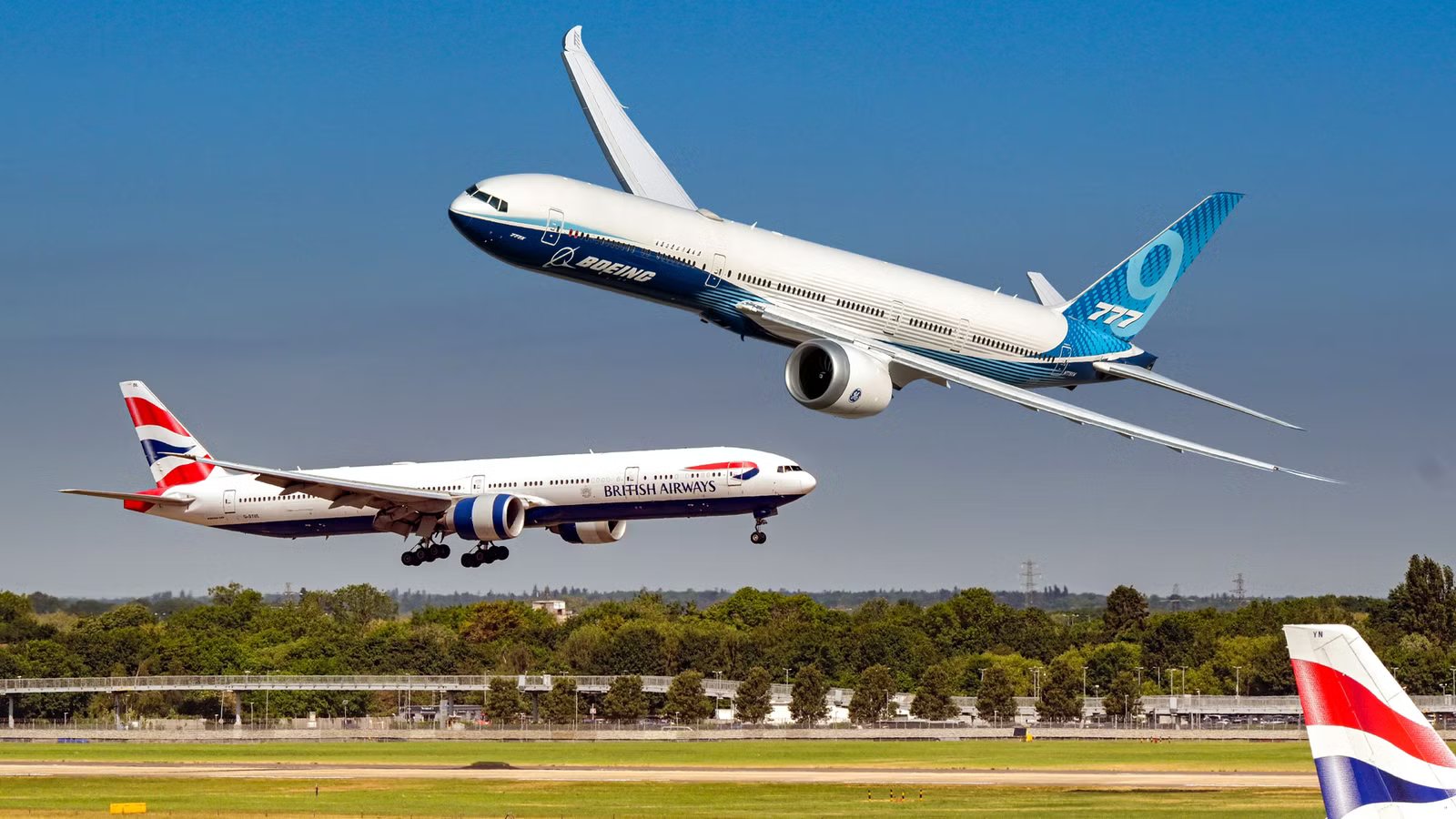
It might not be until 2028 that  British Airways will begin to receive its 777Xs. However, there are a number of indicators that the aircraft will be ideal for the carrier’s long-haul network. The jet, ordered for British Airways by IAG in February 2019, will bring new capacity and range potential to the fleet. It will also enable British Airways to operate long-haul flights at a lower environmental cost. The 777X should help British Airways continue finding success in long-haul aviation.
Beginning with the nature of IAG’s 777X order for British Airways, we interrogate this and more below, including how the carrier’s extensive pre-existing 777 fleet will make it easier for the new 777Xs to be seamlessly integrated.
International Airlines Group’s 777X Order

In February 2019, International Airlines Group (IAG) announced its order for 42 Boeing 777X aircraft. The deal for British Airways included 18 orders and 24 options. At list prices, it was worth $18.6 billion, although it can safely be assumed that IAG will have negotiated a lower actual price given the size of the order.
Willie Walsh, IAG chief executive, said: “The new 777-9 is the world’s most fuel-efficient long-haul aircraft and will bring many benefits to British Airways’ fleet. It’s the ideal replacement for the 747 and its size and range will be an excellent fit for the airline’s existing network. This aircraft will provide further cost efficiencies and environmental benefits with fuel cost per seat improvements of 30 per cent compared to the 747. It also provides an enhanced passenger experience.”
Kevin McAllister, president & CEO of Boeing Commercial Airplanes, also spoke on Boeing’s delight to have secured the order: “British Airways is one of the most iconic international carriers, now in its 100th year of connecting the world with its impressive route network. We are honored that British Airways has selected the 777X as part of its fleet for the next century.”
When making the order, British Airways intended that the aircraft would replace the carrier’s aging 747s. It would also sit nicely alongside the large pre-existing fleet of 777s owned and operated by the carrier.
British Airways Already Has Plenty Of 777s

When making the order, British Airways had a fleet of almost 60 Boeing 777s. It had also just committed to four more Boeing 777-300ERs via operating lease. The carrier still operates 43 Boeing 777-200ERs and 16 -300ERs. The new 777Xs will both replace and fly alongside British Airways’ older 777s, now that the carrier has retired all of its Boeing 747 fleet.
Flying multiple jets of the same family within its long-haul fleet brings a host of advantages to British Airways. It represents a cut in training costs as there are many system similarities between older 777s and the 777X. Likewise, it will cut maintenance costs, as IAG will already have a strong maintenance infrastructure for 777s.
The 777X will also sit nicely alongside other modern cutting-edge Boeing airliners in the British Airways fleet. For widebody aircraft, this includes 12 787-8s, 18 -9s, and 12 -10s, with a further 38 -10s on order. It should be noted that all of BA’s modern narrowbody aircraft are Airbus jets.

Unprofessional: British Airways 777 Pilot & ATC Get Into Argument On Radio
An argument over the radio took place between the pilot of a British AIrways Boeing 777-300ER and an Air traffic controller at San Francisco International Airport. The words exchanged reek of unprofessionalism and, reading the transcript is one thing, but hearing the actual audio and the tone is another!
The 777X Pushes Range And Capacity Boundaries

The Boeing 777X has an incredibly impressive capacity as it is larger and wider than the Boeing 777s currently in the British Airways fleet. The jet can comfortably seat 400-425 passengers and even more in high-density layouts. Capacity increases are essential for British Airways, as it primarily operates from London Heathrow, one of the world’s busiest airports, and notorious for its slot restrictions. That will allow the carrier to serve more customers without acquiring additional slots.
The 777X’s range is higher than its predecessors at 7,600 nautical miles (14,075 km). That could allow British Airways to expand its routes that push the boundaries of commercial aviation.
The table below shows the range and capacity advancements made by the 777-9 ordered by British Airways over the other 777s in its fleet:
|
Characteristics |
777-200ER |
777-300ER |
777-9 |
|---|---|---|---|
|
Range |
7,065 nautical miles (13,080 km) |
7,370 nautical miles (13,649 km) |
7,600 nautical miles (14,075 km) |
|
Typical capacity |
305 |
365 |
400-425 |
|
Number in fleet |
43 |
16 |
Awaiting delivery |
Another great advantage of the 777X for British Airways is its folding wingtips. This innovation allows the 777X to reach an enormous 235 ft 5 in (71.8 m) of wingspan while flying, which then shrinks down by 23 ft (7 m) when parked. The difference is huge as it allows the 777X to maintain its enormous size while still being compatible with Category E airports, which make up the majority of major airports worldwide. This gives the jet far more destination flexibility than the super jumbos of yesteryear, meaning that the 777X can still be used as a point-to-point airliner.
The 777X Will Help British Airways Meet Its Sustainability Responsibilities

The British Government is seeking to achieve net-zero emissions by 2050, for which the aviation sector will need to make a significant contribution. Likewise, British Airways has set targets to achieve net-zero emissions by 2050, and will use 10% sustainable aviation fuel (SAF) by 2030. It will do the latter in line with the British Government’s sustainable aviation fuel mandate.
The 777X is set to play a pivotal role in making British Airways’ long-haul network sustainable, as the jet offers a 10% reduction in fuel burn, which yields far lower CO2 emissions, while also reducing the operating cost for carriers. Chris Raymond, Boeing’s chief sustainability officer, spoke with Simple Flying to explain how Boeing achieves this: “It’ll be more improvements in the wing design, the lighter composite wing. It will have some significant avionics improvements in the flight deck. That airplane has taken advantage of the things that we’ve learned from ecoDemonstrator, about winglets and acoustic treatments for the engine noise etc.”
By ecoDemonstrator, Raymond refers to insights gleaned from the 787 ecoDemonstrator aircraft, particularly in terms of noise emissions, an often-forgotten part of the sustainability discussion. The 777X has made additional noise-emission advancements beyond chevrons on the engine nacelles, as with the 787 and 737 MAX. The noise-related innovations on the 777X don’t have such a noticeable impact on noise emissions.

What Makes The Boeing 777X So Sustainable?
Where Might British Airways Fly Its 777Xs?

Until British Airways starts to receive the aircraft and puts it into service, predictions of how it will slot into the carrier’s long-haul network can only be speculation, although educated guesses are possible. Simple Flying’s Jake Hardiman asked this very question in a thread at the end of 2025: ‘Where Do You Think British Airways Might Fly The Boeing 777X?’
The general consensus was that the carrier would use the aircraft for its broadest transatlantic routes, such as from London to John F. Kennedy International Airport (JFK), Dallas/Fort Worth International Airport (DFW), Los Angeles International Airport (LAX), San Francisco International Airport (SFO), and Chicago O’Hare International Airport (ORD). User BOAC also writes: “Johannesburg may also see them, as could Bombay, Singapore, Hong Kong, and Delhi.” Paul Hartley also predicted the carrier would push the jet’s range to the limit with flights to Singapore and Sydney.
It is also worth looking at British Airways’ latest announcement on the destinations it is prioritizing for this year’s summer schedule. The announcement had a focus on popular long-haul destinations. Significant growth is evident in flights to Bangkok, Miami, and Jamaica. However, the announcement should be taken with a pinch of salt. It won’t be for at least another couple of years before 777Xs begin entering the British Airways fleet. The carrier’s focus may have changed by then, harming the 777X’s position within the long-haul fleet.
Will the 777X Be A Success For British Airways?
The 777X will bring new capacity and range capabilities to British Airways’ fleet while helping it to meet its sustainability goals. Ultimately, we will not know if the 777X will find success in British Airways’ long-haul network until the aircraft enters the fleet. In 2021, British Airways revealed that it expected to begin receiving its 777Xs between 2026 and 2028. This was a substantial push-back from IAG’s initial plans to receive the 777X in 2022, which were revealed in 2019.
The 777X is now expected to enter commercial service in 2027, so British Airways will begin to receive the aircraft even later. A few years from now, British Airways’ long-haul strategy may have changed. It will get harder to slot the jet into the network the longer it is delayed. Furthermore, when British Airways ordered the jet in 2019, the 777X offered the height of technological sophistication. It could now be a decade after making the order that Britain’s flag carrier finally receives its 777-9s. A clear question emerges: will the 777X already be obsolete when it enters British Airways’ fleet? And if so, what other aircraft might British Airways need to acquire to pick up the slack.