dailynewsnblog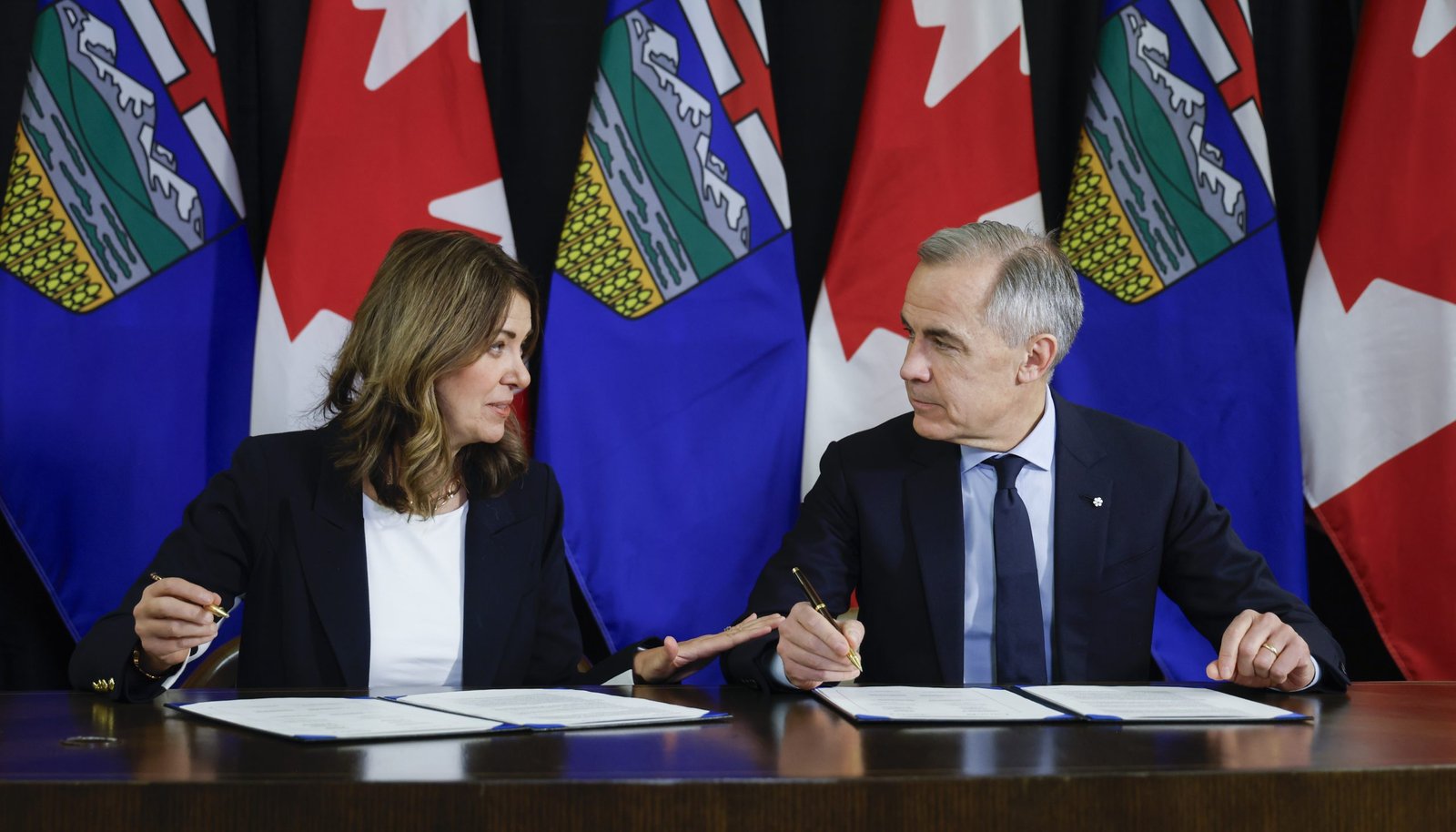
Federal and provincial leaders have six weeks to reach a carbon pricing agreement, and many challenges lay ahead.
A key milestone in the Alberta-Ottawa memorandum of understanding is fast approaching, marking one of the first major tests of last fall’s renewed relationship between the province and the federal government.
Both hope to have an agreement on industrial carbon pricing by April 1st, 2026.
That deal could reveal Alberta’s true appetite for cutting emissions, and exactly how much pressure Ottawa is prepared to apply.
It’s unclear if the April deadline will be met, however.
Spokespeople for Alberta Premier Danielle Smith and the federal Environment Minister Julie Dabrusin both say negotiations are ongoing and more details will be shared in due course.
But speaking at an event in Calgary last week, Natural Resources Minister Tim Hodgson suggested an agreement could still be reached even if both parties didn’t meet the April deadline.
Meanwhile, Alberta’s minister of affordability and utilities, Nathan Neudorf, told CBC there are “some viewpoints that are incredibly far apart” in these talks.
The carbon pricing agreement will describe how Alberta will bring its effective carbon price to $130 per tonne by 2030 when carbon credits currently trade for about $35.
The deal could spell out when measures take effect and how steeply prices will climb in years to come, all while including a financial mechanism to ensure both parties are respecting their commitments.
As the deadline approaches, clean energy think tank Pembina Institute is proposing four metrics to measure whether these early MOU negotiations are “the foundation on which successful climate policy in Canada is built, or the beginning of its unravelling.”
These include carbon credits trading at $130 per tonne by 2030, equitable rules for industry players across Canada, immediate investment into Pathways by oil producers, and no taxpayer money for a new bitumen pipeline.
Janetta McKenzie, the institute’s director of the oil and gas program, said April 1st was always a very ambitious deadline given concerns about locking in rushed policy decisions, but that Canada simply cannot afford to wait.
“There are consequences to staying in this environment of uncertainty,” she told iPolitics.
“Investors can’t make decisions, emissions continue to not come down, and other places in the world aren’t waiting.”
McKenzie said the sector as a whole will be expecting something tangible by April, even if no agreement is reached.
Points of contention
To increase the price of carbon credits, Alberta will need to do some heavy lifting on demand and supply.
Some estimates suggest there is a surplus of 47 million carbon credits in the province’s Technology Innovation and Emissions Reduction (TIER) bank.
Improving demand will be a challenge, especially given the introduction of a new compliance pathway last fall whereby companies can invest in their facilities as a way to settle their carbon obligations. Alberta has yet to specify which projects will qualify for this investment pathway, but nonetheless, the policy could hurt demand for carbon credits.
On the supply-side, there is another complication – the new reactivation mechanism, also introduced by Alberta last fall. This allows companies to pull old supply back out of retirement to sell or use, effectively recirculating old credits.
To hit the $130 price target, some massive government intervention could be required, including governments committing to buying up excess credits or putting an expiry date on them.
Uncertainty around carbon pricing could deter investment, and so carbon contracts for difference are also an important part of the Alberta-Ottawa negotiations.
These would force Alberta to put some skin in the game by offering an insurance policy against political change, putting the province on the hook for investments made unprofitable by changes in carbon pricing.
Long-term policy certainty
Speaking to the International Energy Agency on Wednesday, Hogdson said creating long-term policy certainty will allow the private sector to do its bit, and is a priority for the federal government.
“When we have tax credits for one year, and tax credits off the near year … it’s incredibly hard for the private sector to be properly allocating capital. That’s on us. We have to do a better job on that.”
Ottawa is currently reviewing the federal benchmark, or the minimum standard of stringency that every provincial carbon pricing system must meet going forward, including Alberta’s.
A discussion paper published in late December presents three options: a threshold-based approach focusing on facility size, an activity-based approach targeting specific industrial processes, or a combined model.
Some in the industry have reacted negatively to the benchmark proposal, as changing the minimum emissions threshold would pull smaller emitters into the system.
ARC Energy Research Institute analysts say this would impose a regulatory burden on smaller operators without making significant emissions reductions.
The Canadian Association of Petroleum Producers was harsher in its response to the proposed changes to the federal benchmark, saying higher costs for carbon directly reduce Canada’s competitiveness as other jurisdictions “bear little to no burden for carbon compliance.”
Neudorf’s comments last week, then, illustrate well what is at stake in these carbon pricing negotiations:
“We have the same end goal,” he told CBC. “It’s the how, and how much is it going to cost.”