dailynewsnblog
Summary
- Run, jump and flip gravity to escape the mind of a selfish god.
- Themes of isolation and childhood struggles in a treacherous world.
- Experimental narrative channeling influences from Silent Hill to Satoshi Kon’s filmography.
Love Eternal, releasing on Xbox One today,is a psychological horror platforming game set in a mysterious and ancient dilapidated castle, which serves as the prison of our abductee protagonist Maya. The predicament of Maya, an American teenager who gets spirited away in the middle of dinner from her suburban family home by a callous and jealous god, is quite the emotional whiplash for anyone, but to what end must Maya endure these trials?
Today I’ll dig into the diverse influences and ingredients that the developers of Love Eternal, brlka, mixed together in order to serve up an unsettling journey with an experimental narrative where you truly won’t know what next to expect.
For starters, brlka, comprised of siblings Toby and Sam Alden, conceived of Love Eternal as an evolution to an older platforming game they made together, simply titled Love. The original Love, made almost a decade ago, shares mechanical roots with Love Eternal in that both are platformers in the vein of masocore (a portmanteau of masochism and hardcore) inspired from the 2000s freeware era of games like Jumper, an early platforming game by Maddy Thorson long before the likes of Celeste, and the Knytt series from Swedish developer Nifflas.
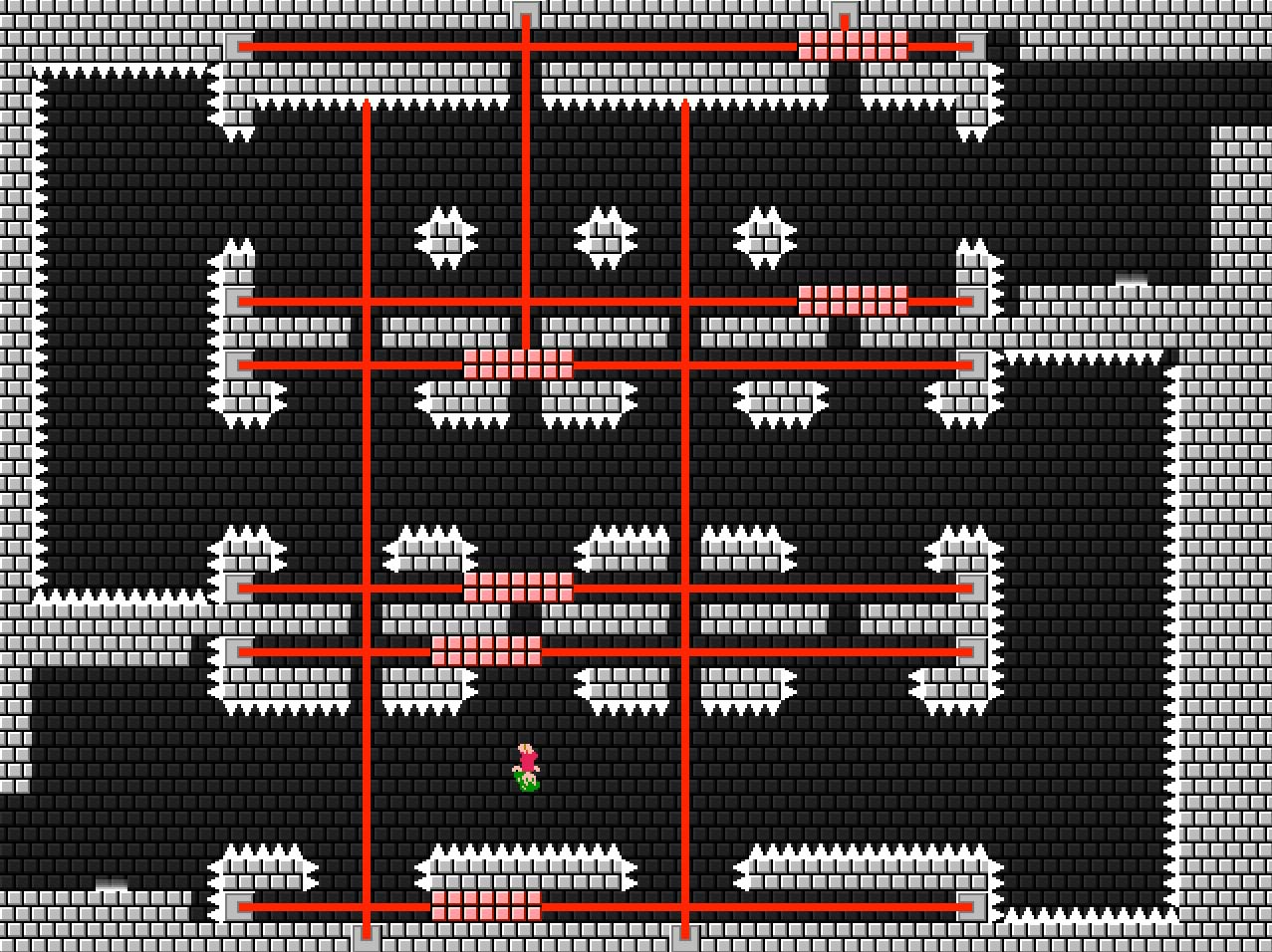
These masocore challenges – and the effort required to overcome your initial apprehensions at seemingly insurmountable platforming arcs – traditionally serve as a meditation on a rhythmic cycle of failing, observing one’s mistakes and mental lapses, and returning to the breach. With Love Eternal, however, brutality in platforming is the scaffolding for Toby, the game’s principal programmer and designer, to hang the quiet terror of the game’s narrative dressing.
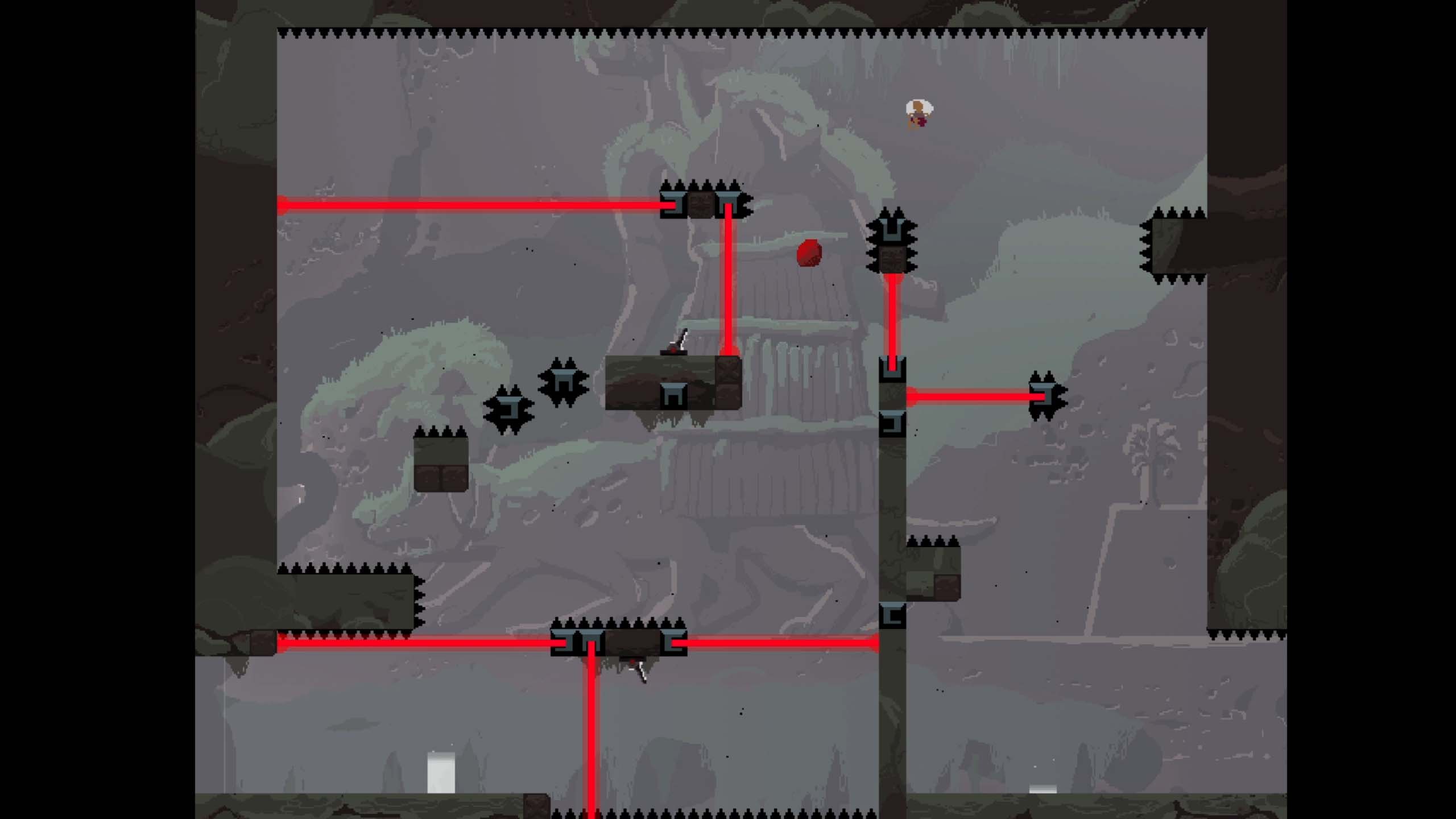
Love Eternal’s influences gel together with considered curation – yet it’s also accurate to say, “These are just the movies and TV that Toby was watching at the time of development!” Either way you see it, the influences that run in Love Eternal’s blood include significant works from the esoteric works of Kiyoshi Kurosawa, particularly “Pulse” (2001); the fever dreams of “Twin Peaks” season 3 and “Paprika” (alongside all of Satoshi Kon’s other animated movies); and the inimitable 1998 anime “Serial Experiments Lain”.
The common thread is how these pieces of media parlay psychological horror, even though horror wouldn’t be considered each work’s principal genre. As it appeared to Toby, psychological horror was seemingly underrepresented in precision platforming, and they decided to use horror to express the narrative in deeply uncanny ways.
Toby has described the essence of the Love Eternal experience as the feeling that one gets after experiencing a nightmare that, when described to another person, that other person would not find immediately apparent as to what was scary about the nightmare, even though one’s direct participatory experience of the nightmare is charged with a curdling unease.
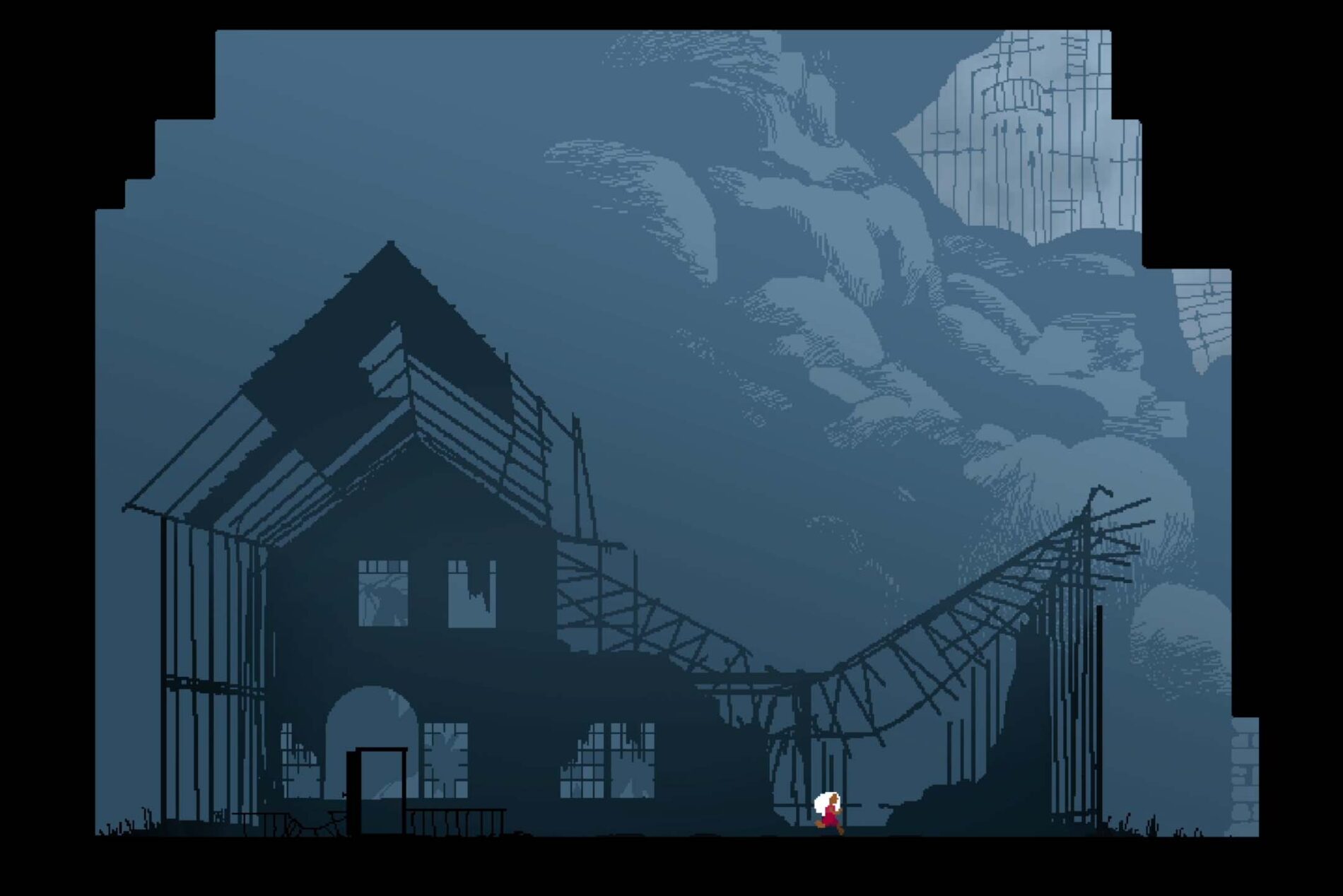
To my eye, having seen the Aldens repeatedly discuss their development journey, the themes of Love Eternal have emerged organically during development, rather than being explicitly designed into the game. For example, the theme of isolation stands out through the visual design and structural composition, with the cavernous environments of the god’s castle imposing upon the miniscule Maya who is comparatively only a few pixels tall.
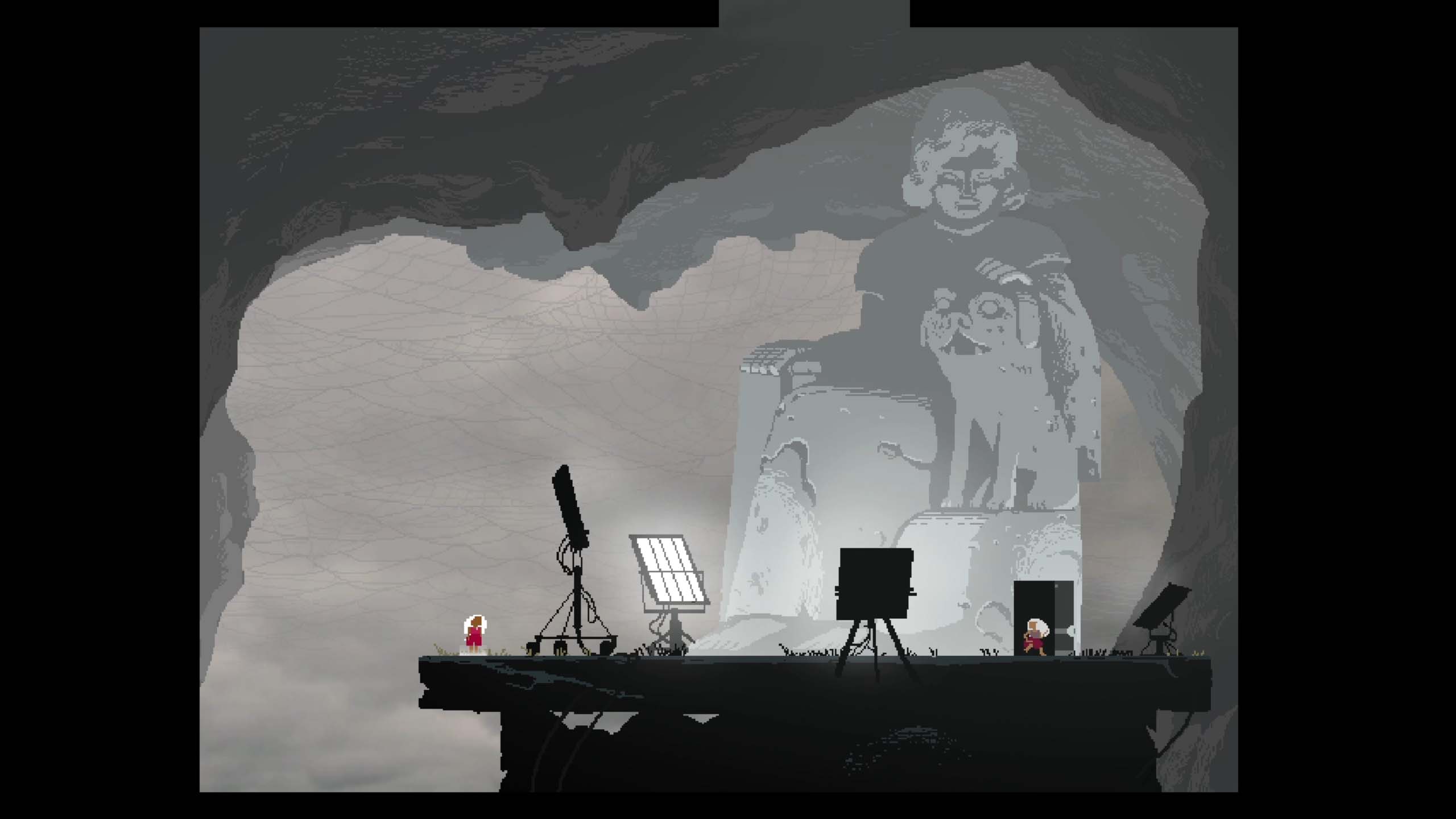
The juxtaposition of Maya – who is still a child – and her isolation in the vast castle ruins viscerally convey how children often lack physical and mental autonomy, and must submit to the whims and mercies of higher powers, parents or otherwise. Taken from the view of an adult – and likely worsened if a player has the experience of parenthood – Love Eternal’s lens of childhood is abstractly horrific.
There’s horror even in the experience of a child learning to inhabit and occupy their own body as it grows and contorts in unexpected ways, though that horror isn’t explicitly violent. Even simple experiences like losing your baby teeth as new ones push out, or the awkwardness of reconciling with the image of one’s rapidly morphing body during puberty can be strange and unnerving markers of growing up.
Such is the flavor of unusual, lightly grotesque expression of body horror conveyed by Love Eternal’s gorgeously expressive pixel aesthetic and animation. This is all crafted by Sam, a professional animator and artist whose experience spans across work like the aforementioned Love to well-known franchises like “Adventure Time”.
Through character animation, Sam pushes how characters’ bodies can be depicted in pixel art, forming a sense of the uncanny with his subtle explorations of how even mundane things might move and writhe. As an example, not too far into Love Eternal’s introductory stages, Maya will come face to face with a distorted version of her father with freakishly elongated limbs, and even in the confines of pixel art, watching this man creep around like a spider (and not like your friendly neighborhood Spider-Man) tended to raise some hairs amongst those who’ve already experienced the demo of Love Eternal.
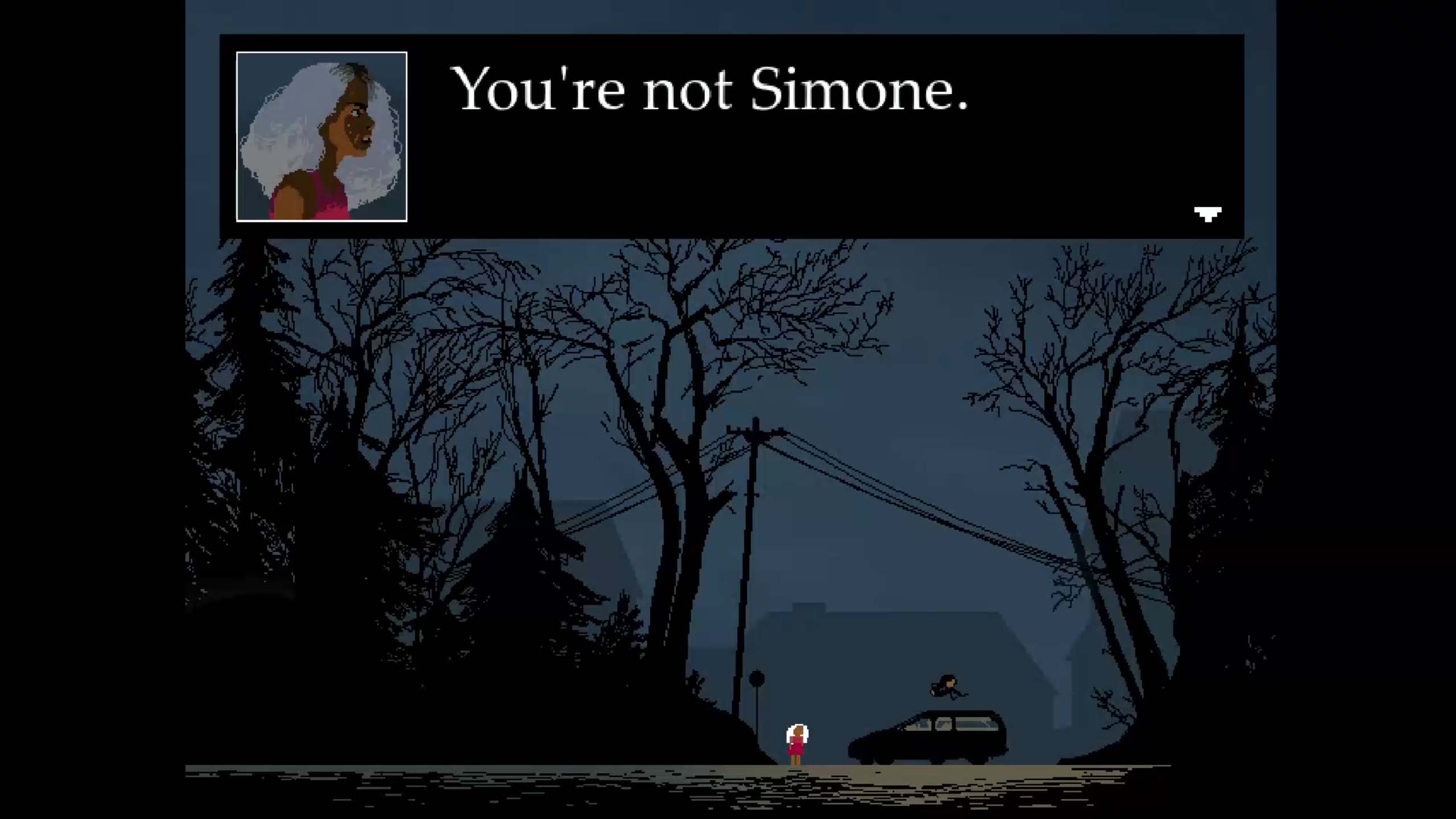
This uncanny aesthetic dovetails into Love Eternal’s mechanical and narrative pillars for an experience that careens from somber, melancholic and ominous to bizarre, spine-chilling and occasionally unhinged. Ultimately, the team at brlka and I are confident that just about no one will be able to predict the ways in which the experience of Love Eternal unfurls its twisted tendrils.
We’re excited for players to gear up for the unrelenting challenges and eerie narrative of Love Eternal, now that the game’s out on Xbox One today!

LOVE ETERNAL
Ysbryd Games
$9.99
$8.49
Wander a castle built of bitter memories in LOVE ETERNAL, a psychological horror platformer with devious trials and an unsettling, experimental narrative.
Run, jump, and reverse the flow of gravity itself to escape the mind of a selfish god in this challenging precision platformer. Play as Maya, a child stolen from her family on the whim of a lonely, forsaken deity, and make your way through over 100 screens filled with spikes, lasers, switches, and traps as you unravel the horrifying secret of your new prison.
Will you find your way home, or wander these halls carved of memory forever?