dailynewsnblog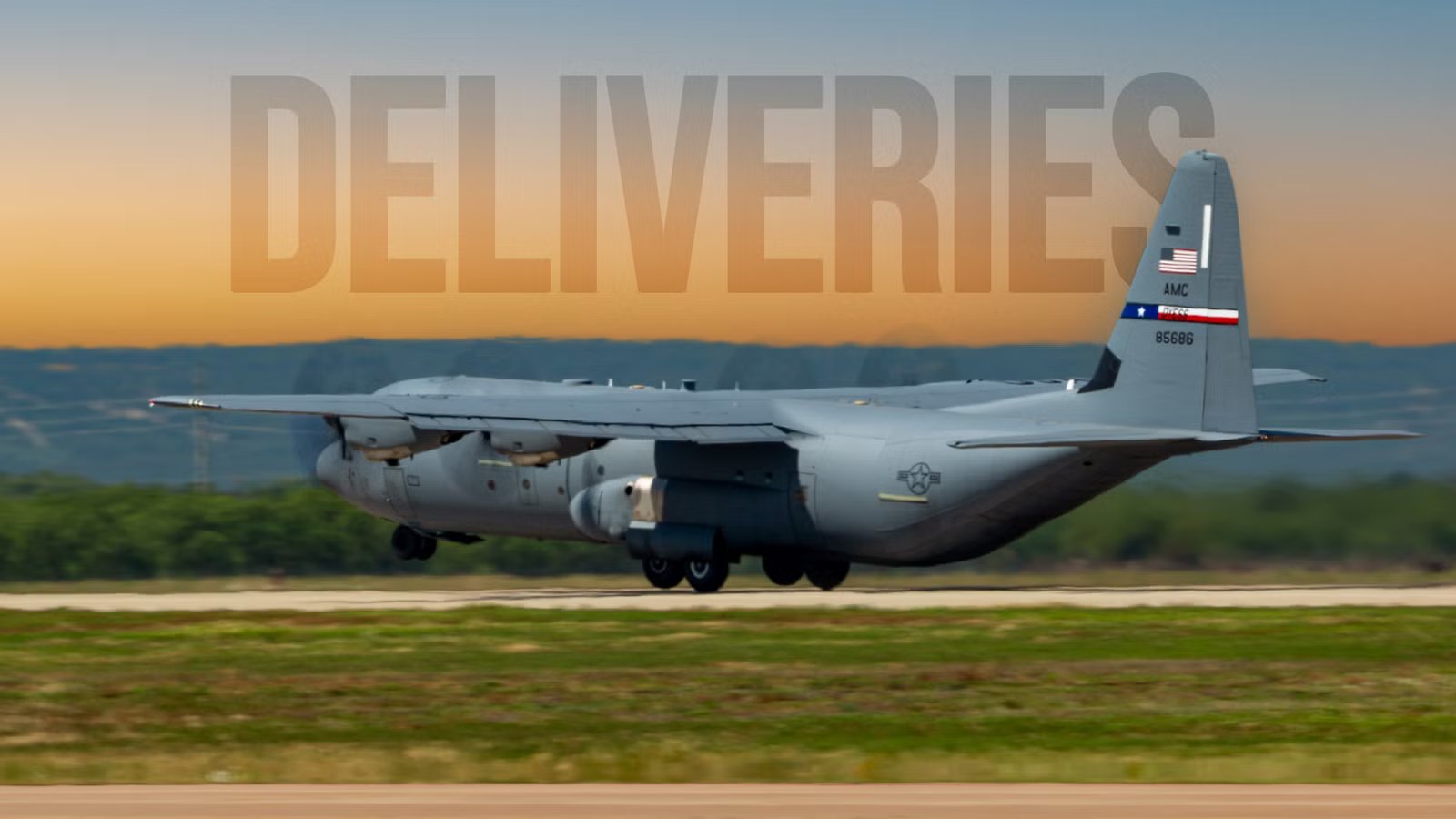
A technical hiccup with the new communications suite in the Lockheed Martin C-130J Super Hercules has brought the assembly line grinding to a halt. Lockheed Martin (LM) estimates the setback will cost the company around $140 million. Production will continue, and aircraft will be stored until issues are resolved with the problematic systems. LM anticipates delivering as many as two dozen to the United States Air Force this year despite the delay.
Introduced in 2025 as an update to legacy components, testing of the new communication system revealed that there were compatibility issues requiring additional refinement. At least 154 of the total orders for 202 of the newest iteration of the tactical airlifter have already been delivered. The USAF has also received over 110 specialized variants based on the ‘J’ airframe, as released in a 2025 equipment report by Air & Space Forces magazine.
Recapitalizing The Fleet

Lockheed Martin only delivered two C-130J aircraft in 2025, with zero arriving in the last quarter of the year. This has put the brakes on a major modernization effort within the US Air Force. So far, some units have had their deliveries slide to the right by 6 months, which will require continued investment in older aircraft and keep force readiness levels lower than they would be with the new planes.
The legacy C-130H platform, which comprises the backbone of the US Air Force tactical airlift fleet, was first introduced in 1974, two decades after the very first Hercules debuted, and they are beginning to show their age. These aircraft have been crucial to not only the United States but a number of Allied Nations around the world, which also rely on the ‘H’ model as their primary transport aircraft. The C-130J revitalizes the core mission of a large force within the USAF.
Despite the halt, the USAF remains committed to the new platform. The 2026 budget includes $976 million to procure six additional C-130Js for the Air National Guard. Importantly, the C-130J is slated to take over the TACAMO mission, which is essential for maintaining secure communications with nuclear ballistic missile submarines. Delays in certifying the new communications suite directly affect the timeline for this high-priority national security role.
Hercules On The Battlefield

The C-130J is central to the Agile Combat Employment (ACE) concept, which focuses on dispersing forces to austere, remote locations to avoid being targeted at major bases. In the USAF’s Air Mobility Command (AMC), the C-130J Super Hercules serves as the workhorse tactical airlifter, bridging the gap between large-scale strategic delivery and frontline combat support. It is the central pillar of modern expeditionary operations due to its ability to operate where larger jets cannot.
The US Air Force airlift wings can use the Herk to set up decentralized command and control centers in contested environments for all of the US Armed Forces’ service branches. These aircraft can sustain dispersed appointment of planes, like the LM F-35 Lightning II and the forthcoming Northrop Grumman B-21 Raider stealth bomber. C-130s can also support ground forces deploying systems like the HIMARS rocket artillery for rapid ‘shoot-and-scoot’ missions, by delivering fuel, ammunition, and even entire units to rough dirt strips.
While strategic airlifters like the C-5 and C-17 move cargo between continents, the C-130J handles the ‘last tactical mile.’ Using the Container Delivery System (CDS), it can drop up to 42,000 pounds of supplies with high accuracy into hostile areas. The C-130J’s design also allows it to be rapidly reconfigured for diverse AMC roles. It can be outfitted with 74 to 97 litters to transport wounded personnel. Upgrades include Starshield satellite connectivity, turning the aircraft into a flying Wi-Fi hub that provides real-time data to ground commanders.
Redefining Airlift With The C-130J

The C-130J Super Hercules expands existing mission sets and introduces entirely new capabilities that were impossible for the C-130H to perform effectively, primarily thanks to its digital systems, performance upgrades, and roll-on-roll-off (RORO) modularity. While both the legacy and new models have special ops variants, the AC-130J ‘Ghostrider’ expands the gunship mission into the precision-guided era. New sensors also transform the ‘J’ into a cutting-edge ISR (Intelligence, Surveillance, and Reconnaissance) platform.
A major new expansion for the E-130J Phoenix II is the TACAMO (Take Charge and Move Out) mission. It will replace the Navy’s aging fleet of 16 Boeing 707-based ‘doomsday’ E-6B Mercury aircraft, which have been in service for over 30 years. Notably, the original TACAMO was the EC-130Q, from 1963 to 1993. The transition is expected to begin in 2028, with the E-6B fleet fully retiring by the early 2030s.
The HC-130J variant provides a 40% jump in range over the HC-130H. It can stay airborne longer to locate targets in vast ocean areas and features integrated defensive systems for rescue operations in contested coastal zones. AMC has begun experimenting with external fuel tanks on C-130Js, adding roughly four hours of flight time to reach isolated islands without the need to perform midair refueling.

How Many C-130 Hercules Aircraft Were Built?
Over 2,700 C-130-family aircraft have so far been produced, with production expected to run into the 2030s.
The Herk Gets Smart

The C-130J Super Herk brings a host of upgrades to the classic tactical airlifter, which first debuted in 1954. New engines from Rolls-Royce have boosted top speed, range, payload, service ceiling, and performance across the board. The latest version of the plane is not 15% faster, but it can fly almost twice as far on a single tank with nearly 20% more cargo in weight.
The block 8.1 upgrade introduces link- 16 tactical data networking that provides secure, real-time, encrypted mission data sharing between all US service branch forces as well as partner nations equipped with the system. The latest version of the Hercules also adds civilian-certified GPS and ADS-B to integrate with modern air traffic management in US airspace.
|
Specification |
C-130H (Legacy) |
C-130J Super Hercules |
|---|---|---|
|
Engines |
Allison T56-A-15 |
Rolls-Royce AE 2100D3 |
|
Propellers |
4-bladed Aluminum |
6-bladed Composite |
|
Maximum Speed |
366 miles per hour |
417 miles per hour |
|
Maximum Range |
1,200 miles (1,931 km) (maximum payload) |
2,000+ miles (3,218+ km) (maximum payload) |
|
Service Ceiling |
23,000 feet (7,010 m) (with payload) |
28,000 feet (8,534 m) (with payload) |
|
Cargo Capacity |
6 Pallets |
8 Pallets (C-130J-30 variant) |
The aircraft can operate from 2,000-foot dirt strips and has a maximum payload of 42,000 pounds. Four Rolls-Royce AE 2100D3 turboprops, providing approximately 4,700 shaft horsepower each. Six-bladed Dowty R391 all-composite propellers with Full-Authority Digital Electronic Control (FADEC), improving fuel efficiency by 15%.
The digital systems and improved engines lower operating and support costs significantly compared to the high-maintenance C-130H. In the cockpit, there are four multifunctional digital displays as well as a dual heads-up display (HUD) giving the crew a truly state-of-the-art flying experience. The new system includes a digital moving nap display with Night Vision Imaging (NVIS) capability as well.

How Many Variants Of The C-130 Hercules Are There?
A mighty airlifter that forged a new era for the US armed forces- the C-130 Hercules, how many variants of the enduring icon have arisen over the year
Improving The Fundamentals

For the core tactical airlift mission of the USAF’s Hercules fleet, the C-130J Super Hercules provides several mission-critical enhancements over the C-130H, like superior ‘high and hot’ performance, increased survivability, and modernized cargo handling. Performance enhancements give the ‘J’ a 40% better payload and range than its predecessor in desert conditions.
Upgraded Mission Computers (MC) and common software enable more precise airdrops as well as reduced crew task saturation in the most intense phases of flight. It is also less vulnerable to portable anti-aircraft weapons (MANPADS) thanks to a faster climb-out rate and a higher cruising altitude, plus quieter engines and reduced thermal signature. The C-130J-30 variant can carry 33% more pallets and 31% more paratroopers than the legacy H-model.
Automation allows a three-person crew, two pilots and one loadmaster, to complete missions that previously required five members on the C-130H. A redesigned cargo handling system with flip rollers that rotate from the floor for easier movement of heavy loads, replacing the manual, side-stored rollers of the C-130H. Some are even equipped with high-speed satellite internet for real-time video transmission and mission updates that were previously limited to text or satellite phones.

What Are The Lockheed Martin C-130 Hercules’ Roles In The US Military?
An in-depth look at the versatile backbone of US military operations
Master Of The Night

A number of the upgrades included with the C-130J are focused on night operations. The aircraft has a new formation strip lighting on the exterior that was not seen on the C- 130H. This lighting system is compatible with night vision systems that allow for better formation flying as well as deconfliction in congested Drop Zones or other complex airspace near the front line.
Some of the new Herks are equipped with an MX20 camera system capable of capturing both color and infrared (IR) imagery. The WESCAM MX-20 is a high-altitude, long-range imaging and targeting turret produced by L3Harris. It can be fitted to standard C-130J aircraft for search-and-rescue or ISR missions, and it is a core component of the AC-130J Ghostrider’s Precision Strike Package.
It includes HD thermal (Infrared), daylight, and low-light cameras for 24/7 ISR. The 5-axis gimbal turret can support up to seven sensors simultaneously, allowing crews to switch between different views without losing track of a target. In addition to maintaining study images during aggressive maneuvers, it provides over 400-times magnification for the electro-optical (EO) sensor. Meanwhile, it can deliver 75-times zoom for the infrared (IR) sensor, enabling identification of subjects from over 12 miles (20 km) away.