dailynewsnblog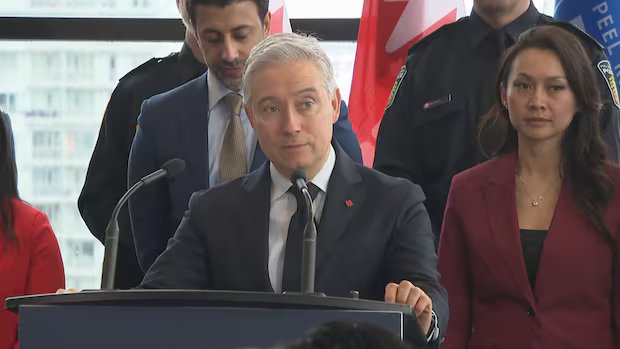

Listen to this article
Estimated 2 minutes
The audio version of this article is generated by AI-based technology. Mispronunciations can occur. We are working with our partners to continually review and improve the results.
The federal finance minister visited Mississauga, Ont., Thursday to announce dedicated financial intelligence experts who will focus on extortion crime targeting Canadian businesses and households.
The move comes as Brampton and Caledon, Ont., mayors called on the federal government to help create a multi-jurisdictional strategy to combat what they say are rising extortion threats towards businesses in their cities, particularly South Asian ones.
It also follows a pair of summits in Brampton and Surrey, B.C., to hear about how threats of violence are affecting communities.
The strategy is to “follow the money,” François-Philippe Champagne said at a news conference Thursday, joined by other federal ministers, Mississauga’s mayor, Peel Regional Police and the RCMP.
“Our message to criminals is both powerful and simple: Enough is enough,” he said.
“We’re going to make their life miserable.”
The country’s Financial Transactions and Reports Analysis Centre of Canada (FINTRAC) will work closely with local law enforcement and prioritize receiving more timely and relevant financial intelligence to identify criminal networks and support investigations, Champagne said.
In a news release Thursday, the government also announced the launch of a partnership between FINTRAC and Canadian banks, credit unions and financial service providers, including cryptocurrencies, to enhance information sharing and provide clear guidance on how to detect extortion transactions.
FINTRAC will also be publishing intelligence on how criminals launder proceeds, the news release said.
According to Peel Regional Police, a total of 476 extortion crimes were reported in Peel Region last year. There have been at least 41 incidents of extortion in Caledon since December 2023 that appear to share a similar pattern, according to Ontario Provincial Police.
Generally, victims would receive calls and messages threatening violence unless victims pay a ransom, with the perpetrators often knowing where they live or work, the police force said in a release detailing the issue.