dailynewsnblog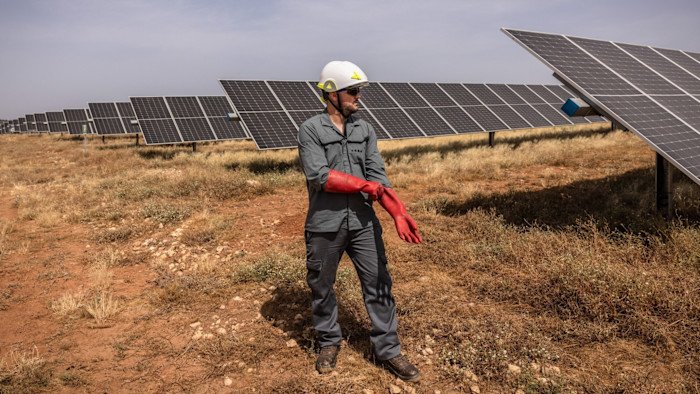
Unlock the Editor’s Digest for free
Roula Khalaf, Editor of the FT, selects her favourite stories in this weekly newsletter.
Once it takes hold a derisive nickname can be hard to shift. But Europe’s “periphery” economies have rebranded impressively. The disparaging acronym “PIIGS” — covering Portugal, Ireland, Italy, Greece and Spain — was once synonymous with these nations’ fiscal difficulties, high unemployment and political instability. Yet over a decade and a half since the European sovereign debt crisis that spawned the label, they have transformed into the continent’s brighter spots.
After the global financial crisis triggered a surge in indebtedness across many southern European nations, the IMF, European Central Bank and European Commission stepped in with conditional financial assistance. Painful austerity measures followed. But this has now matured into more prudent fiscal administration. Public debt to GDP ratios are mostly on a downward trajectory, and bond yields have now converged with the Eurozone’s largest economies. Greece, Portugal, Ireland and Italy are forecast to run notable primary budget surpluses this year. In contrast, France’s debt ratio is on a worrying upward path.
Labour market reforms have paid off too. Amid high joblessness, Europe’s peripheral economies enacted policies to boost skills development, and reduce long-term unemployment and precarious work. At the height of the crisis, Spain and Greece had jobless rates above 25 per cent. These have now more than halved. Finland, typically associated with lower Nordic unemployment levels, now has the highest rate in the EU. And as northern European nations struggle with skills shortages, Spain and Italy have implemented measures to attract foreign workers.

The once laggard economies are also now among the most dynamic. The Iberian peninsula economies and Greece are projected to grow faster than the EU as a whole this year and next. The return of tourism post-pandemic has helped, but these economies are also diversifying. Spain’s resurgence has been propelled by immigration and a rising specialism in renewable energy. Ireland’s growth rate, which is often erratic given the accounting activities of multinationals that locate there for tax purposes, is underpinned by tech, pharmaceutical and life science activity. Last year, benchmark stock market indices in Spain and Italy also outpaced the gains in France and Germany.
Economic outperformance has translated into political stability and clout. Italian Prime Minister Giorgia Meloni has outlasted several counterparts in France. In December, Greek finance minister Kyriakos Pierrakakis was elected president of the Eurogroup, which helps to co-ordinate Eurozone policy.
Still, the periphery’s progress should not create complacency. Living standards continue to lag behind the north. Significant improvements in productivity are needed, particularly given southern Europe’s rapidly ageing populations. Political problems also remain. Spain hasn’t been able to pass a budget since 2023.
In theory, economic convergence is expected in an integrated trading bloc over time. The debt crisis era of the early 2010s might then be seen as an aberration. Indeed, the range of bond yields and unemployment rates across the bloc was relatively narrow before the GFC. Grants and loans from the EU’s recovery and resilience facility have also propped up southern European economies and helped propel reforms, though there have been concerns about how efficiently the funds have been deployed.
Nonetheless, these countries should be lauded for their resurgence. They demonstrate that a dose of fiscal discipline and disruptive reforms, painful as they may be, can deliver long-run gains in the form of higher growth and more fiscal wriggle room. Making difficult economic trade-offs has its rewards. Governments in the “core” could learn a thing or two from their renewal.