dailynewsnblog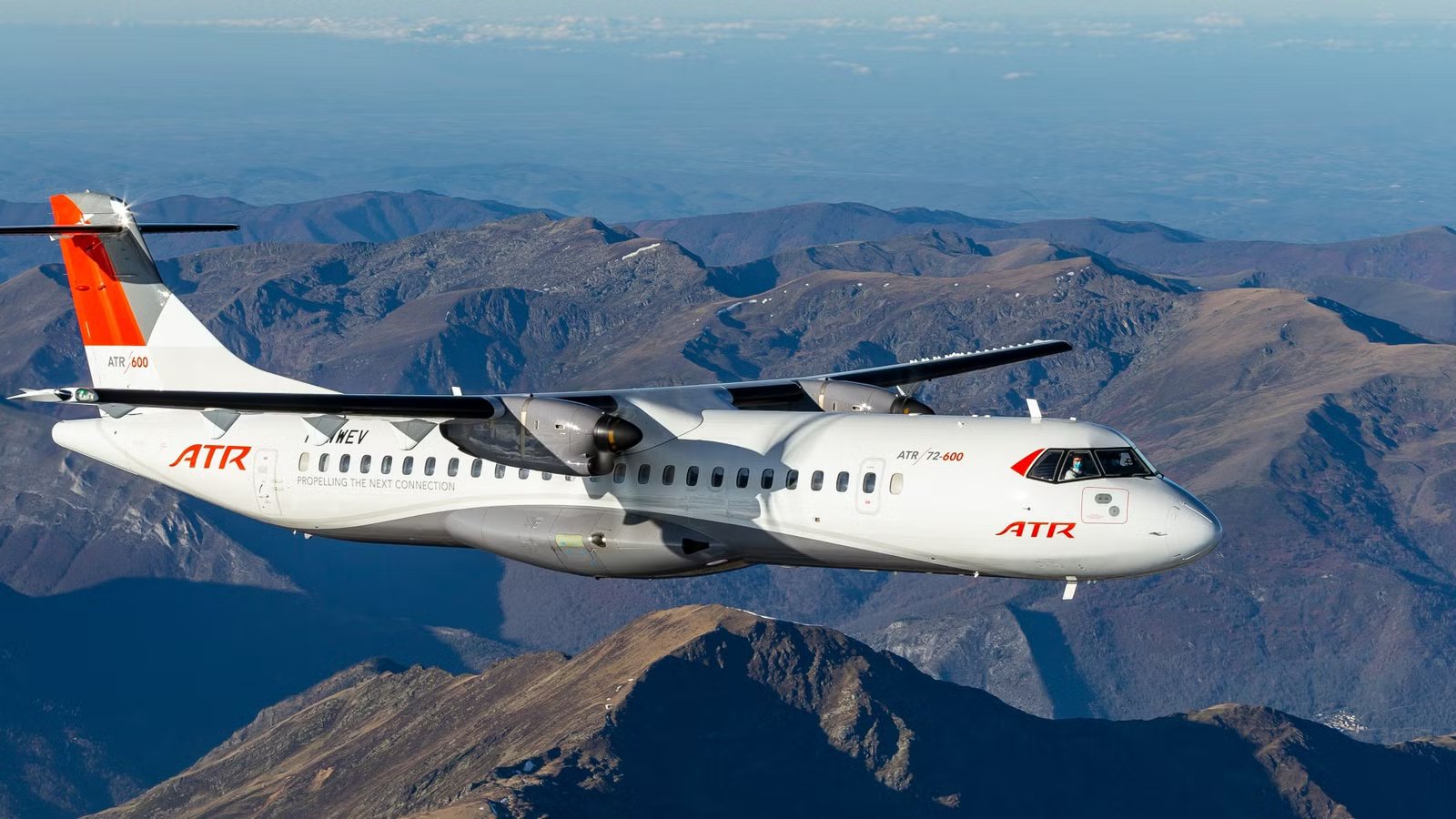
Franco-Italian regional aircraft manufacturer  ATR (Avions de Transport Régional/Aerei da Trasporto Regionale) has shared its 2025 full-year results with the world, showing that last year was a mixed bag in terms of orders and deliveries. Indeed, while the planemaker achieved what it called a “solid order intake,” its delivery rates tracked lower than expected. However, with a big ramp-up planned, 2026 looks like being a better year.
Looking further into the future, one market that ATR is eyeing for expansion is the United States of America, where it believes its twin-turboprop regional aircraft will offer a compelling alternative option as carriers begin to retire their smaller jets. Let’s take a closer look at ATR’s American ambitions, and how it is looking to build on its mixed 2025 results with more solid performance in 2026 and, indeed, the years beyond.
ATR’s American Dream

Speaking at yesterday’s full-year results presentation, attended by Simple Flying’s Managing Editor Tom Boon, Natalie Tarnaud Laude, the firm’s CEO, highlighted the fact that 2025 saw it take an important step into the US market in the form of JSX’s order for 15 ATR 42-600s. According to ATR, JSX began operating these aircraft last month, and, now, the planemaker hopes to use this as the start of a bigger regional aircraft revolution in the US.
On this front, Natalie Tarnaud Laude explained that “in recent years, about 30% of routes below 500 nautical miles have disappeared in the US,” with ATR hoping that its aircraft can serve as the optimal choice to plug this gap. The ATR CEO went on to explain that “we are a relevant aircraft [manufacturer] for that, and, in this respect, I have a lot of ambition in the US, and this deal proved that we can start to be successful,” adding that:
“In the next 10 years, there will be about 300 regional jet 50-seaters who could retire. This is an area where we believe that an ATR would make perfect sense. 500 nautical miles is the range where ATRs bring the maximum economic benefits, as well as the maximum CO2 emissions reduction benefits.”
Diving Deeper
At face value, ATR’s sentiments could seem somewhat contradictory. After all, if 500 nautical miles is the perfect range for its aircraft, and such routes have disappeared in the US at a rate of 30% in the last decade, this would seemingly indicate that this market won’t be a good fit for its planes. However, Alexis Vidal, ATR’s Commercial Senior Vice President, explained how this dichotomy works. Responding to a question from Simple Flying’s Tom Boon at yesterday’s press conference, he said that:
“Gauging from turboprops to regional jets that are much less efficient on short trips has basically commanded the airline industry to eliminate routes, one after the other, that are either thin or short. We believe, and I don’t think that it’s just ATR that is saying so, that that shift from turboprops to regional jets has destroyed regional connectivity in many countries, and the US in particular.”
As such, the Franco-Italian aircraft manufacturer is of the conviction that, if it can penetrate the US market, it will be able to foster growth in regional connectivity, resulting in sustained American demand for its aircraft. Concluding with a sense of optimism, Vidal added that “by adding more efficient aircraft, we can recreate that direct connectivity,” citing Santa Monica to Las Vegas as an ideal case study.

Could Turboprops Make A Comeback In US Airline Service? ATR Thinks So
ATR has a bold plan to revitalize regional air travel in the US.
A Strong Year

After a solid 2025, ATR certainly has a strong foundation on which to base its American dream. The firm secured 60 gross orders last year, with a net total of 50 when accounting for cancellations, of which 35 came from just two two-figure deals. These saw Air Algerie and UNI Air respectively commit to 16 and 19 examples of the ATR 72-600, bringing the firm’s total order backlog to more than 160 planes.
Away from JSX and the US, ATR also achieved a key Canadian milestone, when it delivered the country’s first example of the ATR 72-600 to Rise Air. Second-hand demand for its planes also remained strong in 2025, with more than 90 transactions of this nature taking place last year.