dailynewsnblog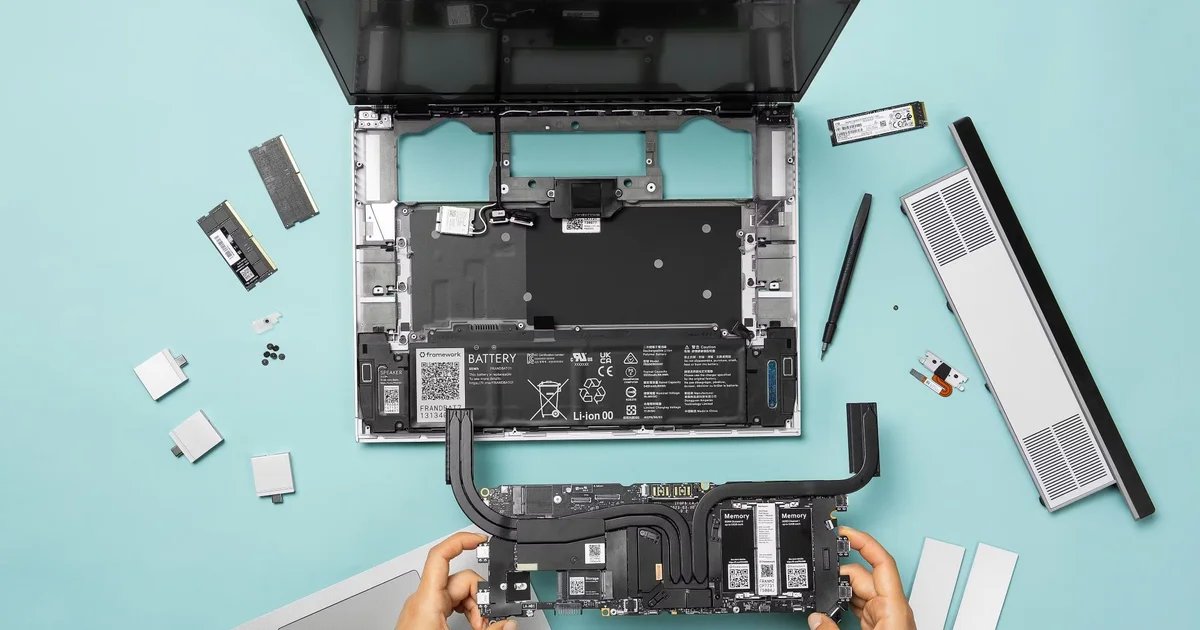
Far from ushering in a technological golden age, artificial intelligence is giving PC hardware its most trying time in years. As huge, hyper-rich tech companies go about building resource-intensive AI data centres in pursuit of future wealth, the resulting memory chip shortages have detonated consumer-level pricing for RAM modules, graphics cards, SSDs, and even ancient hard drives.
Doubling or tripling street-level outlays without harming sales would, you’d think, make a lot of gaming gear makers – especially their accounting departments – very happy indeed. But as those chips have become a scarce commodity at the supplier level, even the bigger hardware businesses are being squeezed as well, and it shows. Razer can’t decide how much their next laptops should cost. Valve are running out of Steam Deck stock and delaying the new Steam Machine. Zotac Korea called the RAM shortage an existential threat. But what of the industry’s smaller players – those producers of the niche, the quirky, the retro?
At face value, you might expect these to have succumbed to RAM malnutrition before anyone. As they tell it, however, strategy and circumstance are allowing gaming’s specialist manufacturers to endure the worst – if they’re even affected at all.

One ‘tactic’ has proven successful, effectively, by accident: just use less RAM. Released to gushing reviews late last year, just as memory shortages began to bite, the Commodore 64 Ultimate is a modernised but functionally faithful tribute to the computer-defining 1982 original, designed and built by a resurrected Commodore themselves. Chief technology officer Marc Bilodeau credits the Ultimate’s relatively meagre RAM specs, just 128MB of ye olde DDR2, for it never having been trampled in the industry’s rush to snap up DDR4 and DDR5 modules.
“Our choice of DDR2 instead of DDR5 really means we haven’t been impacted that much, from the hardware manufacturing perspective,” he explains to me. “Although this RAM shortage absolutely weighs into our decision on future designs and projects… we don’t want to compromise on design at all. But at the same time, we have to be very strategic and remain cost effective for our products, from consumers’ perspectives. So we’re watching this very closely, but at the moment, we’re not seeing the pinch as other manufacturers are.
“This is something we’re watching on a daily basis, because it is very unfortunate, in my opinion, what’s happening out there. I mean, I want to upgrade my PC, and I’m watching those prices and hold them back because of it.”
Another low-RAM device to have escaped supply pain is Panic’s wind-up handheld, the Playdate. While not as intentionally retro-styled as the C64 Ultimate, the Playdate’s chip hunger is even easier to sate: its 4GB of Flash storage is joined by a microscopic 16MB of integrated RAM. Its only recent price bump came in March 2025, well before the current crisis, and was blamed on the move to a new factory rather than individual part costs.

“Getting only 16MB of RAM per unit is not that difficult because it’s such a small number,” says Panic’s external PR rep Jurge Cruz-Alvarez. “Manufacturing Playdate is always a fun adventure – getting other parts in the past, like the CPU, was an issue back when there was a chip shortage – and working with the correct factory willing to work with Panic have been past problems they’ve had to solve, but RAM has thankfully not been one of them.”
For manufacturers who do need to deal in modern, more capacious RAM and storage specs, being a little fish in a big, panicking pond can still have its advantages. Framework specialise in modular, highly customisable (and repairable) laptops, and recently launched their first model capable of high-end gaming: the Framework Laptop 16, which can be kitted out with Nvidia’s upper-mid-range RTX 5070 GPU. That’s not a cheap component, and nor are the DDR5 memory options it offers, but company founder Nirav Patel reckons that Framework benefit from a sort of reverse economy of scale: because they only need in-demand parts in small numbers, their own costs are lower, and the modular approach lets them offer cut-price laptops with no included RAM at all.

“We’re in kind of a unique position. We’re not at a scale where we have these giant, long-term memory contract buys with the big players,” he says. “But we’re also big enough, and credible enough, that we have direct contact with all the key players we need to. So as a company, we’re in a uniquely, almost advantaged spot in some ways, where at our volume we can go out into things like spot markets and buy chunks of memory that for a Dell, or HP, or Lenovo, or Apple would look at and say ‘Well, that’s a rounding error. We’re not even gonna bother with that.’ So we get to stay in production.
“The other part of it is that, because of our model of modularity and upgradeability for our laptops, the memory is all socketed. It’s all it’s all removable and upgradable, and we actually sell a configuration of our laptops, our DIY editions, without memory or storage pre-installed. So that means for consumers, they have a lot of flexibility, even in a world where, for whatever reason, we can’t get access to a certain memory capacity or storage capacity, for example. Or we’re getting access to it at a price that is higher than we would like it to be, or consumers would like it to be. Consumers can actually go out into the open market, even jumping onto eBay and seeing, ‘Okay, what’s out there, what’s available.’ Then pick up the memory that they can at the price that they can, and bring it on their own and drop it into the system.”
Shopping around for better RAM prices is also something Framework do themselves. Patel adds that “Creativity and flexibility, I think, is the key. It really does go back to scale – we’re in this very interesting middle ground where we can do things that the bigger players can’t, but we have access that the smaller players don’t have, and so we get to be creative in how we source. Our supply chain team is incredibly capable, and has ears on the ground everywhere to make sure that we’re able to continue getting the supply we need to keep our products available.”
For some, however, these manoeuvres are about mitigation rather than avoidance. Shortage woes have still struck independent hardware firms, and struck acutely: the Pi Foundation, creators of the palm-sized Raspberry Pi computers that have powered everything from retail signage to wire-strewn DIY projects, have bumped prices up twice in the past three months. While the Pi Foundation did not respond to a request for comment in this piece, on both occasions, the give cause was memory costs. Framework, too, have raised prices across their range. A repeatedly updated blog post by Patel is a grim journal of these hikes, which encompass memory modules, storage drives and motherboards. For Patel, though, these posts – which have also covered the chip shortage more generally – are intended as informative PSAs.
“One thing we’ve done that is, I think, a bit different for most other companies, is that we’ve been pretty transparent about it,” he says of these blogs. “And every time we do that, we also post on our social channels, we post in our community, and I think especially for our customers, the types of people who are interested in Framework products, they appreciate that transparency. That’s a large extent of why they want our products to begin with.”
As unpleasant as it is to both share and receive bad news, it’s hard not to look at the candour with which Framework and the Pi Foundation announced their adjustments – often including specific prices or percentage changes – and see it as something the major manufacturers could be doing better. Plans to jack up prices or alter availability are often buried in non-public-facing sources like investor calls, if they’re even revealed at all, leaving mass-produced PCs, laptops, and components with no visible warning of an imminent bad time until they’re already been made more expensive. Or, stripped from shelves. And when a public-facing announcement is made, it might still only deal in vagueness, as did Valve’s post declaring that the Steam Machine would cost more (but we don’t know how much) and would be delayed (but we don’t know until when).

In any case, one common view among these specialist manufacturers is that RAM shortages and all their ill effects will continue unaddressed. “I don’t see the situation getting any better,” says Bilodeau. “AI is making some, I think, wonderful advances, and helping make life easier for a lot of people. But personally, I am holding off on upgrading.
“The way I look at it is there might be other opportunities to upgrade the system, maybe through the CPU, maybe even replacing your video card. And with memory, stick to the previous generation, if possible, until, you know this blows over, which I don’t believe it’s going to in a year. In fact, I think that this issue will continue through 2026 maybe even 2027. It’s just those AI companies are so hungry and expanding so quickly and making so many innovations that you know that they’re going to take those resources, and those memory companies are going to happily sell it to them first.”
Patel shares the assessment of an unstable market, though thinks it is still possible to make smart buys in the current conditions – even if he is, as he puts it, “speaking to my own book” and recommending modular hardware that can be more easily tweaked later.
“The memory market is going to continue to fluctuate. I don’t know, a year from now, what memory pricing is going to look like,” he admits. “But [I’d suggest] picking up a product where you can buy the memory you need now, for whatever use case you have today, with the ability to do that upgrade in the future when capitalism will catch up.
“Eventually the supply will meet the demand, even though – because of the lead times for standing up new capacity – that could be an extended period of time. Eventually the market will stabilize and normalize. And so my advice for consumers is to think about upgradability and think about modularity.”

PC owners are, of course, no strangers to either. But despite the opportunities for smug gurning whenever the Xbox Series X gets even more expensive, or Sony allegedly delays the PlayStation 6 for another year, we – as individual component-buyers – can’t exactly make the most of the PC’s piecemeal capabilities when a decent DDR5 kit costs £400, or half the best graphics card models are MIA.
Perhaps, that might just bring us back to low-end gaming machines like the Playdate or the Commodore 64 Ultimate. Does this breed of less graphically powerful yet far more affordable hardware have the chance to step in where modern tech is quite literally coming up short?
“That’s a tough question,” Bilodeau says, “just because we’ve gotten so used to a lot of the modern computer innovations these days that there aren’t things that we will be able to replace. But I do have to say that we allow people to take that step back and get rid of all of that outside noise and actually enjoy using computers again.”
Correction: In a spectacular piece of recording-mishearing on my part, this article previously quoted Nirav Patel as saying “for $1.” It was “For a Dell, or.” Apologies!