dailynewsnblog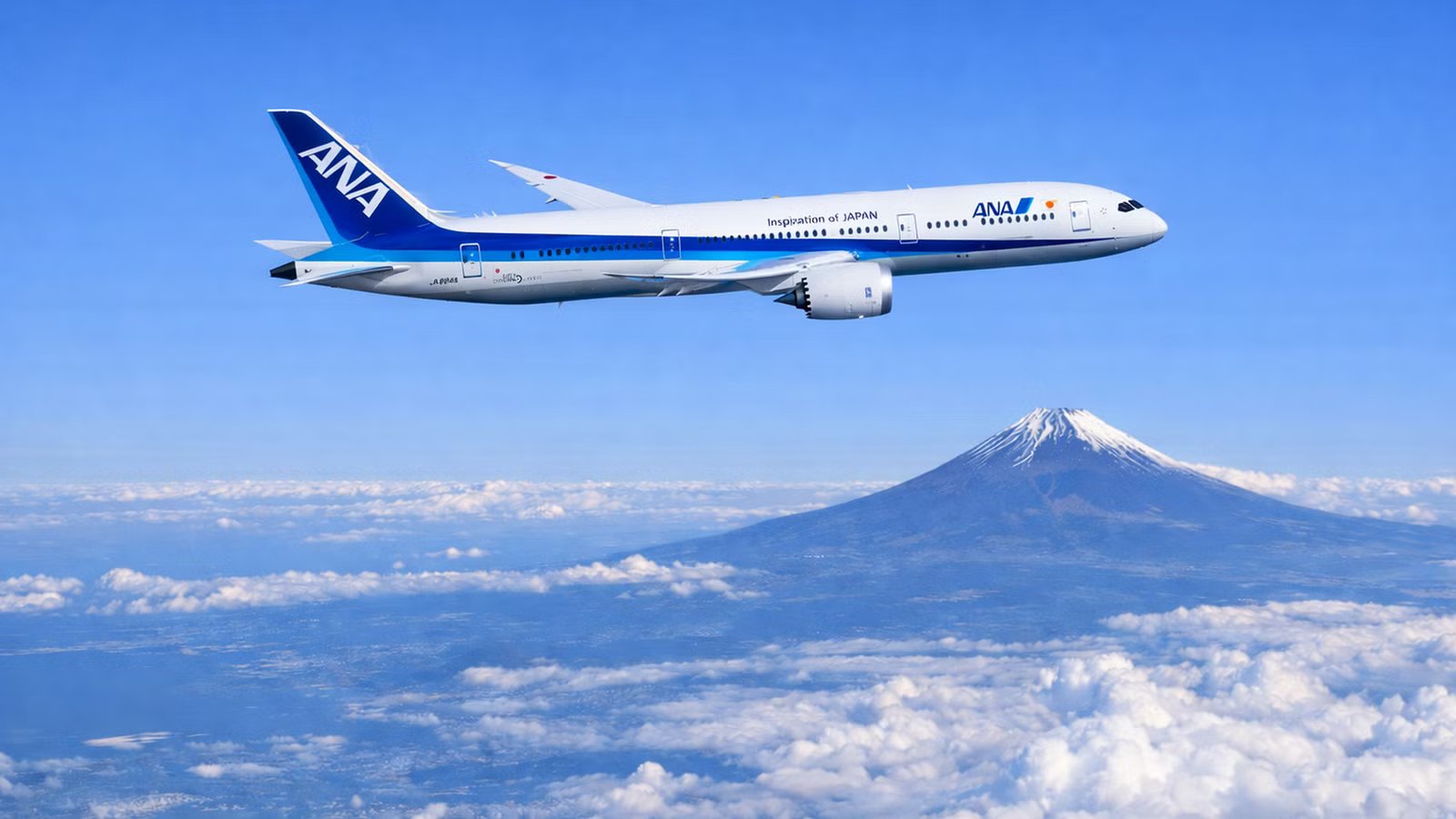
Long-haul flights are often tedious, but generally predictable. You push back, climb out, settle into the rhythm of the cabin, and half a day later, you’re landing on another continent. But yesterday on an All Nippon Airways (ANA) flight to Europe, that predictability completely unraveled over the top of the world.
ANA operates a twice-daily service from  Tokyo Haneda Airport to
  Frankfurt Airport, a distance of 5,800 miles (9,350 km) that normally takes 13–14 hours to fly. But yesterday’s first flight spent more than 14 hours in the air… only to end up right back where it started. Flight-tracking maps showed the Boeing 787-9 reaching the far north, arcing past Alaska, and then executing a dramatic U-turn that turned an already marathon journey into one of the longest “flights to nowhere” in recent memory.
The ANA Arctic Turnaround

Flight NH223 departed Tokyo Haneda late morning on February 17, bound for Frankfurt, the home base of ANA’s primary  Star Alliance partner in Europe,
  Lufthansa. But because ANA has avoided Russian airspace since 2022, the flight path isn’t the straight shot westward that most people imagine; it typically routes eastward over the Pacific, Alaska, the Arctic, and Greenland before bending down into Europe.
Roughly six hours into the flight, with the 787-9 flying off Alaska’s far north coast and out toward the Beaufort Sea, the crew made the decision to turn back. Business Insider reports that an ANA spokesperson said the diversion was triggered by a “low engine oil level” alert. That’s not jet fuel — it’s lubrication and cooling for the engine’s moving parts — and while it doesn’t require an emergency landing, it’s a warning light you don’t ignore on a flight crossing some of the most remote airspace on Earth.
So the flight turned back, and by the time the aircraft descended back into Haneda, it had been airborne for a little over 14 hours, landing just after 01:00 AM local time on February 18, according to various flight trackers. Passengers were subsequently rebooked onto a new flight departing six hours later, and ultimately made it to Frankfurt over a day and a half late. ANA issued a brief statement acknowledging the unfortunate timing, and emphasizing the reason for the decision:
“The safety of our passengers and crew is our top priority. We sincerely apologize for the inconvenience caused to our customers by this extensive delay.”
Why Choose Tokyo Instead Of An Alaska Diversion?

From a passenger’s perspective, the obvious question is, if you’re already over Alaska, why not just land there? Anchorage International Airport could physically handle a 787, and it’s certainly closer than flying eight more hours back to Japan. But dispatch decisions aren’t made based on the closest dot on the map alone, especially when the issue is serious enough to stop the trip, but not so acute that an immediate emergency landing is required.
The most critical part of the decision is where the engine maintenance can be carried out. A “low oil level” indication can demand inspection, troubleshooting, and potentially parts or specialized maintenance actions. ANA’s hub at Haneda is where the airline has the deepest bench of engineers, tooling, spare parts access, and operational flexibility. Returning to base can be the quickest way to get the aircraft airworthy again, and avoid parking a widebody somewhere that it can’t be repaired easily.
Another key consideration is what to do with the passengers. Diverting mid-route can leave hundreds of people stranded where the airline has limited or no local support. This makes passenger handling such as hotels, baggage, rebooking, and special assistance particularly difficult, not to mention costly to the airline. So while a 14-hour flight to nowhere seems onerous for passengers, the potential of being stranded for days in Alaska is far worse.
Then add to that the complication of the crew. Even if the aircraft could be swiftly repaired, crews are governed by strict flight/duty time rules. Diversions on long-haul flights typically lead to crews timing out, forcing airlines to locate and position replacement crews, a key reason why a short diversion can balloon into days of delay. If Flight NH223 had landed in Alaska late in the day, it might have faced a staffing puzzle that’s harder to solve there than at its home base.
So overall, Tokyo wasn’t chosen because it was nearer. It was chosen because it was the most operationally capable place to fix the aircraft, find a replacement 787, find a new crew, reset the schedule, and move passengers onward with the minimum of delay.

9-Hour Flight To Nowhere: British Airways 787 Flying To Mexico Turns Back After Altimeter Failure
The airline decided returning to base was the best course of action.
Other Notable Flights To Nowhere

Long-haul flights that return to origin have become a weird marker of modern aviation. Aircraft can fly farther than ever, but they’re also operating in a world of fragile networks. So if something goes wrong, especially if it is a technical issue that doesn’t require an emergency landing, they are also capable of flying a long way back home.
In this case, NH223 joins a list that includes diversions caused by airport shutdowns, technical faults, and geopolitics. Each case has its own twist, but the pattern is consistent: when something goes wrong far from home, airlines weigh where they can fix the aircraft, how they can care for passengers, and whether diverting to a nearby airport actually creates a bigger operational mess than turning back.
|
Longest “Flights To Nowhere” |
|||||
|
Year |
Airline |
Route |
Aircraft |
Flight Time |
Reason |
|
2023 |
Air New Zealand |
Auckland—New York JFK |
787-9 |
16 hours |
Turned around because of an electrical fire at its destination. |
|
2025 |
Qantas |
Perth—Paris |
787-9 |
15 hours |
Returned mid-flight after Iran launched missile strikes. |
|
2026 |
All Nippon Airways |
Tokyo—Frankfurt |
787-9 |
14 hours |
Made a U-turn due to low engine oil levels. |
|
2023 |
Emirates |
Dubai—Auckland |
A380 |
13 hours |
Turned around due to weather disruption at the destination. |
|
2024 |
British Airways |
London—Hong Kong |
777-200 |
11 hours |
Experienced technical issues mid-flight. |
And for the passengers on NH223, that calculus produced the most unsatisfying outcome possible. A 7,000-mile U-turn was followed by stepping off the aircraft in the same city they left more than half a day earlier, with the destination still an entire long-haul flight away.