dailynewsnblog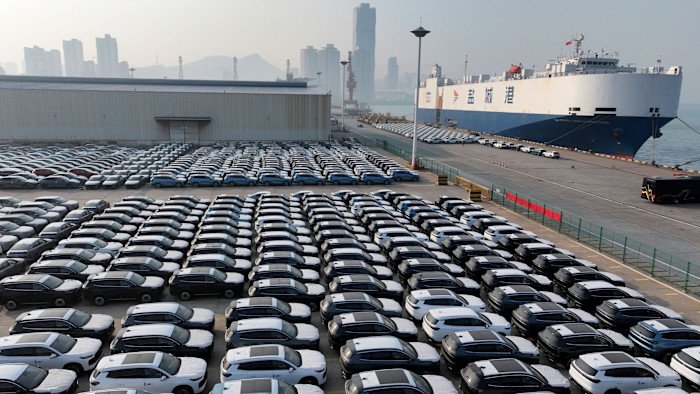
Stay informed with free updates
Simply sign up to the Chinese economy myFT Digest — delivered directly to your inbox.
The IMF has called for China to slash state support for industry in half as international concerns mount about overcapacity in the world’s second-largest economy.
The fund estimated that China spends about 4 per cent of its GDP subsidising companies in critical sectors, and said it should reduce that by 2 percentage points in the medium term.
China’s industrial policies “are giving rise to international spillovers and pressures” and have combined with weak domestic demand to make China “more reliant on manufacturing exports as a source of growth”, the fund said.
“Industrial policy has enabled tech innovation in some sectors, but overall the impact on the economy has been negative,” said Sonali Jain-Chandra, mission chief at the IMF for China and Asia Pacific, pointing to “resource misallocation” and “overspending”.
The fund has previously called on China to scale back its industrial policies but has not estimated by how much.
The recommendations in an IMF report come after China has ramped up exports of manufactured goods, including higher-value items such as EVs, which has stirred tensions with the west over its subsidies.
China’s global trade surplus in goods surpassed $1tn last year. World leaders such as France’s Emmanuel Macron have bemoaned “unbearable imbalances” in trade.

The IMF welcomed an initiative from Beijing to reduce “involution”, a term China uses to refer to excessive price competition, but said it should further “clarify its strategy”.
Policymakers in China are battling challenges including the threat of deflation, weak consumer confidence, high youth unemployment and a sustained property slowdown that shows few signs of easing.
The IMF in 2024 called on China to spend 5.5 per cent of GDP over four years to combat the property slowdown by completing unfinished housing and supporting unviable developers’ exit from the sector.
In the report published this week, it called for 5 per cent of GDP over three years from the central government. “The proposition is essentially the same,” said Thomas Helbling, IMF deputy director for Asia Pacific, who said unfinished properties and the consequences for Chinese investor confidence remained the “elephant in the room”.
“The hangover from the boom has not been addressed,” he said.
The IMF also urged China to move towards a “consumption-led growth” model for its economy. It recommended that China loosen restrictions on internal migrants’ access to social welfare, move to a more progressive taxation system and boost pensions.