dailynewsnblog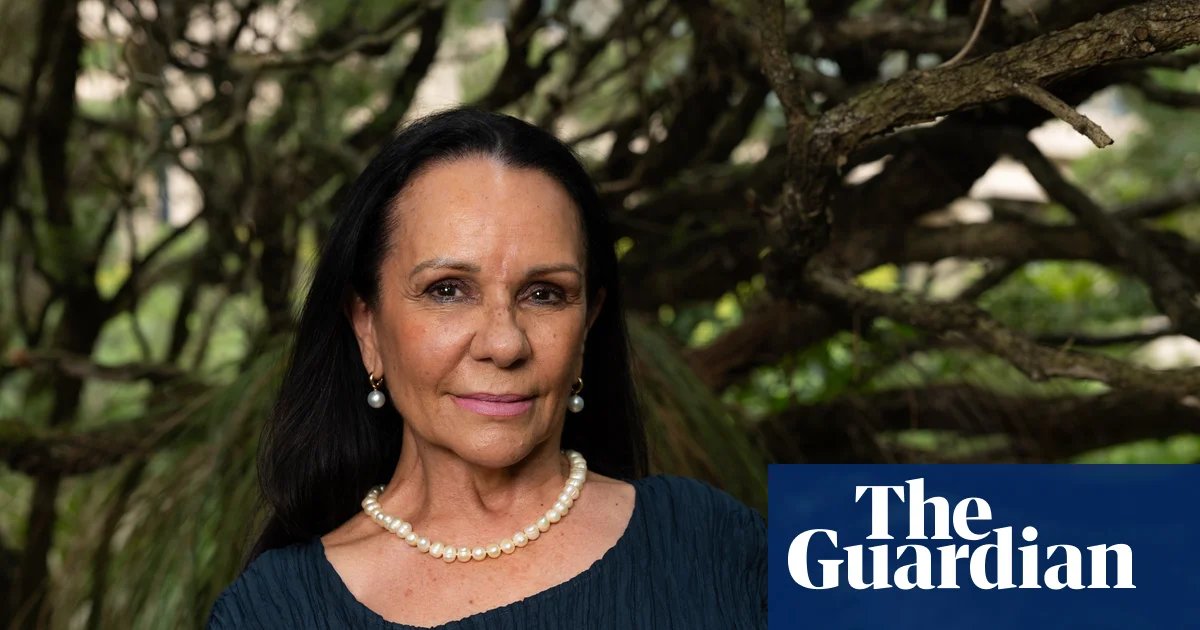
Linda Burney has been appointed to her first public role since leaving federal parliament, joining the board of the University of Technology Sydney (UTS) in a move the New South Wales government hopes will restore faith in the embattled institution.
Burney, the first Aboriginal woman to be elected to the federal House of Representatives, ended her two-decade career in politics in early 2025, departing as the minister for Indigenous Australians in mid-2024 and formally leaving office at the end of the 47th parliament.
The Wiradjuri woman carried much of the public weight of the failed voice to parliament referendum, even as she faced some private health challenges.
She said it was not the referendum defeat but a desire to “pass on the baton to the next generation” that led to her resignation from political life.
Burney said she was honoured to be offered the board position at the university and her priority would be taking on Australia’s pervasive inequity in higher education.
It is a cause that predates her political career, with Burney spending three years working as a public school teacher in Sydney’s western suburbs in the 1970s and 80s.
Sign up: AU Breaking News email
Decades on, she has not forgotten her pupils’ faces.
“I still remember the students I had when I was young. I think I learned more from the students than they learned from me,” she said.
“I taught in an area that was really socioeconomically diverse, out at Mount Druitt … And I’ll never forget the relationship you develop with students, the responsibility of being a teacher and having those little minds at your hands.
“Opening up worlds for those kids they wouldn’t normally see.”
Burney also helped develop the first Aboriginal education policy in Australia in the 1980s before being elected to NSW parliament, a trailblazing document that mandated teaching all children about contemporary and traditional Aboriginal society for the first time.
She said she had “always had a dream where not only do we reach equity and parity for First Nations young people and older people”.
“But also to make sure that, particularly in things like nursing and teaching, there’s a very strong Aboriginal perspective through curriculum,” she said.
UTS has an Indigenous education and research strategy with targets to increase its Indigenous employment to 3% of its full-time equivalent (FTE) staff by 2026 – bringing it into line with population parity – and to increase its Indigenous student participation rate to 700 students by 2030.
It is a long road ahead: in UTS’s latest annual report in 2024, just 2.2% of its FTE staff were Indigenous, and its Indigenous student cohort was 406 students, or 1.09%.
The NSW minister for skills, Tafe and tertiary education, Steve Whan, who is a longtime friend of Burney, said she had an “incredible amount” of expertise in encouraging Indigenous students to tertiary education and a “great skill set” from her time in politics that would be useful for the university council.
“I’ve never forgotten Linda’s inaugural speech in this place [NSW parliament] in 2003 when [she] talked about … how important education was to her future and to everyone’s future,” he said.
In the speech, which has gone on to be widely cited, Burney said education was the “cornerstone of social justice” and “is what equals us out whether we are from Canterbury boys high school … or the King’s school”.
Burney arrives at UTS amid the university’s continued restructure and associated backlash.
Last week, management announced it would push forward with cutting 121 full-time roles as part of its academic change plan – however UTS said all redundancies would be voluntary. It has paused any changes to courses until 2027, after fury from the National Tertiary Education Union (NTEU) over its handling of the restructure.
Initially, UTS told its staff that 150 academics and 250 operational employees could lose their jobs – about a tenth of the workforce – and more than 1,000 subjects were slated to be slashed.
Whan said universities were at a “really critical time”, with many in financial distress.
“That requires a new way of thinking and bringing someone else into the board means new ideas,” he said.
“There’s been quite a lot of denigrating of universities from each end of the spectrum at the moment. I think it’s really important that we value that role of independent institutions in our society and that we aren’t seeking to undermine them.”
Last August, the NSW government established an inquiry into the “crisis” in the university sector after backlash over rolling university restructures, including at UTS, from the tertiary community and its chair, the Labor MP Sarah Kaine.
Its terms of reference included the qualifications and experience of council appointees.
Whan said with governance a “national focus”, the state government’s ability to appoint board members was a way to ensure council appointments were not just from commercial or business backgrounds.
“We want to make sure that they are also looking at the educational side and the equity side,” he said. “In the interest of the institution and not at the direction of some external party.”