dailynewsnblog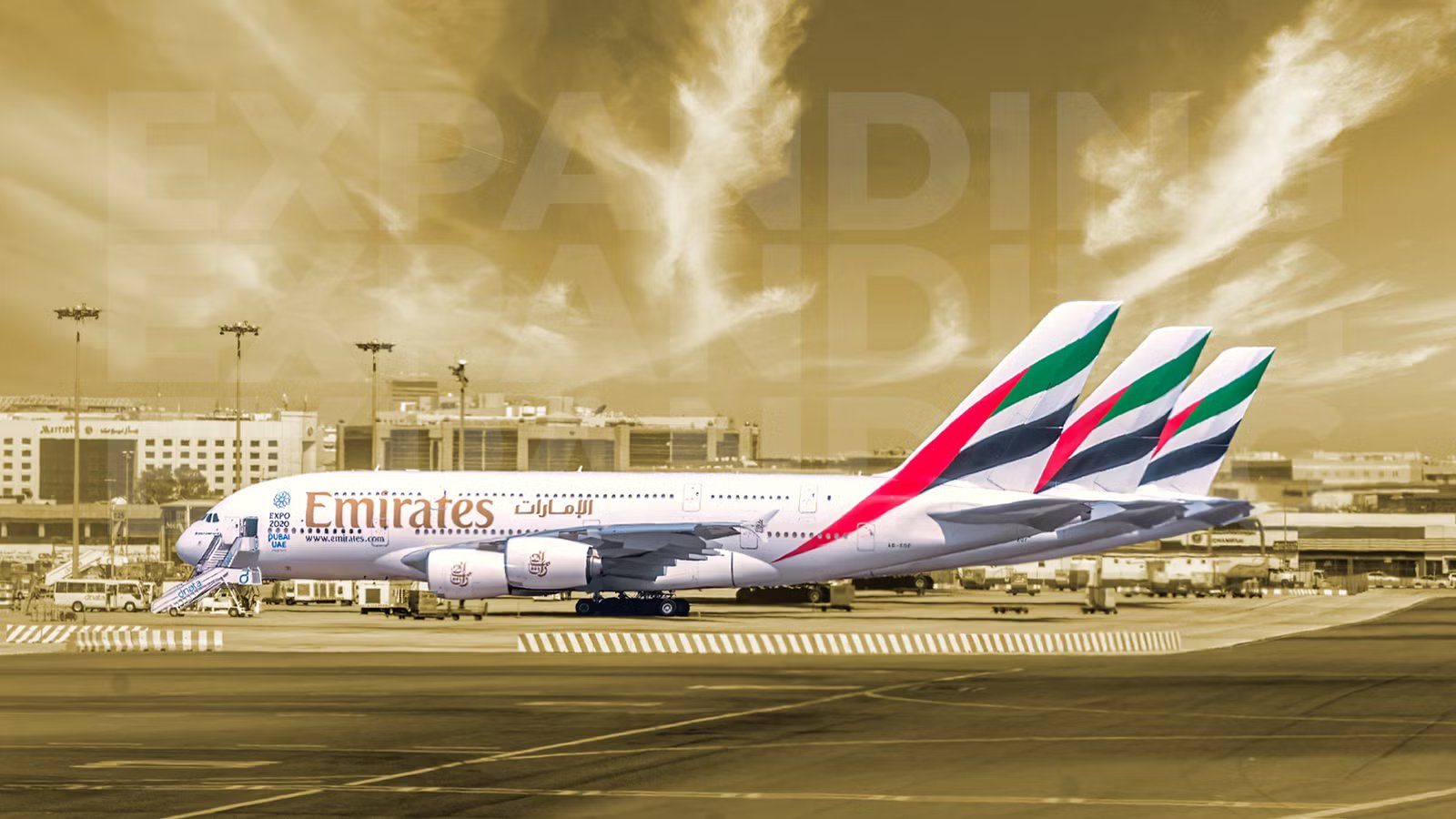
While Emirates is known for its Dubai hub, it also uses codeshares and partnerships to expand the services it offers customers beyond the UAE. The airline has many different interline, codeshare, and intermodal partners, allowing its network to reach nearly 1,800 cities. Notable agreements are with Qantas, United Airlines, and  Air Canada. Such deals are also crucial on a regional level due to the lack of narrowbody aircraft in Emirates’ fleet.
In recent times, Emirates has launched various new partnerships, with recent agreements with Condor and Air Seychelles given particular attention in this article. Emirates also expands beyond its Dubai hub through a handful of fifth freedom flights that serve two foreign destinations under the same service.
Emirates’ Dubai International Airport (DXB) Hub

To many aviation enthusiasts, Emirates is synonymous with Dubai, as the UAEcity hosts the carrier’s primary hub and its headquarters. The carrier operates over 3,600 flights each week from its Terminal 3 hub at Dubai International Airport, which is famous as the world’s largest airport terminal by floor area.
Emirates’ dominance of Dubai’s aviation sector has drawn criticism, with some arguing that the company has an unfair advantage, and other airlines have called for an end to open-skies policies with the UAE. Much of this commitment to Dubai stems from the airline’s ownership being the government of Dubai’s Investment Corporation of Dubai. It was also founded in March 1985 with backing from Dubai’s ruler, Mohammed bin Rashid Al Maktoum.
Each year, Emirates adds further flights from Dubai, stretching the airport’s capacity even closer to breaking point. In March 2025, the airline announced plans to introduce flights to Shenzhen in China, Da Nang in Vietnam, and Siem Reap in Cambodia to its Asia network. These additional destinations increase the airline’s total number of destinations served in Asia and the Pacific at the time to 49.
Emirates & Condor

Part of Emirates’ recent efforts to expand its network and the flights offered to its customers was to officially activate a reciprocal codeshare partnership with Condor, ready for the 2025 summer season. The agreement aimed to enhance travel options for both airlines’ customers, giving Emirates customers access to 11 additional destinations from cities currently served by the UAE carrier, including Frankfurt, Düsseldorf, and Hamburg.
These destinations include Palma de Mallorca, Ibiza, Gran Canaria, Fuerteventura, Tenerife, Cancun, and Montego Bay. Condor customers also benefited from connectivity from Emirates’ Dubai hub, with destinations including Bali, the Maldives, Sri Lanka, Bangkok, Phuket, Hanoi, and Cape Town.
Customers can book flights from the Emirates or Condor websites seamlessly. They can also make use of online travel agencies and major GDS platforms. Emirates Skywards members can also earn and use points on flights operated by both airlines.

Condor’s Top 10 Boeing 757 Routes This Year By Flight Frequency
The final routes for Condor’s 757-300s before they leave for good.
Emirates & Air Seychelles

While Emirates’ codeshare agreement with Condor built on a pre-existing partnership, its arrangement with Air Seychelles was a new deal, allowing Emirates’ customers to seamlessly connect to Air Seychelles’ flights from Mahé to Praslin Island. Emirates customers enjoy the convenience of island-to-island connectivity, hassle-free booking of itineraries on a single ticket while benefiting from competitive fares, and a single baggage policy checked through to Praslin Island.
Emirates and Air Seychelles have been keen to espouse the benefits of these agreements for their customers. As reported by the Emirates Media Office, Air Seychelles CEO Sandy Benoiton said that “this codeshare agreement not only simplifies travel for our customers but also showcases our commitment to making Seychelles more accessible to travelers from around the world.” Adnan Kazim, Emirates’ Deputy President and Chief Commercial Officer, added:
“Our codeshare partnership with Air Seychelles will provide customers with seamless connections to Praslin Island, and complements our existing services between Dubai and Mahé, enabling Emirates to expand our reach and allow our customers to fly to one of the most popular points in the Seychelles. We look forward to developing the relationship further and introducing more added-value benefits.”
The agreement builds on the flights it runs from Dubai to Mahé. Most of the airline’s customers on these flights are transit passengers from European countries such as France, Italy, Germany, Switzerland, and the United Kingdom.
Emirates’ Fifth Freedom Flights

While Emirates often expands its services through commercial partnerships, it is also known for its ‘fifth freedom flights’. This term refers to any routes that start in an airline’s home country, but have a second leg between two foreign destinations that can be booked in isolation. Many of these routes allow customers not from or wishing to travel to the Middle East to enjoy Emirates’ iconic widebody services, including its A380s. The table below details some of Emirates’ most famous fifth freedom flights.
|
Route |
Flying Time |
Noteworthy Attributes |
|---|---|---|
|
Sydney-Christchurch |
Three hours |
Uses an A380 despite its short length |
|
Melbourne-Singapore |
Eight hours |
Operated by a Boeing 777 |
|
Bangkok-Hong Kong |
Three hours |
Operated by an A380 in a two-class configuration (no first-class) |
|
Singapore-Phnom Penh |
Two hours |
Recently brought back. Uses a three-class 777-300 |
|
Athens-Newark |
10 hours and 45 minutes |
Uses a 777 for its longest fifth freedom flight to the USA |
|
Milan-New York |
Eight hours |
Carries a significant amount of cargo and has been used by around 2 million passengers |
|
Accra-Abidjan |
One hour |
One of Emirates’ shortest flights |
|
Harare-Lusaka |
One hour |
Another super-short flight. Uses a 777 |
|
Conakry-Dakar |
90 minutes |
Service is only from Conakry-Dakar with no return service. |
|
Barcelona-Mexico City |
12 hours 30 minutes |
The longest Emirates fifth freedom flight, necessary as Mexico City’s high altitude makes it risky to take off with enough fuel to make it to the UAE |
|
Rio de Janeiro-Buenos Aires |
Three hours and 30 minutes |
The Dubia-Rio de Janeiro 777 service sets off after just a 1-hour 45-minute layover. |
Two fifth-freedom flights operated by Emirates are island-hopping routes. The Larnaca-Malta flight is operated by a Boeing 777 and lasts approximately 150 minutes. Moving to South Asia, the Malé-Colombo flight takes approximately 90 minutes and is operated by a 777. These island-hopping flights are designed to connect popular tourist destinations.
Emirates Appears To Be Shifting Away From Its Dubai Hub

Despite its rich history at DXB, Emirates’ bosses have indicated that moves away from its current hub will be coming. However, that is not to say that Emirates’ business plan, which primarily focuses on Dubai-based operations (supplemented by partnerships and fifth freedom flights), will change. That’s because the airline is set to relocate its hub to a new location in Dubai, and plans to operate a single mega-hub rather than two. Paul Griffiths, Dubai Airports’ CEO, told The National:
“The way the city is growing is towards the south, so Dubai World Central (DWC) will be a very convenient and quick journey once all the road and rail networks are in place. It is quite probable that once the transition is complete, DXB will close to traffic and enable the redevelopment of the whole Al Garhoud area.”
Meanwhile,  Emirates has been somewhat forced into the move because Dubai International Airport’s city center location makes expansion incredibly challenging. This development is necessitated by Dubai Airports’ desire to have a mind-blowing capacity of 260 million passengers, over double the largest capacity airport operating today. The airport is also expected to become a central hub for freight. The world-leading capacity will come at an eye-watering cost of $35 billion.
However, DXB will have many more years of active operations before it is eventually scrapped, despite Al Maktoum International Airport having been operational since 2010 (primarily for cargo). The relocation is not expected to be complete until 2034, with an enormous 150 million passengers expected to travel through Dubai that year. Further phases will further expand the hub’s capacity.

The Game-Changing New $35 Billion Mega Airport Project Coming To Dubai
Dubai’s new mega airport is scheduled to take over from the current airport in 2034 and eventually become the world’s largest airport.
Emirates’ Midas Touch

As Emirates combines moves to provide services outside the Middle East (through partnerships and fifth freedom flights) and the shift to a new hub in Dubai, it is continuing to be enormously successful. At times, it seems like everything the airline touches turns to gold. Last year, AeroTime reported that Emirates is the world’s most profitable airline, generating $4.7 billion annually. That’s over double its closest competitor,  Singapore Airlines. This total comes from an impressive revenue of $33 billion and an even more impressive profit margin of 14.24%.
Beyond expanding its Dubai hub by relocating and adding more routes, Emirates is also entering the digital economy. It hopes that giving its customers more ways to pay will drive further growth. In July 2025, Reuters reported that Emirates had signed a preliminary deal with Crypto.com, a cryptocurrency trading and payment service, to allow for this type of payment for Emirates flights.
Adnan Kazim, Emirates’ Deputy President and Chief Commercial Officer, said that the airline hoped the move would enable it to tap into young and tech-savvy consumers. This move matches the UAE’s efforts to become a hub for crypto companies, with many of these ventures setting up shop or seeking to expand into the country.