dailynewsnblog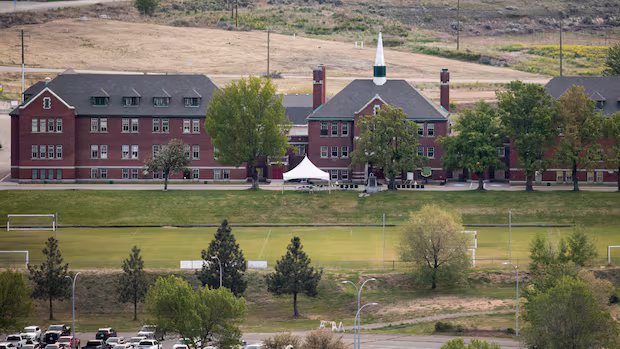

Listen to this article
Estimated 4 minutes
The audio version of this article is generated by AI-based technology. Mispronunciations can occur. We are working with our partners to continually review and improve the results.
WARNING: This story contains distressing details.
The Tk̓emlúps te Secwépemc investigation at the former Kamloops Indian Residential School has ruled out some areas on the grounds as areas where potential unmarked graves may be, while data from multiple surveys has identified other areas that “should now be the primary focus” of the search.
It’s been almost five years since the First Nation shared that preliminary findings from a ground-penetrating radar survey found some 200 potential unmarked graves on the grounds of the former residential school.
That announcement was the beginning of a nationwide movement, as First Nations across the country began their own searches of residential school sites and non-Indigenous Canadians began to comprehend the significance of the harms perpetrated at those institutions.

The First Nation says the investigation is “more complex” than originally thought.
“We are making progress and will continue adapting our methodologies and information as it advances,” Tk̓emlúps te Secwépemc said in a statement.
Tk̓emlúps te Secwépemc says it has used ground-penetrating radar and a LiDAR (Light Detection and Ranging) scanner — which uses rapid laser pulses to measure distances and create 3D representations of objects and areas.
In addition, dog teams specialized in detecting historic human remains have also been used to study the area.

The Ahousaht First Nation is the latest to release findings from its search for missing children who attended residential schools. The CBC’s Wawmeesh Hamilton explains the situation and asks what is next for sites where ground surveys indicate the possibility of unmarked graves.
In its statement dated Feb. 17, Tk̓emlúps te Secwépemc says findings from all three of those methods overlaps in several areas — and those areas will now be the primary focus of the investigation. The First Nation did not share which areas that includes.
Tk̓emlúps te Secwépemc says the surveys have also found “signatures that resemble burials” in some areas on the grounds, while it has been able to rule out other spots.
The First Nation is also using historical records from the Catholic Church, which ran the residential school from 1890 to 1969, and the provincial and federal governments, the latter of which ran the institution as a day school until its closure in 1978.
However, it says it’s faced challenges accessing those documents, particularly due to government restrictions and slow response times.
CBC News has contacted Canada’s Ministry of Crown-Indigenous Relations for a response to the nation’s claims.
Whether or not to dig at former residential school sites has been controversial, as some survivors want human remains left undisturbed, while others feel exhumation could help lay victims properly to rest and offer some closure.

The former Kamloops Indian Residential School, where, in 2021, Tk̓emlúps te Secwépemc shared that preliminary findings from a ground-penetrating radar survey had found some 200 potential unmarked graves on the institution’s grounds, has been designated as a national historic site. The CBC’s Jennifer Norwell got an inside look at the school with the chief of the Tk’emlúps te Secwépemc.
More than 150,000 First Nations, Métis and Inuit children were forced to attend residential schools between the 1870s and 1997.
The National Centre for Truth and Reconciliation estimates about 4,100 children died at residential schools across the country, based on death records, but has said the true total is likely much higher.
The Truth and Reconciliation Commission said large numbers of Indigenous children who were forcibly sent to residential schools never returned home.

The First Nation said that if any ancestral remains are discovered, it will seek consensus with the dozens of First Nations whose ancestors attended the institution.
“Each [nation] upholds its own cultural and spiritual protocols for how ancestral remains must be treated,” Tk̓emlúps te Secwépemc said.
“We also understand that full consensus may never be achieved.”
Support is available for anyone affected by their own experience at residential schools or intergenerational trauma, or by the latest reports.
A national Indian Residential School Crisis Line has been set up to provide support for survivors and those affected. People can access emotional and crisis referral services by calling the 24-hour national crisis line: 1-866-925-4419.