dailynewsnblog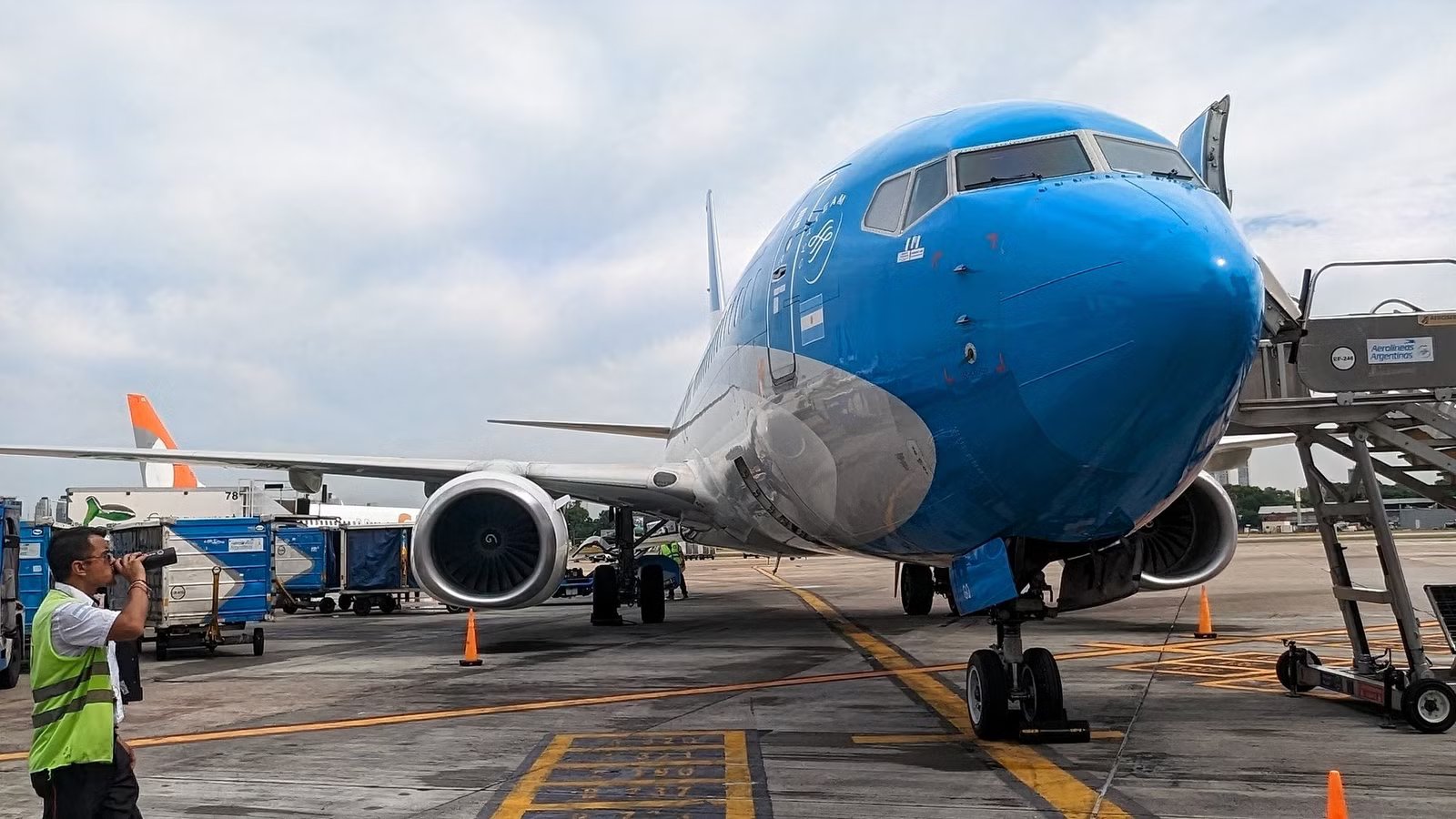
In an intriguing network twist,  Aerolíneas Argentinas has added three very long Boeing 737 MAX 8 flights to the US. Timed at up to 13 hours or so, the new one-stop services will test most passengers’ resilience—which makes them all the more intriguing.
In the 12 months to November 2025, booking data shows that 2.2 million people flew between the US to Argentina. For obvious reasons, 43% did so from Miami. As identified by Aeroroutes, the three new routes will only operate for a brief spell during the northern summer, mainly for the World Cup.
The Three New Very Long One-Stop MAX Flights

They are summarized below. The maximum block time is measured as chocks-off-to-chocks-on, and it’s what is shown in booking engines and in schedules. Reflecting a full one-way journey, including the time to refuel and change crew, it includes taxi time at all airports, flight time on each leg, and a period for short delays.
Each route will stop en route in Punta Cana. Cirium Diio data shows that Aerolíneas Argentinas already operates nonstop from Córdoba, Rosairo, and Tucuman to the immensely popular tourist destination for South Americans. These three services have been extended to  Miami to cater to the demand for the major sporting event, which is a relatively low-risk thing to do.
According to ch-aviation, Aerolíneas Argentinas has 15 737 MAX 8s. Most of them have eight seats in business and 162 in economy. The relatively low-capacity, 170-seat layout means the aircraft are lighter than they might otherwise be, which helps to increase their range. After all, it is still around eight hours between Argentina and the Dominican Republic. While its MAXs don’t have seat-back entertainment, passengers can use the carrier’s app to stream movies, etc., to phones.
|
Max. Block Time* |
Routing** |
Nautical Miles (km) |
Operating Period |
Operations |
Miami Arr. Time*** |
Miami Dept. Time^ |
|---|---|---|---|---|---|---|
|
13h 10m |
Rosairo to Miami via Punta Cana |
3,898 (7,219) |
June 9-August 2 |
Three weekly MAX flights |
11:45 pm |
2:15 am |
|
12h 40m |
Córdoba to Miami via Punta Cana |
3,782 (7,004) |
June 8-July 29 |
Two weekly MAX flights |
12:20 am |
2:15 am |
|
12h 15m |
Tucuman to Miami to Punta Cana |
3,511 (6,502) |
June 11-August 1 |
Two weekly MAX flights |
11:45 pm |
2:15 am |
|
* Partly so long due to the ground time in Punta Cana |
** Seemingly no traffic rights between Punta Cana and Miami |
*** Shown in Simple Flying’s new time format |
^ Shown in Simple Flying’s new time format |
What Is The Demand For These Miami Routes?

As they’ll effectively operate for the World Cup, a standard discussion about traffic is perhaps less useful. Nonetheless, in the 12 months to November 2025, booking data shows that Córdoba-Miami had 55,000 round-trip passengers, Rosairo had 15,000, and Tucuman had just 7,000. Traffic-wise, only Córdoba is a decent foundation to build on. Even American Airlines has expressed interest in returning there, this time on the Airbus A321XLR.
The two other routes have minimal traffic. In normal times, they’d not be connected to Miami. In contrast, Mendoza is a larger market, with 29,000 round-trip Miami passengers. Unlike the three other regional cities, it won’t have US flights for the World Cup because Aerolíneas Argentinas does not serve Punta Cana from Mendoza. However, the Dominican Republic’s Arajet will begin flying to Mendoza in May.

Icelandair’s Unusual 24-Hour US Stopovers Explained: Why These Routes Exist
A look at the routes, reasons, and realities behind this unusual setup.
What About Boliviana’s Very Long One-Stop Operation?

On December 16, 2025, BoA took off from Santa Cruz to Washington Dulles. Operated by the 737-800, the twice-weekly flights existed through early January to capture demand around Christmas. The Greater Washington DC area has 35,000+ Bolivians and Bolivian Americans, which jumps to 150,000+ when Maryland and Virginia are included.
Flights stopped in Panama City in both directions to refuel. No entertainment or Wi-Fi was available. It covered 3,655 nautical miles (6,769 km) each way, which was longer than two of Aerolíneas Argentinas’ new routes. Due to a quick 40-minute stop in Central America, the block time was ‘only’ 10h 10m. The long route is due to return in June and operate during the peak summer.