dailynewsnblog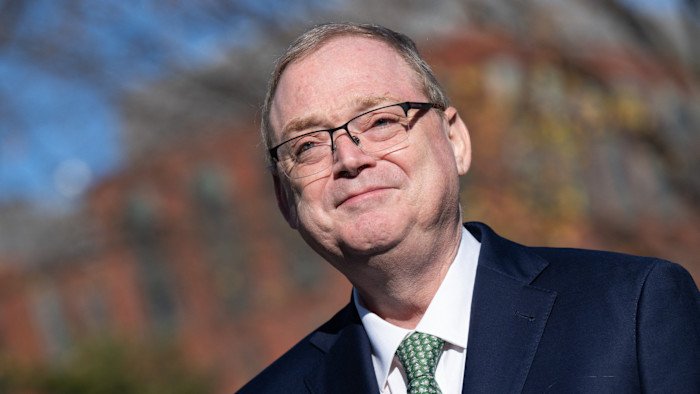
Unlock the Editor’s Digest for free
Roula Khalaf, Editor of the FT, selects her favourite stories in this weekly newsletter.
Estimating the effects of the new US tariff regime is incredibly complicated, given the huge variety of rates and exemptions. They also seem to change all the time, depending on who is the latest to plonk a solid gold bar on to the Resolute desk. But the New York Fed has had a stab at the cost, and estimating who pays the price.
Here’s a recent blog post from some of its economists, with an entirely unsurprising conclusion (Alphaville’s emphasis in bold below):
First, 94 percent of the tariff incidence was borne by the U.S. in the first eight months of 2025. This result means that a 10 percent tariff caused only a 0.6 percentage point decline in foreign export prices. Second, the tariff pass-through into import prices has declined in the latter part of the year. That is, a larger share of the tariff incidence was borne by foreign exporters by the end of the year.
In November, a 10 percent tariff was associated with a 1.4 percent decline in foreign export prices, suggesting an 86 percent pass-through to U.S. import prices. Given that the average tariff in December was 13 percent (see the first chart), our results imply that U.S. import prices for goods subject to the average tariff increased by 11 percent (13 times 0.86) more than those for goods not subject to tariffs. These higher import prices caused firms to reorganize supply chains, as suggested by the findings presented in the two charts above.
In sum, U.S. firms and consumers continue to bear the bulk of the economic burden of the high tariffs imposed in 2025.
This is fairly unsurprising. There have been myriad reports on the subject, which all found broadly the same. Even the Congressional Budget Office has come to the same conclusion. Indeed, Alphaville last week began writing a post about how unsurprising the NY Fed paper is, before quickly spiking it for being irredeemably uninteresting. Instead, we took the piss out of the latest round of Extel begging.
But then the Trump administration’s economic supremo — the towering intellect behind “perhaps the most spectacularly wrong investing book ever” — decided to weigh in, and we couldn’t resist dipping back in.
MainFT:
Kevin Hassett, director of the National Economic Council, described the recent study from the New York Fed as “an embarrassment” and said it failed to capture the full impact of the president’s levies.
“It’s I think the worst paper I’ve ever seen in the history of the Federal Reserve system,” Hassett told CNBC on Wednesday. “The people associated with this paper should presumably be disciplined.”
He added: “What they’ve done is they’ve put out a conclusion which has created a lot of news that’s highly partisan based on analysis that wouldn’t be accepted in a first semester econ[omics] class.”
Of course, Hassett is not the first government official to react badly to an entirely unremarkable report. Tim Geithner famously warned the chair of Standard & Poor’s owner that the rating agency’s downgrade of the US government’s creditworthiness would be met with a “response”. China takes a particularly dim view of economic criticism.
But the Trump administration seems to often go nuts over far smaller matters. Last summer President Trump told Goldman Sachs to fire its chief economist, Jan Hatzius, despite him being among the more optimistic analysts. More recently, Treasury secretary Scott Bessent went after Deutsche Bank’s chief FX strategist, George Saravelos.
This has been noticed. Some senior analysts have told Alphaville that many are exceptionally careful about what they write these days, for fear of being the subject of an overnight bomb on Truth Social. Hassett going after some Fed economists on TV for a random and fairly unremarkable paper is not going to help matters.
But at least we can do our bit by re-upping the Fed paper that vexed Hassett so much. Streisand Effect FTW.