dailynewsnblog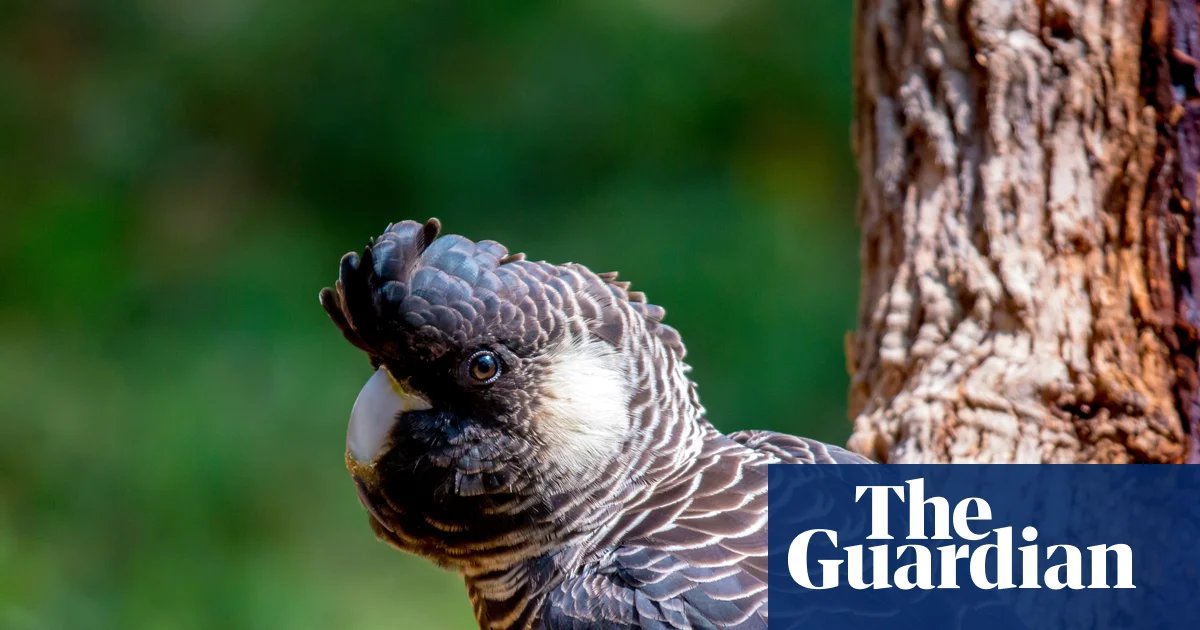
The environment minister, Murray Watt, has handed a $55m penalty to the US mining giant Alcoa for unlawful land clearing for bauxite mining in Western Australia’s northern jarrah forests, south of Perth.
As Watt announced the “unprecedented” remediation order, he said he had also granted the company an exemption to clear further habitat for 18 months while the government considered a proposal for an extension of the company’s mining operations to 2045.
Watt said the penalty – known as an enforceable undertaking – was for clearing that occurred from 2019-2025 in known habitat for nationally protected species without an approval under the Environment Protection and Biodiversity Conservation Act.
WA’s northern jarrah forests are habitat for species including the endangered carnaby’s and baudin’s black cockatoos.
The $55m penalty, which relates to more than 2,000 hectares of cleared land, requires Alcoa to fund environmental and research measures, including $40m to secure permanent ecological offsets to compensate for the habitat destruction.
“It’s the largest conservation‑focused commitment of its kind,” Watt said.
A further $5m will go to the Australian Wildlife Conservancy for conservation programs for affected species, $6m to state government invasive species control projects, and $4m to the University of Western Australia for research into invasive fauna control in the northern jarrah forests.
Alcoa said in a statement that while it “maintains it has operated in accordance with the EPBC Act” it had agreed to pay for the measures.
“The funding supports the health of the Northern Jarrah Forest, including programs and research that improve habitat for threatened species and control invasive flora and fauna,” the company said in a statement.
Sign up: AU Breaking News email
Watt said he had used an existing national interest provision in Australia’s nature laws to allow for further clearing for bauxite mining for 18 months.
It would appear that this is the first time the exemption has been used in a way that benefits the commercial interests of a mine.
The exemption is separate to a new power included in last year’s overhaul of the EPBC Act, which allows the minister to approve projects in breach of nature laws.
Watt said the “time limited exemption” would allow Alcoa to continue clearing while the government used a strategic assessment process to consider the company’s proposed expansion of its Huntly and Willowdale mining operations, about 100km south of Perth, until 2045.
He said the exemption “ensures the continued supply of bauxite and supports future gallium production, critical for renewable systems like solar panels and wind turbines”.
Watt said it would secure a “stable supply of minerals vital for our net zero transformation and defence industries, while strengthening partnerships with the United States and Japan”, and would allow Alcoa to sustain its operations which employed about 6,000 workers.
Alcoa’s spokesperson said the company would limit clearing under the exemption to 800 hectares per year and would “increase annual rates of new rehabilitation to 1,000 hectares per year by 2027”.
The company’s president and chief executive, William Oplinger, said: “We are committed to responsible operations and welcome this important step in transitioning our approvals to a contemporary assessment process that provides increased certainty for our operations and our people into the future.
“We appreciate the government’s recognition of the important contributions of our operations to the Australian economy.”
Matt Roberts, the executive director of the Conservation Council of Western Australia, said while the significant penalty issued to Alcoa was welcome, “we’re talking about a company that strip-mines the northern jarrah forest”.
“It cannot be rehabilitated to its original state after it’s been strip-mined. Therefore rehabilitation is not equal to the damage they’re doing to our forest,” he said.
“It’s in our national interest to preserve the natural world that we have carriage of and in that sense there’s a national interest to preserving a jarrah forest that exists nowhere else in the world.”
The Biodiversity Council, an expert group founded by 11 Australian universities, expressed concern that Watt’s decision to issue a national interest exemption set a “dangerous precedent”.
“Having reviewed the EPBC Act exemptions register this appears to be the first time that a commercial activity has been given an exemption on economic grounds since the commencement of the Act in 2000,” said Lis Ashby, the Biodiversity Council’s policy and innovation lead.
“The national interest exemption was intended for matters of emergency response, defence and national security, not as a convenience for resource companies committing environmental offences.”
She said the public did not want to see WA’s environment “sacrificed for international profit”.
“The government must stop prioritising the ‘operational certainty’ of a foreign corporation over the survival of our unique biodiversity.”
Tania Constable, the chief executive of the Minerals Council of Australia, said the council was “encouraged that sensible and pragmatic collaboration between the government and a significant critical minerals producer has recognised the importance of Alcoa Australia’s operations and the company’s strategic role in the ongoing development of Australia as a minerals powerhouse”.
“This outcome will allow Alcoa to undergo a more rigorous method of assessment while guaranteeing operations, and thousands of jobs in the local WA community.”