dailynewsnblog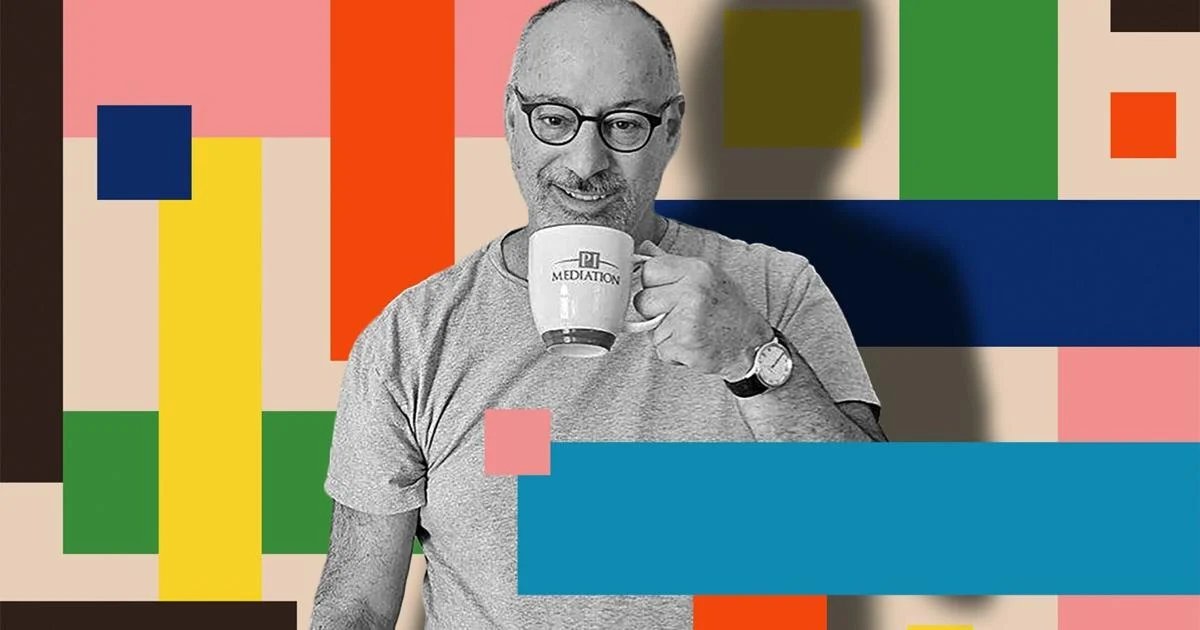
Gourmet chef. Smartest guy in the room. Best friend. That’s how clients turned investors describe high-flying accountant John Rosenthal.
“I guess that’s why I am still hoping John will make good on what he owes me someday,” says Gilbert Sharpe, lawyer and former top Ontario bureaucrat, who is one of dozens who poured money into Rosenthal’s investment schemes. “He keeps saying, ‘I am working on it.’ He was always a good friend.”
Today, Rosenthal’s career is in tatters. Ontario’s professional accountant regulator has stripped him of his licence, along with the licence of fellow accountant Mark Zaretsky. There are millions of dollars of claims against them in 15 court actions. Zaretsky has declared bankruptcy, owing $17 million. Rosenthal has not declared bankruptcy — he still lives in an upscale Toronto neighbourhood, and has a home in Arizona.
“I think we’re all wondering, what happened?” says Peter Israel, a Toronto lawyer. “Did he just get in over his head?” Israel often vacationed with Rosenthal and counted him as one of his best friends. He says he and his wife are owed $300,000.
In this two-part series, the Star takes you through the rise and fall of one of Toronto’s top accountants, who had a stable of blue-chip Toronto clients. Rosenthal, 75, is alleged in a court action to have masterminded a Ponzi scheme — using later investors to pay off earlier investors. It’s a cautionary tale for people who invest money without asking enough questions, and getting proper documentation.
Rosenthal did not respond to numerous interview requests. His former accounting partner, Zaretsky, reached at his home, told the Star he has nothing to say. “I am retired and moving on to a new part of my life.”
‘We became best friends’
The Arizona sun was blazing hot. John Rosenthal hummed along the desert road in a lime-green convertible Fiat, whizzing past scrub bushes and cactus. Up ahead, his good friend Peter Israel, astride a Harley-Davidson motorcycle. Israel was clad in leather riding gear. Rosenthal, a lavender top and shorts. Cowboy boots, too.

From left, Toronto lawyer Peter Israel and John Rosenthal. They often travelled together.
Supplied
His outfit that day in 2015 was classic Rosenthal. He liked to make an impression. In looks, Rosenthal is a cross between actors Stanley Tucci and Larry David. He was more than an accountant to his clients. He was a buddy, asking them how they were, and how the family was doing. He always remembered their kids’ names.
Friends say that part of Rosenthal’s charm was how he went the extra mile to be helpful. Not just with astute tax advice that saved them money, but with personal assistance that in retrospect was overly generous.
One client was a collector, who liked to purchase artwork and relics at U.S. auctions. Rosenthal had a Black American Express card and told the client he needed to spend a lot to keep its top-tier privileges. The client handed over cash — Rosenthal made the purchases and had the items shipped to Canada. When things started going south for Rosenthal, that was one of the canaries in the coal mine. The auction houses had not been paid.
But that day in Arizona everything was smooth.

Star Investigation: Part 2
As real estate scheme unravelled, Rosenthal made excuses for bounced cheques: he was sick, he’d been hit by a “major wire fraud.” Second of two parts.
Star Investigation: Part 2
As real estate scheme unravelled, Rosenthal made excuses for bounced cheques: he was sick, he’d been hit by a “major wire fraud.” Second of two parts.
The bond between Rosenthal and Israel stretched back two decades. Like many people Rosenthal would end up owing money to, it began with a business arrangement. Israel, a top Toronto lawyer specializing in employment and labour law, hired Rosenthal in 1997 to do his books.
“Slowly, we became best friends,” Israel recalled. “Whenever John was in town he spent about every Sunday at our place for brunch. He came to all of my parties. I went to his. We travelled together too, mainly Arizona. I would go on a motorcycle and he would follow me in a little car.
“My kids called him ‘Uncle John.’ ”
It was the same with Robert Sidi, known for Patachou patisserie shops, Arlequin restaurant and Kiosk Design, a high-end furniture store on King Street East.
“We would see each other on a regular basis to have coffee,” says Sidi. “He befriended me and I befriended him, but in a very superficial way.”
Those who used Rosenthal as an accountant say he was whip-smart.
“John was the smartest man I have ever met, and I’ve known a few,” says Michael Levine, a Toronto businessman who is out $325,000. Until recently, he considered Rosenthal his “best friend.”
Rosenthal had an uncanny ability to, in the middle of a conversation, recall an obscure part of tax law. He’d implement it, and save his clients thousands of dollars, sometimes tens of thousands.
How Rosenthal got started
He got his start as a licensed accountant in 1973. He joined Toronto firm WE and Co., and became a partner in 1981. He met fellow accountant Zaretsky in the early 1980s, and in 1989 they formed their own practice, RZN, LLP. Their clients were law firms, financiers, developers and business owners. Rosenthal was the front man of the operation; Zaretsky crunched the numbers.
Rosenthal’s work helped him rub shoulders with the very wealthy. Levine recalls noticing that Rosenthal seemed to always want a bigger seat at the table. To be more like the clients he did the books for.

John Rosenthal and his wife, Marcia Lipson.
Supplied
“He was a very successful accountant, the head of his own accounting firm, but he never seemed to have any money,” says Levine, who has been friends with Rosenthal for 50 years.
Rosenthal’s wife, Marcia Lipson, was an heir to the McGregor Socks family of Toronto. They lived in a nice — but not huge — house in North Toronto. Lipson is now a creditor in Rosenthal’s former partner’s bankruptcy, having advanced $1.9 million over the years, according to Zaretsky’s bankruptcy statement.
Friends say as the years passed, Rosenthal started bragging about taking first-class flights, staying in the best hotels in the U.S. and Europe. They say he yearned to be an entrepreneur.
A mutual friend came up with the idea of selling Canadian lobsters to China. Rosenthal and his friend sourced fresh lobsters in New Brunswick. Levine says he loaned Rosenthal $45,000 to buy lobsters and set up the shipping route.
“I don’t import anything,” says Levine, “but I am guessing that importing food from Canada to China has got to be fraught with red tape.”
It turned out to be a disaster. A giant freight container of fresh Canadian lobsters got caught up in bureaucracy on a dock in China. “This went on for weeks,” recalls Levine. “The lobsters went bad.”
Then there was the time Rosenthal tried to bring NASCAR to southern Ontario. That ended badly, too, Levine recalls. Investors’ money was lost. Levine says Rosenthal never understood that the Ontario market would not support such an American-dominated motorsport.
“It was incredible how such a smart guy could be such a bad business person.”
Rosenthal and Zaretsky continued doing books for companies. But Rosenthal kept looking for the deal that would make him rich. He set his sights on real estate. Rosenthal started telling people he had a “fund” that people could invest in and they’d make twice what they could make by keeping their money in the bank.
One of Rosenthal’s longtime clients was Edward Borins, who founded Edwards Books and Art, a Queen Street West fixture for decades. Borins would be the first to raise the alarm.
A mysterious real estate deal
Beginning in 1984, Rosenthal did corporate and personal tax returns for Borins and his wife — both Canadian returns and their U.S. returns when they moved to Santa Fe, N.M. In a regulatory hearing later held by Chartered Professional Accountants of Ontario last year, Borins testified that Rosenthal was “a trusted friend and adviser.” Borins says Rosenthal was “part of his family.”
That’s why in 2014, Borins was delighted to be offered an opportunity by Rosenthal: a real estate investment fund that would pay almost 5.9 per cent interest, almost double what Borins would get from his savings account. Rosenthal himself was an investor, Borins was told, which gave him confidence that it was a safe bet.
“Rosenthal appeared to be very successful,” Borins later told investigators.
To begin with, Borins invested $164,500. All seemed well, so Borins invested more over the next few years. By 2017, he had invested $815,305. The interest rate was raised to 6.59 per cent. Borins used money he had inherited, plus funds from his Registered Retirement Income Fund (RRIF). The money was to be kept in the “real estate” investment fund Rosenthal said he had set up. Whenever Borins needed it to fund his retirement, he could cash out, Borins was told.
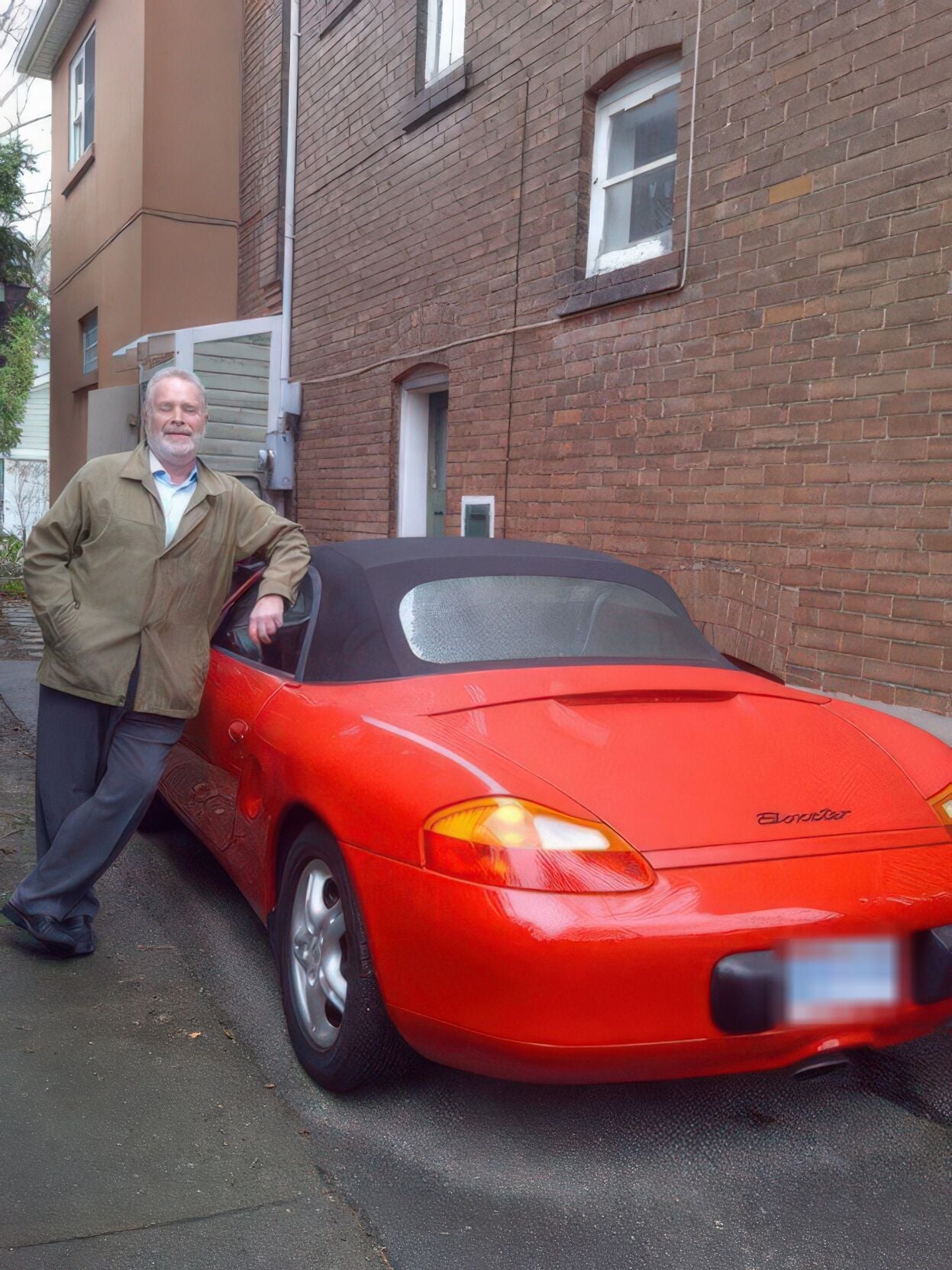
Mark Zaretsky, John Rosenthal’s former partner, has also been stripped of his accountant licence in Ontario. Zaretsky has declared bankruptcy.
Facebook
At the same time, others were investing with Rosenthal, including Sidi, an entrepreneur who came to Canada from Lebanon in 1970.
“It was a blessed day,” Sidi says, recalling how he arrived in Toronto at age 18 with nothing. “Toronto has been a very generous city to me.” He would start a highly successful pastry shop (Patachou), then a restaurant (Arlequin), and more recently, furniture store Kiosk Design.
The Rosenthal/Zaretsky accounting firm did work for Sidi. Eventually, Sidi and Rosenthal struck up a friendship. Sidi noticed how Rosenthal liked the fine things in life.
“John was, in his own way, a man about town. He liked restaurants. He was a foodie. He somehow worked his way into my friendship.”
Sidi was not as close to Rosenthal as other clients. Still, they met regularly for coffee, gave each other advice from their own knowledge.
“And one day he came to me and asked if I would be interested in sharing an investment,” Sidi recalls. What Sidi was offered was a mirror of what others heard.
“At first, you know, there was nothing out of the ordinary about it.”
Rosenthal was working on a “real estate deal,” he told Sidi. He was putting $400,000 of his own money in, and would be earning between eight and 9.5 per cent. Rosenthal said the deal allowed for another $400,000 to be invested. “How much of that did I want?” Sidi said Rosenthal told him.
Sidi trusted Rosenthal. Looking back though, “I bit into the line, the hook, and the sinker, too.”
He estimates he invested $250,000 over several years. The interest payments were made by Rosenthal, and for a time, “it went well.”
Israel, the lawyer, and his wife, also a lawyer, invested. His bond with Rosenthal was growing stronger. They kept up their trips to Arizona, where Rosenthal had purchased property. One stands out in his mind.
“It was a really sunny day,” Israel says, taking his mind back to 2018. He was on his Harley, and Rosenthal was ahead in a car. A vehicle in the next lane braked suddenly and veered into Israel, knocking him flying. He ended up with three broken ribs and a “ripped” rotator cuff in his shoulder. Rosenthal pulled over and ran back to check on his friend. When paramedics arrived, Israel said he watched as Rosenthal walked over to the woman driving the car that hit him.
“He started chatting her up, which didn’t surprise me.” Rosenthal had the gift of the gab and was always flirting. The driver said she was distracted, having just come from her lawyer’s office, where she’d signed divorce papers. Another time, Israel and two other investors told the Star, Rosenthal became close with a woman who sold him a pair of cowboy boots. “That was John,” Israel said.
Israel says Rosenthal said goodbye to the woman, then followed him to the hospital, then back to his Phoenix home, and cared for him while he recuperated. “That was also John,” said Israel. “He was always a good friend when I needed him.”

John Rosenthal at his Toronto home.
Handout
For Israel and other friends, their investments with Rosenthal’s real estate deals came with a promissory note, a schedule of payments and a handshake. Today, the investors, all successful people in their fields, are unable to say what the actual “real estate deal” was, or where it was. Some say it was in Ontario; others say they were told it was in Arizona. It’s not written in any of the documentation. Still, the monthly payments were being made, for years in some cases.
While most investors were wealthy, some were more middle-class. A former senior Ontario bureaucrat, Gilbert Sharpe, was admittedly on the lower end of the wealth scale. Sharpe, a lawyer, was the Ontario Ministry of Health’s legal branch director in the 1980s. He’s had advisory roles with the World Bank and the World Health Organization and was a professor at Loyola University in Chicago.
He says he was so close with Rosenthal that he made him his executor. He’s been at Rosenthal’s house “a hundred times for dinner.”
Sharpe says as a lawyer, he is embarrassed. “No paperwork, just a handshake.” He gave Rosenthal $40,000 from his savings, and was promised a return of up to 11 per cent. He says Rosenthal provided him 12 post-dated cheques, which would pay back principal and interest over a year.
Levine, who invested much more, says he trusted Rosenthal for two reasons. He had never steered him wrong on tax advice, and they had a strong bond.
“I guess I’d have to call him my best friend,” says Levine.
Then, in June last year, Rosenthal stopped making payments. Levine couldn’t get him on the phone.
“He started ghosting me,” recalls Levine. “Which was when I realized the jig was up.”
Tomorrow: Part Two: Bounced cheques