dailynewsnblog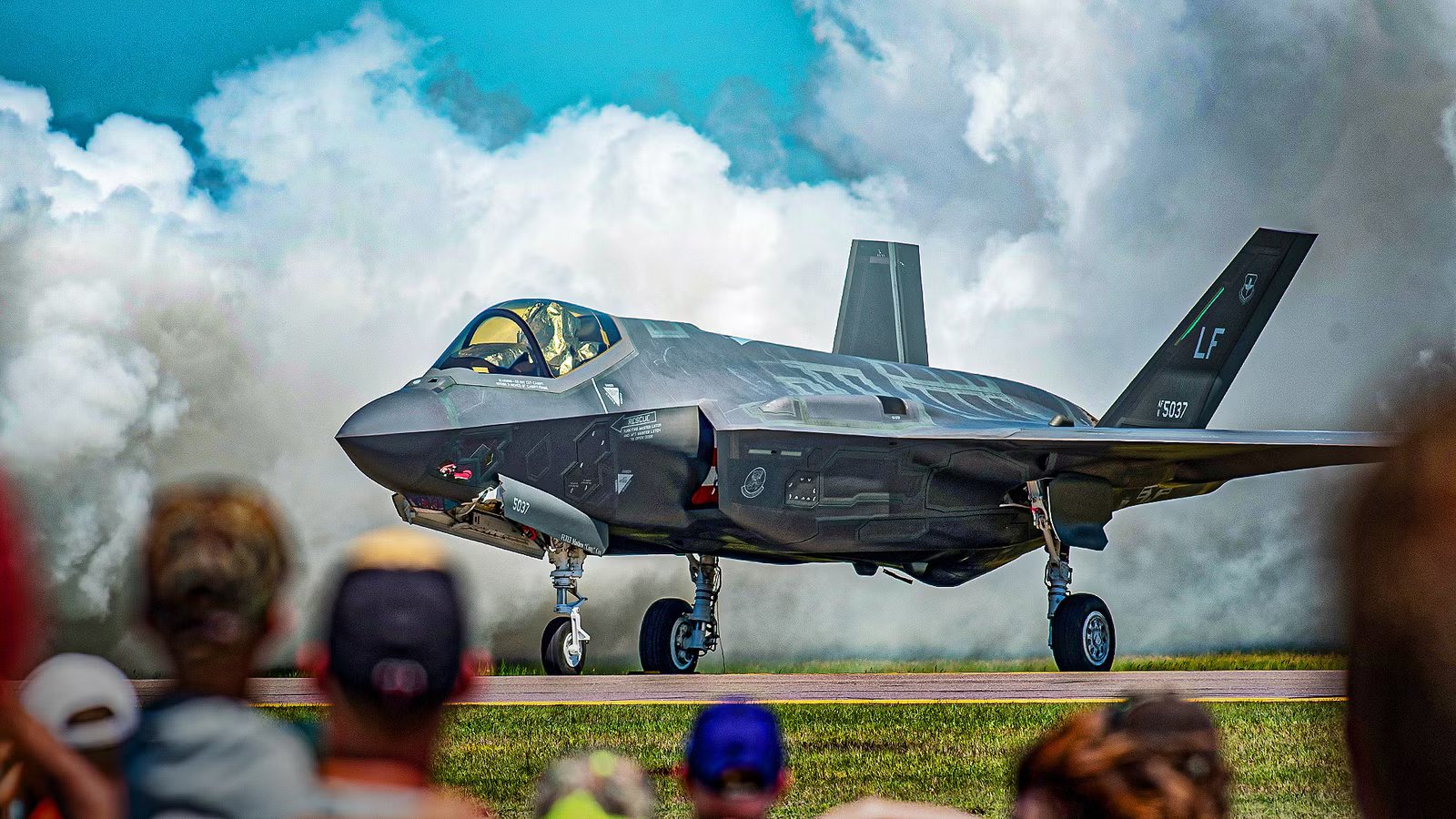
The Lockheed Martin F-35 Lightning II is a combination of 80 years of evolution in American warplane development. The 5th generation stealth fighter represents the pinnacle of a ‘one plane that does it all’ philosophy that first began in WWII when the US Army Air Corps fielded a myriad of different airframes for different missions and operating theaters.
Each aircraft in this lineage solved a critical limitation of its predecessor, leading to the F-35A’s current role as the ‘quarterback of the skies.’ Not only does the F-35 leverage stealth technology to bypass enemy defenses, but it also maximizes its opportunity to seek and destroy targets with impunity or gather intelligence invisibly. The F-35 is the single most expensive defense industrial project in American history, even surpassing the Manhattan Project and the Boeing B-29 Superfortress program, which literally invented a host of aerospace technologies in order to deliver the atomic bomb. American air power has taken another leap forward thanks to the Lightning II.
The Greatest Generation

The American aerospace and industrial industry advanced exponentially during the WWII production efforts to support not only the massive scale of materials and equipment, but also extremely rapid research and development. In order to meet the urgent needs of the troops on the front line, multiple aircraft makers produced different designs to cover both the same missions and a long list of specialized roles.
Two of the most significant from this time were the North American P-51 Mustang and the Republic P-47 Thunderbolt. The P-47 proved that a fighter could be a massive, rugged ground-attacker, while the P-51 provided the long-range escort capability required for deep penetration missions. The F-35A inherits this dual-nature versatility, acting as both a precision bomber and an air-superiority fighter.
Then there is the connection between the F-35 and the Lockheed P-38 Lightning, which is a deliberate architectural and thematic lineage that bridges WWI air dominance with 21st-century stealth warfare. In 2006, the USAF officially named the new jet the Lightning II to honor the P-38, which was the premier long-range strike fighter of WWII.
Both were designed by Lockheed to be the most technologically advanced and versatile multirole platforms of their respective eras. P-38 variants even captured 90% of all aerial film over Europe during WWII. Today, the F-35 has been tailored with an advanced sensor suite to perform even more high-stakes intelligence, surveillance, and reconnaissance (ISR) missions as well as designating targets for allies in real time over the battlefield.
Each of these airplanes was a vital platform for the American armed forces during this epic and terrible conflict. Each plane provided an invaluable capacity that helped turn the tide of the battle, and the lessons learned from both the making of these iconic aircraft and the experience of their crews in combat informed the first generation of jet fighters that appeared in the post-war era.
The Archetype Of American Fighters

The North American F-86 Sabre was the foundational modern jet fighter that is still present in the DNA of every supersonic fighter in the US inventory. In a noteworthy convergence of design and designation numbers, the 35-degree wing sweep that is common for American high-performance fighter jets was first proven by the F-86, as Air & Space Forces wrote. Lockheed Martin’s F-35 has its own innovative wing geometry but still utilizes the 35-degree sweep.
The F-35 represents a leap forward in fire control systems, just as the F-86 did in its era. It introduced one of the first integrated fire control systems (FCS), combining a radar rangefinder (the AN/APG-30) with a gyro gunsight and a primitive analog computer. This gave Sabre pilots a critical edge over Soviet MiG-15s, which relied on manual sightings.
The Lightning II takes this to an extreme with a complex sensor fusion system that gives it an unparalleled view of the battlefield from which no adversary can invade. The F-35A’s AN/APG-81 radar and EOTS (Electro-Optical Targeting System) are the 21st-century descendants of that first F-86 radar rangefinder.
A little-known fact is that a specific variant of the Sabre, the F-86F-35, was the first designed for the exact multirole mission the modern F-35A performs today, according to Air Vectors. This Sabre version was equipped with the Low Altitude Bombing System (LABS) specifically to deliver the Mark 12 atomic bomb. The modern F-35A has just achieved nuclear design certification for the B61-12 bomb, directly fulfilling the strategic multirole vision first tested with the F-86F-35 (coincidentally sharing a 35 in its designation).

The World’s Largest Air Forces By F-35 Numbers
How the top F-35 flyers compare.
The Phantom’s Legacy Lives On

The F-4 was the first true high-tech multirole heavy-hitter, integrating advanced radar and air-to-air missiles for all-weather operations. It proved that a single airframe could serve the Air Force, Navy, and Marines as a joint concept that directly inspired the F-35 program. More than that, the F-4 went on to be the most mass-produced supersonic fighter jet and served in numerous air forces around the world with countless allies of the United States.
The F-4 Phantom II is the spiritual and structural blueprint for the F-35 Lightning II. While separated by 50 years, the F-4 was the first aircraft to prove the ‘Joint Strike Fighter’ concept could actually work in high-stakes combat. The F-35 is famous for its three variants serving the Air Force, Navy, and Marines. The F-4 Phantom II was the first jet to achieve this, successfully operating as the primary fighter for all three branches simultaneously. It proved that a single airframe could be rugged enough for carrier decks while possessing the performance needed for land-based air superiority.
The F-35A is often called a ‘flying computer’ that prefers to kill enemies before they even see it. This philosophy started with the F-4. The F-4 was designed around its powerful radar and radar-guided missiles (the AIM-7 Sparrow), prioritizing electronic detection over visual dogfighting. Early F-4s famously lacked an internal gun, a mistake the F-35A avoided by including an internal 25mm cannon, though the F-35 still leans heavily on the ‘missile-first’ legacy established by the Phantom.

The Striking Differences Between The F-22 Raptor & F-35 Lightning II
F-22 vs F-35: 2 fifth-generation fighters with unique strengths: speed and air dominance vs multirole flexibility. Discover what truly sets them apart
Successor To The Viper

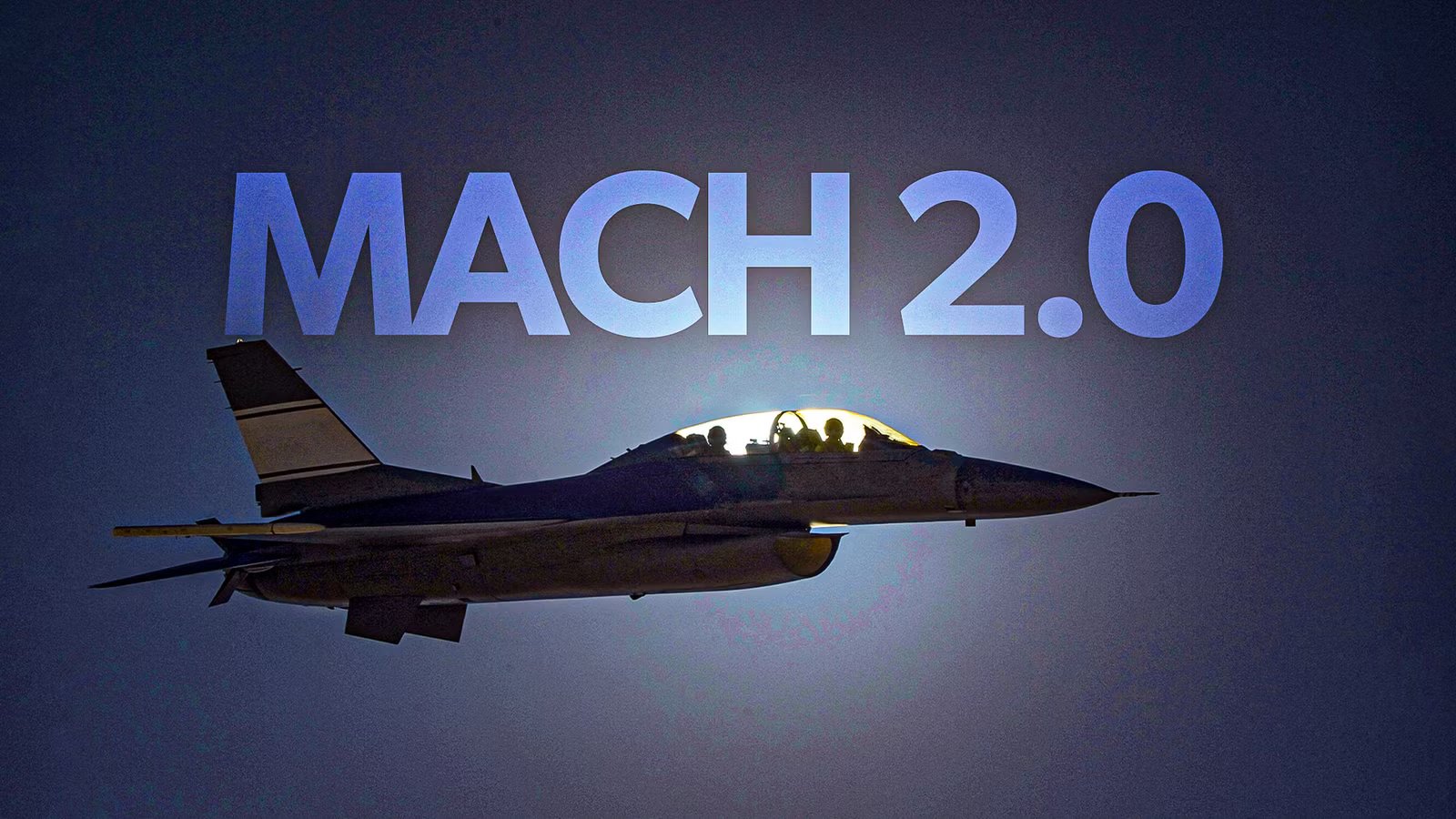
General Dynamics F-16 Fighting Falcon was famously a product of the ‘Fighter Mafia’ in the US Air Force that specifically set out to create a pilot-first lightweight fighter, which eventually evolved into what is debatably the best multirole warplane ever made. The F-16 also builds more on the F-4 joint production and interoperability philosophy with a multinational consortium established in Europe.
Only a handful of F-4 aircraft were produced in Japan under license, but from the beginning of the F-16 project, there was strong involvement with allies under the North Atlantic Treaty Organization (NATO). This is another powerful paradigm that the F-35 is continuing to build upon with an even broader umbrella under its Joint Program Office (JPO) that includes a growing list of 19 allied nations to operate at least one of the three variants of the F-35.
In terms of performance and direct engineering influence, the F-16 was the first production aircraft to use relaxed static stability and electronic fly-by-wire controls to achieve extreme maneuverability. The F-35A builds on this with even more advanced flight control laws, allowing it to perform high-alpha maneuvers that would cause an F-16 to stall.
To maintain multirole performance, the F-35 utilizes the Pratt & Whitney F135 engine, the most powerful fighter engine in history. This provides the thrust necessary to carry a massive internal fuel and weapons load, capabilities that require the F-16 to carry heavy, drag-inducing external tanks. The F-35A is also designed to carry its full combat load internally, maintaining its stealth profile and Mach 1.6 speed without the aerodynamic penalties that plague the F-16.
The F-16 pioneered the ‘bubble canopy’ for 360-degree visual awareness. The F-35A replaces this physical need with the Distributed Aperture System (DAS), which streams a 360-degree infrared view directly into the pilot’s helmet, effectively letting the pilot ‘look through’ the floor of the jet.

Why The F-35 Is The US Air Force’s Most Important Fighter Jet
Discover why the F-35 is the US Air Force’s most critical fighter — from stealth and sensors to strategy, readiness, and future upgrades
The Ultimate Wild Weasel

The F-35A Lightning II has fundamentally transformed the Suppression of Enemy Air Defenses (SEAD) mission, historically known as the ‘Wild Weasel’ role, by shifting from a ‘reactive’ to a ‘proactive’ hunter. The F-35A is the first ‘stealth weasel.’ It doesn’t just react to threats; it penetrates deep into enemy territory undetected, geolocates radars before they even turn on, and destroys them from within their own ‘no-go’ zones.
The F-4G relied on raw power and the AN/APR-47 receiver to detect enemy radars. It was a ‘reactive’ platform: it often had to be painted by a radar to find it, then fired AGM-88 HARM missiles to suppress it. While F-4 and F-16 pilots had to ‘piece together’ the location of a SAM from various audio and visual cues, the F-35A fuses data from its AESA radar, EOTS, and EW suite into a single God’s-eye view on the pilot’s helmet display.
The F-16 improved this with the HARM Targeting System (HTS) pod, allowing for more precise geolocation. However, it still lacked stealth, meaning it had to stay at the edge of a SAM’s engagement zone to survive. Unlike the F-16, which carries its HARM missiles and HTS pods externally, thereby increasing drag and radar signature, the F-35A carries advanced anti-radiation missiles internally. This allows it to maintain a low radar cross-section while approaching much closer to engagement sites.
The F-35A’s ability to act as a networked intel node means it can find a radar, mark its coordinates, and have an F-16 or F-15EX fire a missile from a safe distance, effectively making every aircraft in the fleet part of the ‘Wild Weasel’ team.