dailynewsnblog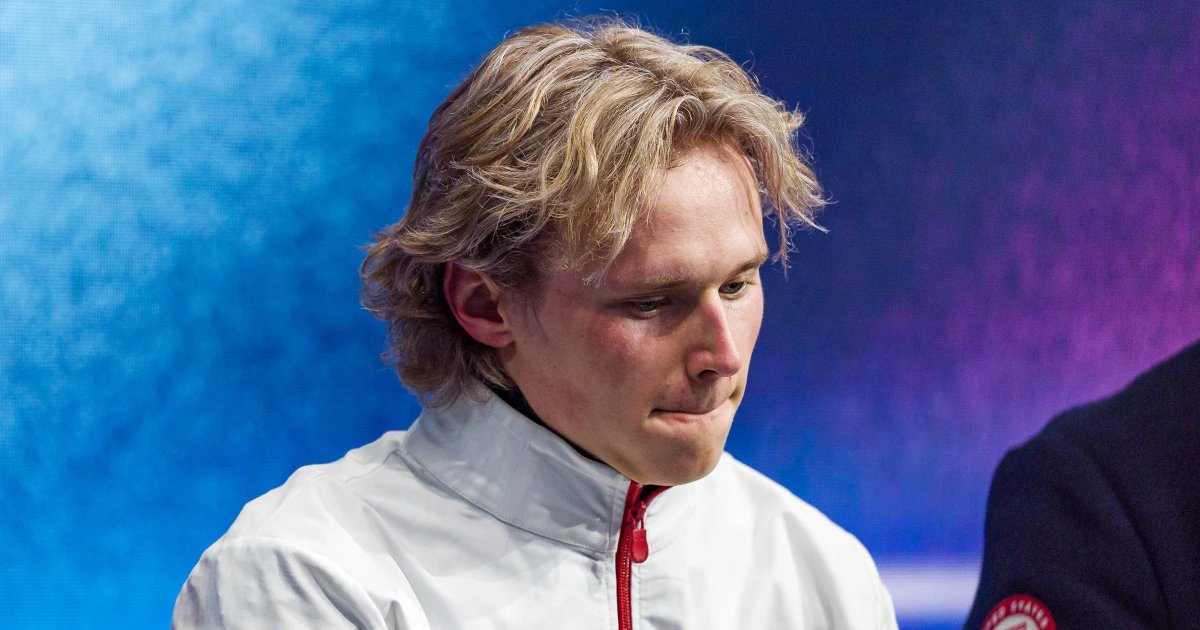
When 21-year-old figure skating superstar Ilia Malinin stunned everyone with his subpar performance in the men’s single skating event — falling from first to eighth because of a mistake-filled free skate program — he cited the pressure of the moment as one of the reasons for his struggles.
“All of this pressure, all of the media, and just being the Olympic gold hopeful was a lot,” he said immediately after the result. “It was too much to handle.”
In an interview on “TODAY” on Tuesday, his most extensive comments since his free skate, Malinin admitted he was not mentally prepared for the Olympic spotlight.
“Honestly, it’s not a pleasant feeling is the most honest way to say it,” Malinin said of the expectations he felt in Milan. “So many eyes, so much attention. It really can get to you if you’re not ready to fully embrace it. That may be one of the mistakes I made, I was not ready to handle that to the fullest extent.”
Malinin, who has otherwise dominated international competition, has been honest and vulnerable about his mental struggles at the Olympics. But the issues he experienced are not necessarily novel.
“Pressure starts with changes and changes in thinking, attitude and perception,” said Robert Andrews, a mental training consultant and therapist. He previously worked with seven-time gold medalist Simone Biles, who famously had her own mental struggles during the Tokyo Games.
“[Malinin] said he was struggling with the negative thoughts, and that’s going to change internal pressure,” Andrews said. “And when you change internal pressure, the body reacts to that in usually not so good ways.”
Andrews was not working with Biles when she had the “twisties,” a mental block while performing midair feats that Biles said were the result of the emotional toll of competing in the Olympics. But he said there is a through line between Biles and Malinin both struggling on the Olympic stage.
“These meltdowns, or whatever you want to call it, they’re always related to stress,” Andrews said.
Michael Gervais, a sports psychologist who has worked with athletes across four Olympics, said Malinin may have been imagining the potential fallout of a poor performance when he took the ice for his free skate.
“Our brains are designed for survival,” said Gervais, who has also worked in the NFL, most recently with the Super Bowl-champion Seattle Seahawks.
“We have a bias for survival, and what that means is our brain is highly equipped, scanning the world for all the dangers,” he said. “So, what he was doing in that moment, his brain was doing what most brains would do, which is scan the world and find all the threats. And there are a lot of threats, not physical, but there are a lot of threats in world championships.”

The concept of pressure or high expectations is not unique to Malinin, though Olympic athletes vary with their mechanisms for dealing with it.
Dutch speedskater Jutta Leerdam, for example, told NBC News she can’t focus on outside opinions or pressure. Leerdam, who also carries the notoriety of being internet personality Jake Paul’s fiancée, said she tried to reprogram her brain “for years” to prevent herself from getting distracted by outside noise.
American speedskater Erin Jackson, on the other hand, told NBC News she welcomes pressure, because it pushes her out of her laid-back personality and adds an edge to her performance.
Malinin, to be fair, entered the Olympics with perhaps the biggest spotlight of any American athlete. And he wasn’t simply expected to medal, he was expected to win gold by a wide margin while executing difficult jumps that only he had made possible.
While Malinin has been able to cruise through international competitions for most of the last three years, the Olympics are an entirely different stage — and a new level of pressure. Malinin himself alluded to the extra weight of the Winter Games when he was overheard after his free skate saying his performance would have been different had he been selected for the Beijing team in 2022.
“What makes Olympic competition so pressure-filled is because you may only get a handful of opportunities to medal, and it’s seen as a lifetime pursuit,” said Michael Heck, a therapist who works with Andrews at the Institute of Sports Performance.
Following his skate, Malinin didn’t offer specifics but said that “traumatic moments” and negative thoughts flooded his mind before skating. According to Heck, those issues may have begun even before the Olympics.
“There’s all kinds of preventative work that these athletes have to be doing in order to keep their competitive authenticity, in order to stay focused on motivational clarity,” he said. “If there’s unresolved trauma, it surfaces, because whatever he was dealing with has not been dealt with yet, so he couldn’t do preventative work, he would get flooded at some point.”
So if Malinin decides he wants to return for the Olympics in 2030 in the French Alps, can he deal with the issues that kept him from peak performance in Milan? The short answer appears to be yes.
Andrews said there are numerous practices he would employ with someone in Malinin’s position, from trying to train the subconscious mind to desensitization techniques to making sure he would process his trauma, all in an effort to what Andrews calls “systematically working through interference.”
“You can train your mind to go exactly where you want it to go,” Andrews said.
Ultimately, Malinin’s fall could turn him into an even better competitor moving forward.
“His reality is that he experienced something embarrassing and humbling,” Heck said. “But through the mindset of excellence, you take this as a really difficult part of your process. You can really learn from being humbled.”
Gervais added: “This is highly emotionally charged experience and there are handfuls of best practices in the field of sports psychology to navigate these experiences. I don’t know him, but I would think his future is very bright.”