dailynewsnblog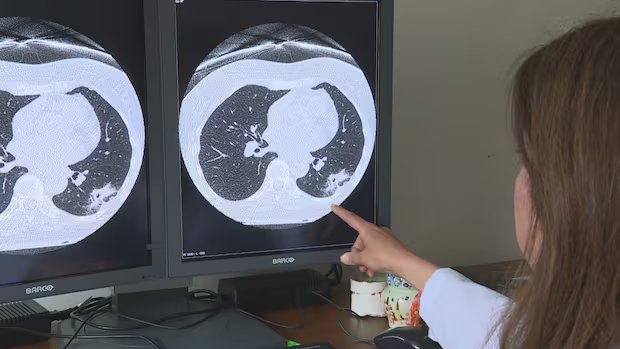

Listen to this article
Estimated 5 minutes
The audio version of this article is generated by AI-based technology. Mispronunciations can occur. We are working with our partners to continually review and improve the results.
Nova Scotia’s lung screening program is still in its infancy, but those leading the effort say they’ve already been able to deliver life-changing, positive news to dozens of people who might have received a terminal diagnosis in other circumstances.
“We’re seeing a big impact and we’re getting more referrals at early stage or Stage 1 lung cancer, where we can essentially cure the disease and improve patient outcomes,” said Dr. Alison Wallace, a thoracic surgeon who operates on lung cancer patients.
“To be able to offer patients surgery and a cure just offers hope with this devastating disease.”
Lung cancer is often called a silent killer, as it doesn’t become symptomatic until it advances to a late stage of the disease. About 80 per cent of people die within five years of a late stage diagnosis.
Nova Scotia’s screening program is aiming to curb that.
It launched two years ago after more than a decade of advocacy by Dr. Daria Manos, a radiologist who now leads the program.
It’s specifically designed for those aged 50 to 74 who smoked daily for at least 20 years, even if they’ve quit.
The patients are vetted by nurses, who send those at highest risk for lung cancer for a CT scan of their lungs.

So far, 1,500 people have received those scans. Of those, 55 have been diagnosed with cancer or are in the process of confirming a diagnosis.
But what’s becoming more common is radiologists discovering small spots of Stage 1 cancer — which is often curable — rather than late stages of the disease.
“It’s been an unbelievable success,” said Manos.
She said thoracic surgeons are now able to remove the spots in a few hours, instead of spending all day in operations with complicated cases of the disease.
“We have the science that shows this is the right thing to do. But on an emotional level, it’s also very rewarding to do this. It’s very rewarding to be able to use the science that we know exists and actually implement it in Nova Scotia.”
Expansion coming
Lung screening is currently available in the central and eastern health zones of Nova Scotia, but Manos said they’ll be launching in the rest of the province in the coming months.
She said it has been a complex effort getting ready for the expansion. She’s now trained 15 radiologists on their own time, on top of their regular jobs. Clerks and nurses have also been trained on the process.
“There’s lots of people who are very enthusiastic, but it takes time. The other big hurdle that we’ve come across is just the IT infrastructure to make sure we can monitor these patients properly and follow them properly.”
While only about half the participants receive scans, everyone is offered a type of support to help quit smoking. Some receive counselling, while others can access free smoking cessation products.

A 2022 survey from Health Canada showed about 12 per cent of Nova Scotians smoke, which is slightly higher than the national average of 10 per cent.
But smoking rates among teenagers in the province are at 10.7 per cent, more than double the national average of 4.2.
Robert MacDonald, president and CEO of Lung NSPEI, sits on the steering committee for the screening program. He said it was essential to include supports to help more Nova Scotians quit.
“Lung and respiratory in the past has always been second fiddle in the sense that there’s a stigma that goes to the fact that you have lung disease. Automatically people go to the fact that you did it to yourself because you smoked,” MacDonald said.
“I’ve seen in recent years the government of the day and the Department of Health and Wellness really enhancing some of the programs available when it comes to respiratory. This is probably the flagship one. To have that is very important.”
Manos has been working directly with community organizations such as the Immigrant Services Association of Nova Scotia (ISANS), the Health Association of African Canadians and Tajikeimik, an Indigenous health organization, to help inform people about the program.
She said many of those who have entered the program will be monitored for years, in hopes of catching any changes to their health early on.
“We know there’s an awful lot of work out there to do. That’s where we really want to get the word out. We’re trying to make the program as accessible to as many Nova Scotians as possible.”
MORE TOP STORIES