dailynewsnblog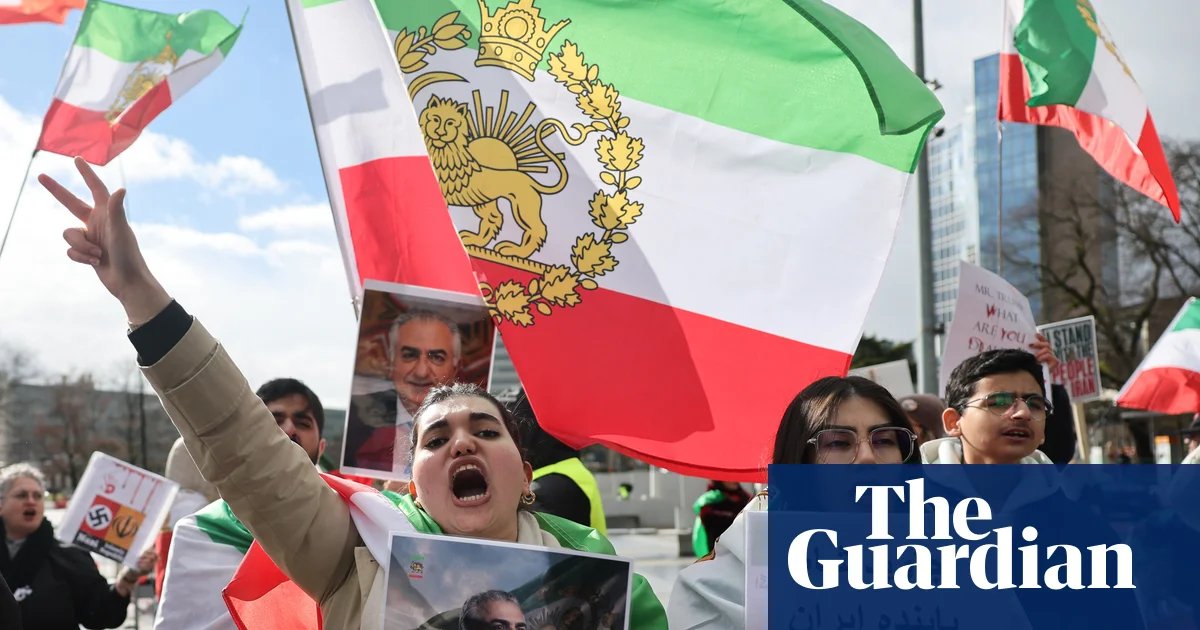
A fresh round of indirect nuclear talks in Geneva between Iran and the US, focusing on the terms for Tehran constraining its nuclear programme under the supervision of the UN nuclear weapons inspectorate, ended after just over four hours, Iranian state media reported.
The talks were held against a backdrop of a now-familiar slew of contradictory messages from Donald Trump, in which he said he believed Iran wanted a deal but also highlighted the US naval military buildup in the region.
Oman continued to act as the mediator, exchanging messages that have not stopped since the first round of this phase of talks started in the country on 6 February.
Iran’s supreme leader, Ali Khamenei, responded to the presence of US warships off the coast of Oman – across the Gulf from Iran – by saying the US could not destroy the Islamic Republic and appearing to threaten the vessels.
Warships were dangerous he said, but “more dangerous than a warship is a weapon that can send it to the bottom of the sea”.
Iran also announced that parts of the straits of Hormuz would be closed on Tuesday to allow the Iranian navy to carry out live-fire military exercises. A full closure of this narrow waterway, controlled by Iran, would cause chaos for commercial shipping.
Trump said he would be in direct touch with the talks, but Iran emphasised that the president would speak only to the US delegation, led by his special envoy, Steve Witkoff, and his son-in-law Jared Kushner.
The Iranian side was led by its foreign minister, Abbas Araghchi, who on Monday met the director general of the International Atomic Energy Agency, Rafael Grossi. The US side met Grossi on Tuesday, underlining how verification of the nuclear industry was at the centre of Tuesday’s round of talks.
Any deal to constrain Iran’s nuclear programme – the sole focus of the Geneva talks – would require a full return of the IAEA inspectors to Iran’s nuclear weapons facilities. Iran has offered to dilute its stockpile of uranium enriched to 60%, but opposes the stockpile being exported abroad, most likely to Russia.
Previous talks in Cairo on the Iran-IAEA protocols that would allow the IAEA full access to three main nuclear bombed sites broke down. A small number of IAEA inspectors are still working in Iran, but they have no detailed knowledge of the damage caused by US bombing or how many of centrifuges could be quickly restarted. The process of “downblending” highly enriched uranium, downgrading it from weapons grade, is an acknowledged technology.
Iran is seeking to restate its right to enrich uranium domestically, even if in practice it is unable to do so for many years.
Tehran was also offering Trump sweeteners in the form of a prosperity package, and a non-aggression pact between Iran and the US – and possibly Israel.
The foreign ministry deputy director for economic diplomacy, Hamid Ghanbari, said: “For the sake of an agreement’s durability, it is essential that the US also benefits in areas with high and quick economic returns. Common interests in the oil and gas fields, joint fields, mining investments, and even aircraft purchases are included in the negotiations.”
He said the 2015 nuclear pact with world powers had not secured US economic interests. “Iran’s limited or blocked resources are also part of the negotiations and their liberation must be realised”, he added.
A full economic package that embedded US commercial interests inside Iran would, it is argued, create a US lobby opposed to continuing sanctions, let alone military activity.
At times, Trump has said the best outcome would be for Khamenei to stand down, but the US does not seem to have a strategy to achieve this. The US president has not committed himself to supporting Reza Pahlavi, the former shah’s son, who has many supporters and is offering himself as a transitional figure to democracy.
In Iran, an Executive Committee for the Establishment of a National Salvation Front of Iran has been formed around the three principles set out by the former prime minister Mir-Hossein Mousavi, now entering his 16th year of house arrest. The principles are: non-interference by foreign powers; rejection of internal despotism; and a democratic and peaceful transition. In a formation statement the group said it wanted to be “the connecting link” between Iranians who wanted a free, fair and impartial referendum to determine Iran’s future political system.
In an attempt to stop this movement, the security services have arrested many leading reformist politicians, alongside thousands of mainly young demonstrators. A group previously close to the president, Masoud Pezeshkian, operating under the banner of the Reform front, were arrested last week but over the weekend most were released, largely on bail. Fars news agency reported that Pezeshkian had intervened to secure their release. They now do not appear politically active.
Others were still in jail, such as Mostafa Tajzadeh, who was this week given a new 14-month sentence for propaganda against the regime. Another reformist, Ali Shakouri-Rad, has been charged with propaganda against the regime after claiming the security services may have run false-flag operations by attacking mosques. He was referencing an article written by an IRGC officer.
The judiciary on Tuesday said 10,538 protesters had been summoned for trial so far, and there are widespread reports of the prosecution trying to extract confession under physical pressure. Protesters are also routinely being denied the right to choose their own lawyer. Hundreds of people were arrested in one raid in Hamadan province.