dailynewsnblog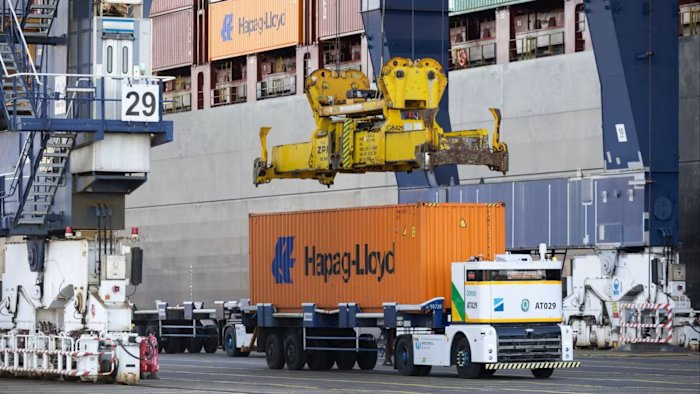
Good morning and welcome back. In today’s newsletter:
UK shelves £110mn frictionless post-Brexit trade border project
Poland extends war reparations campaign to Russia
Keir Starmer says Britain needs to ‘go faster’ on defence spending
The grim message in the ‘rusting’ Arctic rivers
We begin in the UK, where the government has shelved a programme to build a frictionless post-Brexit trade border, after spending £110mn on a contract with Deloitte and IBM for the project.
What to know: Ministers in the previous Conservative government promised in 2020 to create the “world’s most effective border” by 2025 as part of post-Brexit plans to smooth the flow of goods between the UK and the rest of the world.
The “single trade window” was intended to create a one-stop digital platform for traders to submit import and export paperwork. However, the project was paused in the spring of 2024 after encountering delays and higher than expected costs.
Government responses to Freedom of Information requests, seen by the FT, now show that there has been no money spent on the project since January 2025, with the UK Treasury writing that the programme had been “brought to an early closure”.
Why it matters: Delays and IT failures have hobbled the introduction of post-Brexit border arrangements, which the National Audit Office estimated in 2024 will cost £4.7bn. Read the full report.
Here’s what else we’re keeping tabs on today:
Economic data: Germany publishes inflation data. The UK releases February labour market statistics.
Macron visits India: The French president attends the Global AI Impact Summit as part of a visit to New Delhi and Mumbai, during which he will meet Indian Prime Minister Narendra Modi. The two countries are also nearing a blockbuster fighter jet deal.
Results: Carrefour and Havas report earnings.
Lunar new year: Financial markets will be closed in many parts of Asia.
Five more top stories
1. Poland is preparing a reparations claim against Russia for atrocities committed during Soviet dominance of the country, echoing its demand for €1.3tn in compensation from Germany for second world war crimes. But the move risks escalating tensions with Moscow at a time when Warsaw has accused Vladimir Putin of stepping up his hybrid warfare.
2. Britain needs to “go faster” in raising military spending, Sir Keir Starmer has said, as the UK prime minister considers accelerating the timetable for committing 3 per cent of UK GDP to defence and grapples with how to fund an increase.
3. Europe’s privacy watchdog has opened a “large-scale” inquiry into Elon Musk’s X over AI-generated non-consensual sexual imagery, in the latest sign of how regulators are scrutinising the social media site’s Grok chatbot. Read the full report.
4. Big Oil executives are under pressure to spell out their plans for growth after years of cost-cutting and shareholder returns as investors fret about peak oil demand. Companies including Shell, BP and TotalEnergies are being asked to prove the strength of their project pipelines.
5. Hotel magnate Thomas Pritzker has stepped down as executive chair at Hyatt, after documents released by the US Department of Justice revealed the extent of his ties with sex offender Jeffrey Epstein. Read the full story.
The Big Read

Bright orange waterways are becoming more common in Arctic regions, suggesting permafrost is thawing rapidly and leaching potentially hazardous materials and minerals into water systems. Read the FT’s deep dive on the “rusting” rivers of the far north.
We’re also reading . . .
Chart of the day
Interest rate-setters at the Bank of England are split on the long-term impact of UK chancellor Rachel Reeves’ Budget measures aimed at cutting the cost of living. Can the government engineer a lasting drop in inflation?

Take a break from the news . . .
The Courtauld’s Georges Seurat exhibition is the first ever devoted to the painter’s seascapes that comprise more than half his output. Most are in this stunning winter show in London, which reorients our understanding of the artist’s aims, sensibility and inventiveness.