dailynewsnblog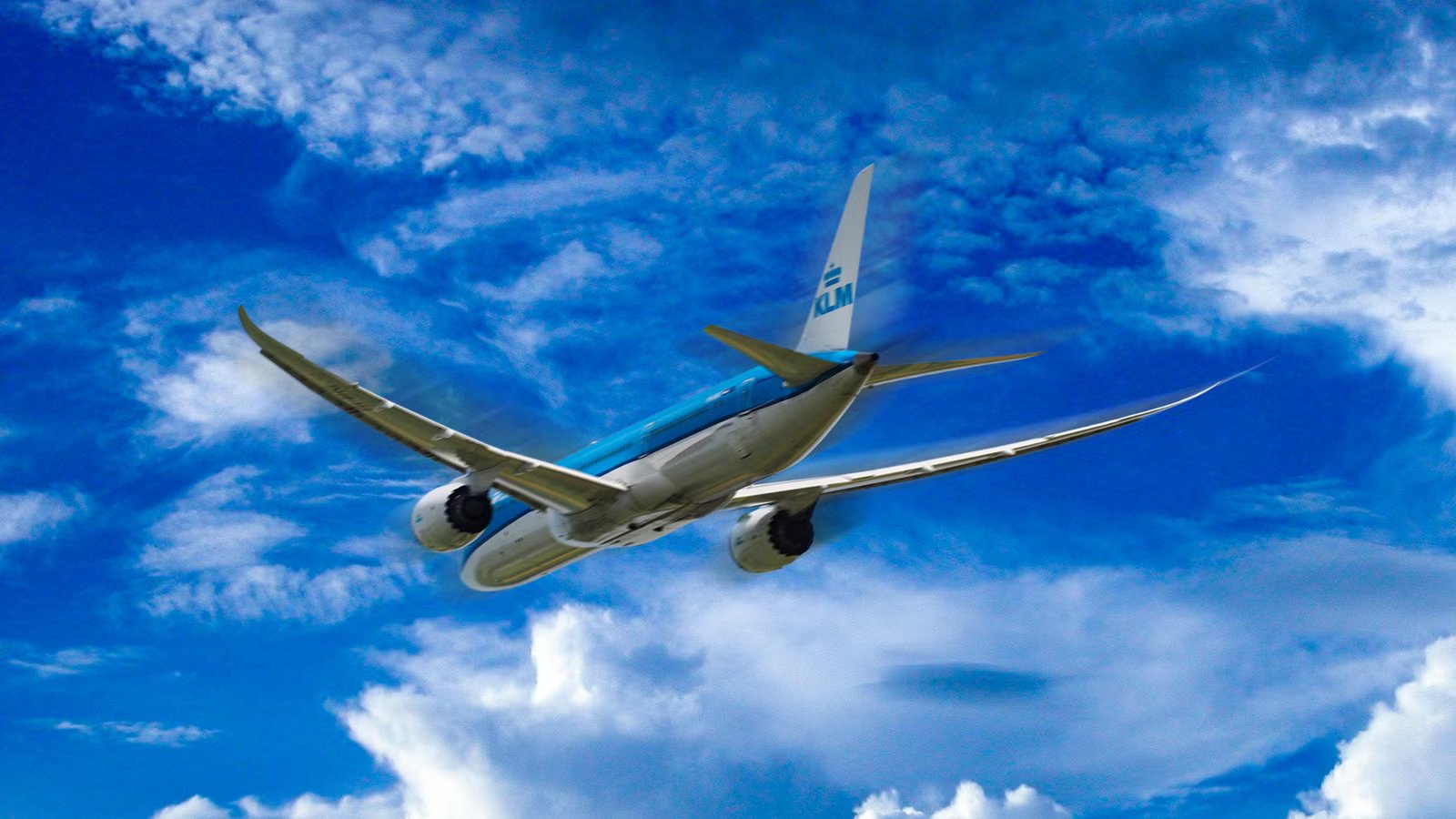
For years, passengers and aviation enthusiasts alike have debated whether the Boeing 787 offers a smoother ride than its European rival, the Airbus A350. On long-haul routes between the US and Europe, Asia, and the South Pacific, both aircraft have become mainstays, and with their advanced composite structures, high-aspect-ratio wings, and next-generation engines, they represent the cutting edge of commercial aviation.
But when turbulence hits at 38,000 feet, does one aircraft really feel better than the other? The answer, as with most things in aviation, is nuanced and depends largely on physics, aircraft design philosophy, airline configuration, and even where passengers are sitting. To answer this question, let’s first get a greater understanding of both aircraft.
All About The Boeing 787

The Boeing 787 first entered commercial service in 2011 with Japan’s All Nippon Airways, marking a new chapter for long-haul aviation. The aircraft has since gone on to become the best-selling widebody aircraft in history. Designed around lightweight composite materials, the 787 was the first large commercial aircraft to use carbon fiber reinforced polymer for the majority of its primary structure. This reduced weight and allowed  Boeing to rethink cabin pressurization and humidity, both of which have been widely praised by passengers.
In the US, the Boeing 787 has become a backbone of long-haul fleets at some of the country’s major carriers.  United Airlines is currently one of the world’s largest 787 operators, operating all three variants – the 787-8, 787-9, and 787-10, while
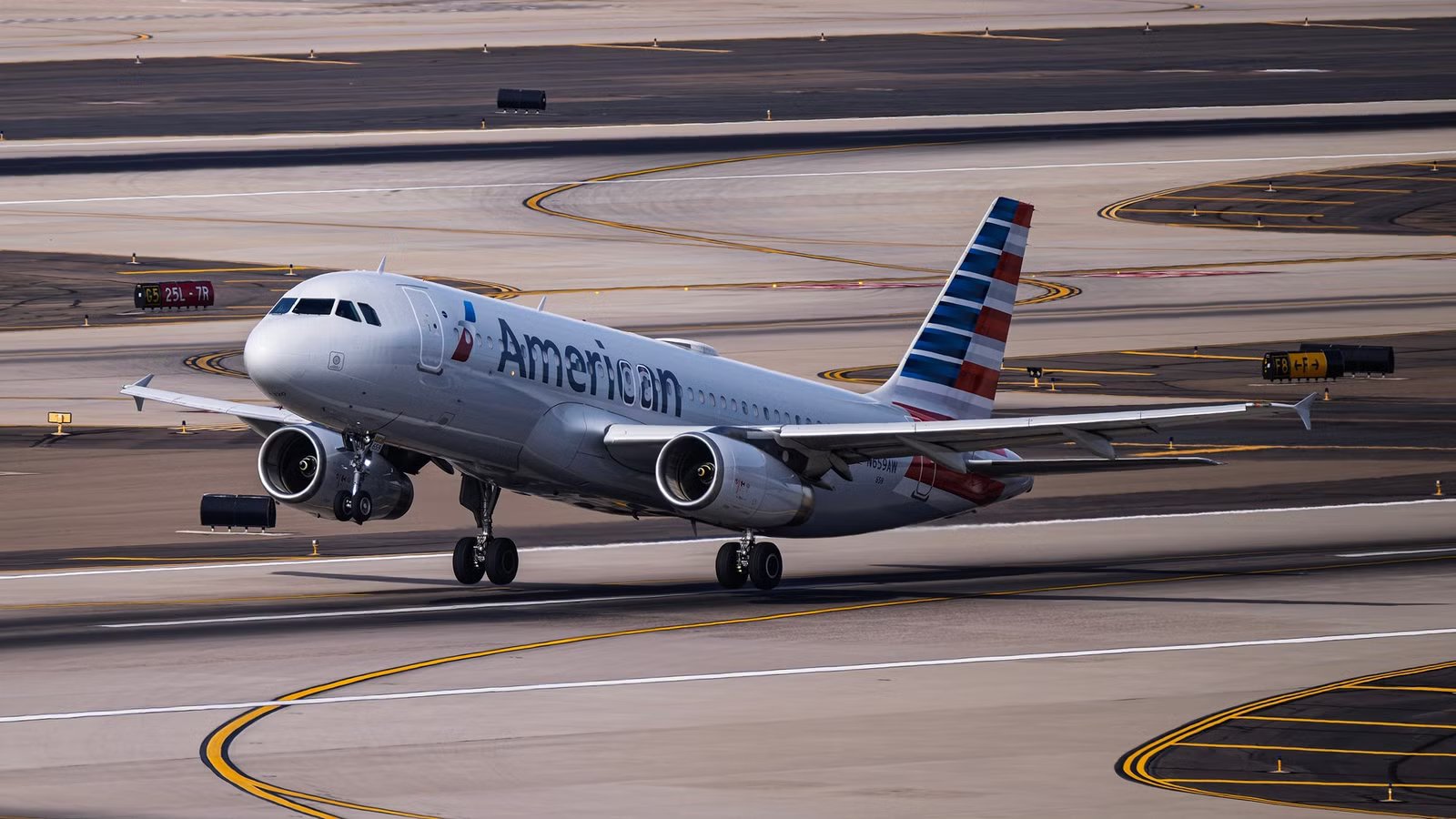
  American Airlines also has a growing fleet of 787-8s and 787-9s. This means that the aircraft are a familiar sight at major hubs such as
  Los Angeles International Airport (LAX), Chicago O’Hare International Airport (ORD), and
  Dallas/Fort Worth International Airport (DFW).
Technically, the Boeing 787’s wings play a major role in ride quality, as they are long, raked, and highly flexible, capable of dramatic wing flex during turbulence. This helps, as a more flexible wing can absorb gust loads more gradually, potentially softening the transmission of turbulence forces to the fuselage, acting almost like a shock absorber.

Airbus A380 Vs. Boeing 747: How Do They Compare On Ultra-Long-Haul Flights?
Does it make a significant difference to to choose one aircraft or another for a long flight? If so, that’s the thing, which is the best airliner?
What About The Airbus A350?

The Airbus A350 entered service in 2015 with  Qatar Airways. Like the Boeing 787, it uses a high percentage of composite materials and was designed as a next-generation long-haul twin-engine aircraft. Airbus positioned it as a direct competitor not only to the 787-9 and -10, but also to larger aircraft like the Boeing 777-200ER and 777-300ER.
In the US, the Airbus A350 has a smaller, but steadily growing presence.  Delta Air Lines operates the A350-900, primarily on routes to Europe, Asia, and South America, and also has an outstanding order for the larger A350-1000. United Airlines recently introduced the A350 into its long-term fleet plans, and international carriers such as
  Singapore Airlines and Lufthansa regularly bring the aircraft into major US gateways.
The Airbus A350’s wing is also extremely advanced, featuring a high aspect ratio and a smooth, curved design, and just like that of the Boeing 787, it flexes visibly in flight. Airbus engineers focused heavily on aerodynamic efficiency and structural optimization, using advanced flight control computers to manage control surfaces precisely and help stabilize the ride.
On paper, both aircraft are designed to handle turbulence within the same regulatory frameworks and must meet identical Federal Aviation Administration (FAA) and European Union Aviation Safety Agency (EASA) certification standards for structural integrity and passenger safety. That means both aircraft are engineered to withstand and mitigate turbulence at comparable levels, and so any perceived difference in smoothness is therefore likely subtle.
What Do Crew & Passengers Say?

Anecdotal reports from crew and passengers alike provide an interesting insight into experience with turbulence. For example, on Reddit, several pilots have commented that, from the cockpit, both aircraft handle turbulence very well. Some note that the Boeing 787’s flexibility gives it a slightly softer feel in light to moderate turbulence, while others argue that the A350 feels equally composed, with no meaningful difference in ride comfort.
Passengers often describe the Boeing 787 as smooth, but it is unclear how much of that perception comes from other cabin features, as the 787’s lower cabin altitude, larger windows, and quieter engines can contribute to a general sense of comfort. When a cabin is quieter and the air feels less dry, passengers may interpret the overall experience as smoother, even if vertical acceleration levels are similar.
Experienced flyers also frequently emphasize the importance of their seat location when it comes to improving comfort. Sitting over the wing, near the aircraft’s center of gravity, tends to minimize the sensation of pitch and vertical movement, while sitting at the very back amplifies it. A passenger in the last rows of a Boeing 787-9 may feel more motion than someone seated over the wing on an Airbus A350-900, for example, and vice versa.
There is also the issue of expectations, and the Boeing 787 was marketed heavily around passenger comfort. As a result, some travelers board with the assumption that it will feel better. That expectation can subtly influence perception.

Is An Airbus A350 Heavier Than A Boeing 787 Dreamliner?
By comparing the A350 and 787, we investigate why size matters in the long-haul widebody market.
Turbulence & Aircraft Response

Turbulence is fundamentally about air mass movement. When an aircraft encounters rising or descending air, it experiences vertical acceleration, and, thanks to their size, larger aircraft can sometimes feel more stable because they are less easily displaced by small gusts. However, both the Boeing 787 and Airbus A350 fall into a similar weight and size category, especially when comparing the Boeing 787-9 to the Airbus A350-900.
Wing loading, structural flexibility, and control laws all influence how those gusts translate into cabin movement. A flexible wing can bend upward in response to a gust, absorbing some of the energy before it reaches the fuselage, and both aircraft have highly flexible composite wings designed to do just that.
In addition, modern fly-by-wire aircraft control systems can make micro-adjustments to control surfaces in milliseconds, and while passengers may not notice these inputs, they can smooth out oscillations. Both Boeing and Airbus have decades of experience refining these systems, and both companies’ latest-generation widebodies benefit from that expertise.
Importantly, no commercial aircraft is designed to avoid turbulence in a structural sense. Instead, they are designed to withstand it safely and maintain controlability, and pilots will often adjust their flying altitude to find smoother air. The ride quality experienced by passengers onboard may have more to do with air traffic control routing and weather patterns than whether they are on a Boeing 787 or an Airbus A350.

How The Boeing 777X Will Change The Passenger Experience On Long-Haul Flights
The new Boeing 777X will enhance passengers’ experience and will make the 777 family more like that of the 787 Dreamliner.
The Perception Of Smoothness

Perceived smoothness is not purely about motion, as noises, vibrations, and even lighting can affect how passengers interpret the ride. The Boeing 787 is widely regarded as one of the quietest long-haul jets in service, and its chevron-shaped engine nacelles and extensive use of composites reduce cabin noise. The Airbus A350 is similarly quiet, with advanced Rolls-Royce Trent XWB engines.
Lower cabin altitude is another shared feature, and both aircraft are typically pressurized to the equivalent of about 6,000 feet rather than the 8,000 feet common on older aircraft. Higher humidity levels also help passengers feel less fatigued, and when passengers arrive feeling fresher, they may attribute that to a smoother flight overall.
In the US, airlines configure cabins differently. For example, Delta Air Lines’ fleet of Airbus A350s features modern seating and mood lighting, while United Airlines’ Boeing 787 cabins have undergone the  Star Alliance carrier’s Polaris upgrades. Seat padding, pitch, and even the tightness of overhead bins can subtly influence how turbulence is perceived, as a well-secured, rattle-free cabin feels calmer. American Airlines recently took delivery of its first Boeing 787-9 with the latest Flagship First Suites, upgrading the onboard experience.
When it comes to wing flex, it is also worth noting that dramatic wing movement does not necessarily mean a rougher ride. In fact, it can indicate that the structure is effectively absorbing gust loads. What looks dramatic outside the window may translate into only mild movement inside the cabin.
Is The Boeing 787 Smoother Than The Airbus A350?

When all factors are considered, there is no definitive evidence that the Boeing 787 consistently delivers a smoother ride than the Airbus A350. Both aircraft are products of the same era, built to similar standards, and optimized for long-haul efficiency and comfort. Anecdotal reports suggest that in light to moderate turbulence, differences are subtle at best, and variations in route, weather, seating position, and airline configuration often outweigh any inherent design differences.
For US passengers choosing between a United Airlines Boeing 787 from  San Francisco International Airport (SFO) to
  London Heathrow Airport (LHR) and a Delta Air Lines Airbus A350 from Hartsfield-Jackson Atlanta International Airport (ATL) to Paris Charles de Gaulle Airport (CDG), the deciding factor is unlikely to be turbulence handling. Schedule, fare, loyalty program, and cabin product will probably matter more.