dailynewsnblog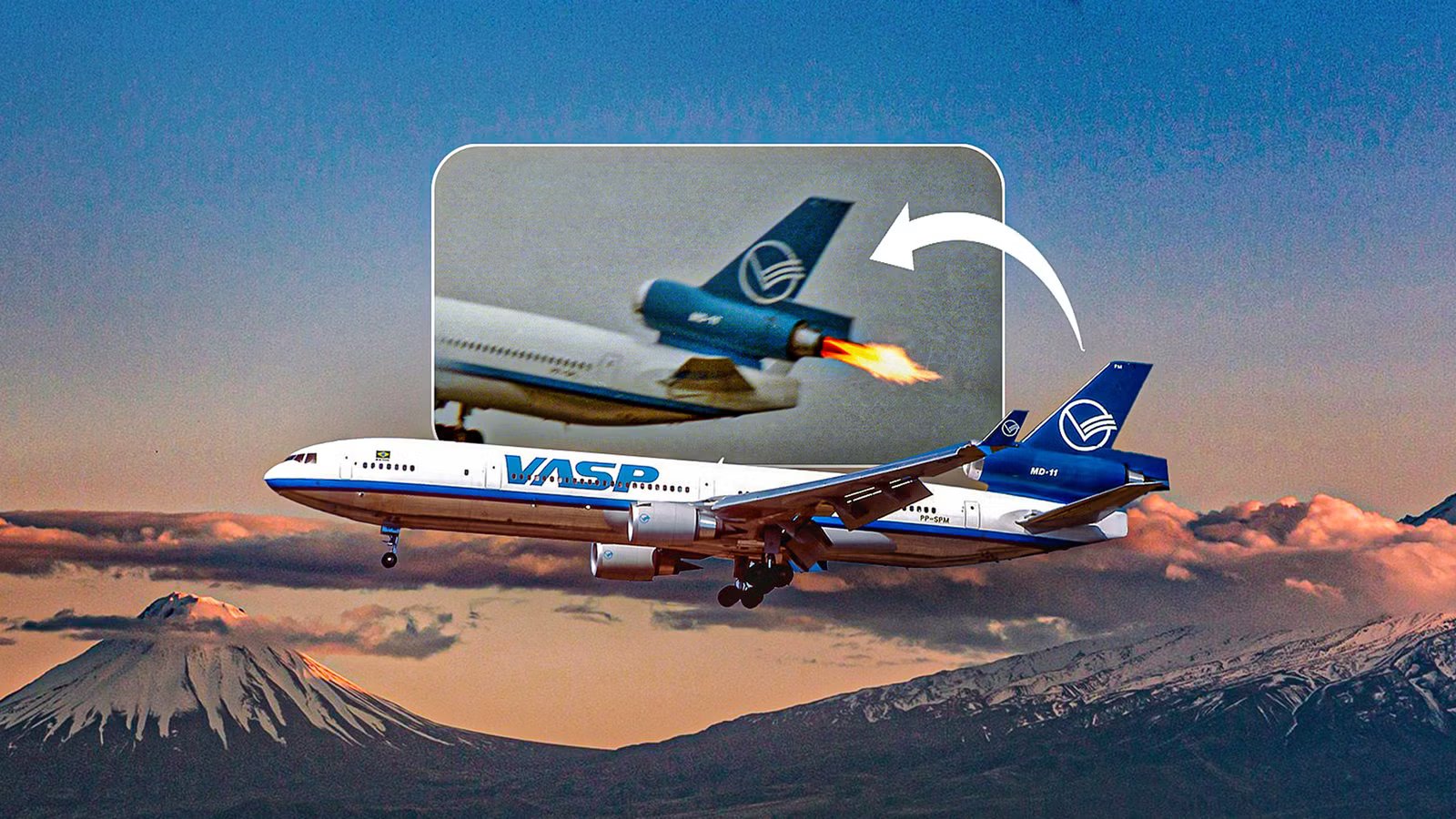
The McDonnell Douglas MD-11 is the most common trijet flying today (sort of). At least that’s true if one ignores the fact that the MD-11s are currently grounded following the 2025 UPS crash, and UPS has hurriedly retired its jets while FedEx wants to start flying them again by the end of May 2026. The aircraft is notoriously difficult to land, and it is easy to point to its tail engine (engine #2) and assume that is the issue. But the truth is more complicated than that, with its difficulty coming from efficiency-led redesign more than the engine itself.
It’s worth noting that the Boeing 727, Lockheed L-1011 TriStar, and Dassault Falcon 900 were all trijets with tail-mounted engines and were not considered more difficult to fly purely because of their tail engine. Here is what to know about why the MD-11 has three engines and whether the engine makes it more difficult to fly.
Why The MD-11 Has A Third Engine

The MD-11 was fitted with a third engine because it is a stretched evolution of the earlier Douglas DC-10, and the DC-10 had a tail engine. The question then becomes why the DC-10 has a tail engine. Trijets became popular in the 1960s as the FAA introduced restrictions on twinjets requiring them to always fly within 60 minutes of a usable emergency airport in the event of engine failure. The development of more powerful and reliable engines would allow ETOPS certifications, essentially eliminating the restriction, but that was in the future.
Trijets (and quadjets) were able to get around this restriction as they could still fly on multiple engines in the event one failed. Another factor is that having a third engine in the rear shifts the aircraft’s center of gravity aft, allowing the wings to be pushed aft. This means the aircraft has three evenly spaced exits, which enables faster boarding and deboarding, reducing turnaround times.
Additionally, when the DC-10 was originally built, the engines available provided around 40,000 lbf each. The PW4000 and General Electric CF6 engines on the MD-11 provide around 62,000 lbf. The General Electric CF6 is regarded as the most successful widebody engine ever developed and is still produced for Boeing’s remaining 767-300Fs being delivered.
Efficiency-Driven Changes Made It More Difficult

Having a tail engine does not inherently make the MD-11 more difficult to fly, but it does make the aircraft less forgiving and more demanding in some regimes. This is even true compared with its DC-10 predecessor. The tail engine does not introduce asymmetric thrust effects, and an engine-out yaw from the central engine is basically zero because it’s on the centerline. However, the installation and airflow effects of that engine do matter.
It’s not the third engine per se, but how the MD-11 was modified that makes it comparatively difficult to fly. Compared with its DC-10 cousin, it has a significantly smaller horizontal stabilizer and an aft-biased center of gravity envelope in cruise. Both of these modifications reduced drag and so increased efficiency. The overall trijet layout allowed the aircraft to have a stretched fuselage and aft center of gravity without excessive stability penalties.
The trade-off was that these efficiency-driven changes had the effect of reducing natural pitch damping and longitudinal stability. This is especially pronounced at low speeds during approach and landing. To compensate, the MD-11 has a higher approach speed (around 10–20 knots) than comparable widebody aircraft to reduce the effects of low-speed aerodynamic damping and lift. After touchdown, it also has a more pronounced pitch-up tendency on ground spoiler deployment. The MD-11 experiences a greater propensity for bounced landings.

Is It True That The McDonnell Douglas MD-11’s Tail Engine Has A Fan?
Surprising facts about the MD-11’s iconic rear engine and how it breaks from trijet tradition.
The MD-11 Has Been Ok In Cruise

During cruise, these issues are not particularly important, with the aircraft even being said to be light on the controls. The issues come with takeoff and landing, which are always the most difficult and dangerous phases of flight. The landings are more notorious for the MD-11s than the takeoffs. Updates to the MD-11’s flight control computers have reduced the issues over time, but the issues remain. Pilots are required to have enhanced training to fly the MD-11.
Looming large over the MD-11 is the recent UPS Airlines Flight 2976 disaster. While this crash may point to other safety issues with the MD-11, it is unrelated to the question of this article. Flight 2976 suffered its left engine detaching during its takeoff roll, with the bulk of its pylon still attached. The aircraft caught fire and crashed into an industrial area, killing all three crew members on board and a dozen more people on the ground.
Tragic as this is, it is not related to the question about whether the MD-11’s tail engine makes it more difficult to fly. But it may point to the MD-11 having multiple design issues, making it less safe than today’s modern 787 and A350 aircraft. No major hull-loss accidents have occurred purely in cruise due to aerodynamic, stability, or control issues. The MD-11’s accident history is overwhelming during takeoff, landing, or ground phases. The exception is Swissair 111 that suffered an in-flight fire from wiring.
Couldn’t Remove The Engine Even If The Company Wanted To

When the DC-10 was developed in the late 1960s, the technology and engine reliability were far below that of modern engines. By the time the MD-11 variant was developed, technology had improved significantly, with its engines producing 50% more thrust than the original DC-10. In a sense, the MD-11 didn’t need the third engine (forgetting about ETOPS), but the redesign work would have increased certification requirements and essentially resulted in a new airplane and a new FAA type rating.
This is a similar issue that other aircraft fall victim to when they are upgraded. Aircraft are products of their time, and as times change, given the opportunity, engineers would do things differently. But when engineers update and upgrade an airplane, they are hamstrung by its certified flight profile and are limited to adjustments that don’t fundamentally change the aircraft’s flight characteristics. This happened with the 1960s-era Boeing 737; the low, short landing gear couldn’t be lengthened in the Boeing 737 MAX upgrade to accommodate the new, larger engines.
McDonnell Douglas MD-11 (per Boeing, Reuters) | |
|---|---|
Number built | 200 |
Years built | 1988-2000 |
Remaining operators | FedEx Express, Western Global Airlines |
Power plant | 3x PW4000 or 3x CF6 |
Thrust | Approx. 62,000 lbf per engine |
This led to the engines being installed forward and slightly up, not “under the wings where they belong,” forcing Boeing to install the now-infamous MACS software. Other design compromises can be seen in the A330neo and 777X. Aircraft updates seek to be cheaper and faster for both the airplane maker and the airlines operating it than developing a cleansheet aircraft. However, they are inherently more constrained to low-hanging fruit and the limits of the old aircraft’s certified flight characteristics.

Is The McDonnell Douglas MD-11 Done Flying For Good?
The aircraft was once a long-haul workhorse.
The MD-11’s Lower Tolerance Makes More Crashes

The MD-11 has experienced a fairly large number of accidents over the years. First, it should be pointed out that this is an older aircraft, and modern aircraft are all far safer and more reliable than old aircraft. The only Dreamliner lost was the Air India Boeing 787 that crashed after the fuel was switched off, and the only A350 loss was a ground collision in Japan. While the final investigation report for the Dreamliner crash is yet to be published, arguably, neither of these incidents was due to faults in aircraft design.
So the MD-11 needs to be compared with its own contemporary aircraft, not today’s aircraft. And here, MD-11 remains markedly worse. Boeing’s historical data through 2013 shows the MD-11 experienced 3.62 hull losses per million departures. This is around 4x higher than the contemporary 747-400 and much higher than the Boeing 777, A330, or A340. Newer aircraft should theoretically be safer than older aircraft, but the MD-11 bucked this trend with its 1960s-era DC-10 predecessor only experiencing 2.98 hull losses per million departures.
Some will point out that the several times the MD-11’s bounced landings have caused it to lose control, break the wing, flip onto its back, and burn. A counterpoint to this is that these incidents have happened when the aircraft was trying to land in conditions that exceeded its maximum crosswind component or in cases where the landing should have been aborted, and that it’s safe when flown as intended. A counter-counterpoint is that the MD-11 is just less forgiving when it is pushed to the edge of its tolerance, as it will inevitably lead to tragic results in the real world.
The MD-11 Is Less Forgiving In Landing

It’s not the fact that the MD-11 has a tail-mounted engine that makes the aircraft more difficult to land. The engine does not produce unusual asymmetric thrust and does not cause deep stall issues. Instead, the problem comes down to the aircraft’s reduced static longitudinal stability, small pitch damping margin, narrow flare margin, and sensitivity to center of gravity.
The MD-11’s early flight control systems also posed issues, but these have been rectified over time. Over time, the aircraft’s performance has improved thanks to software updates and improved training. The MD-11’s modern operators are all freighter companies, with all airworthy MD-11s now functioning as cargo aircraft. Cargo operators do not see the aircraft as unusually unstable.
That said, the aircraft will always be less forgiving than modern widebodies. With the remaining fleet now aging and approaching retirement, there is essentially no realistic scope that future upgrades will ever close this gap. Following the crash, UPS brought forward its MD-11 retirement, retiring them in late 2025. FedEx wants to return them to service in 2026 and phase them out by 2032.


![Historic: Air Canada Launches 1st Flights On These 2 New Transatlantic Routes [Map]](https://dailynewsnblog.com/wp-content/uploads/2026/06/air-canada-boeing-787-8-taxiing.jpg)