dailynewsnblog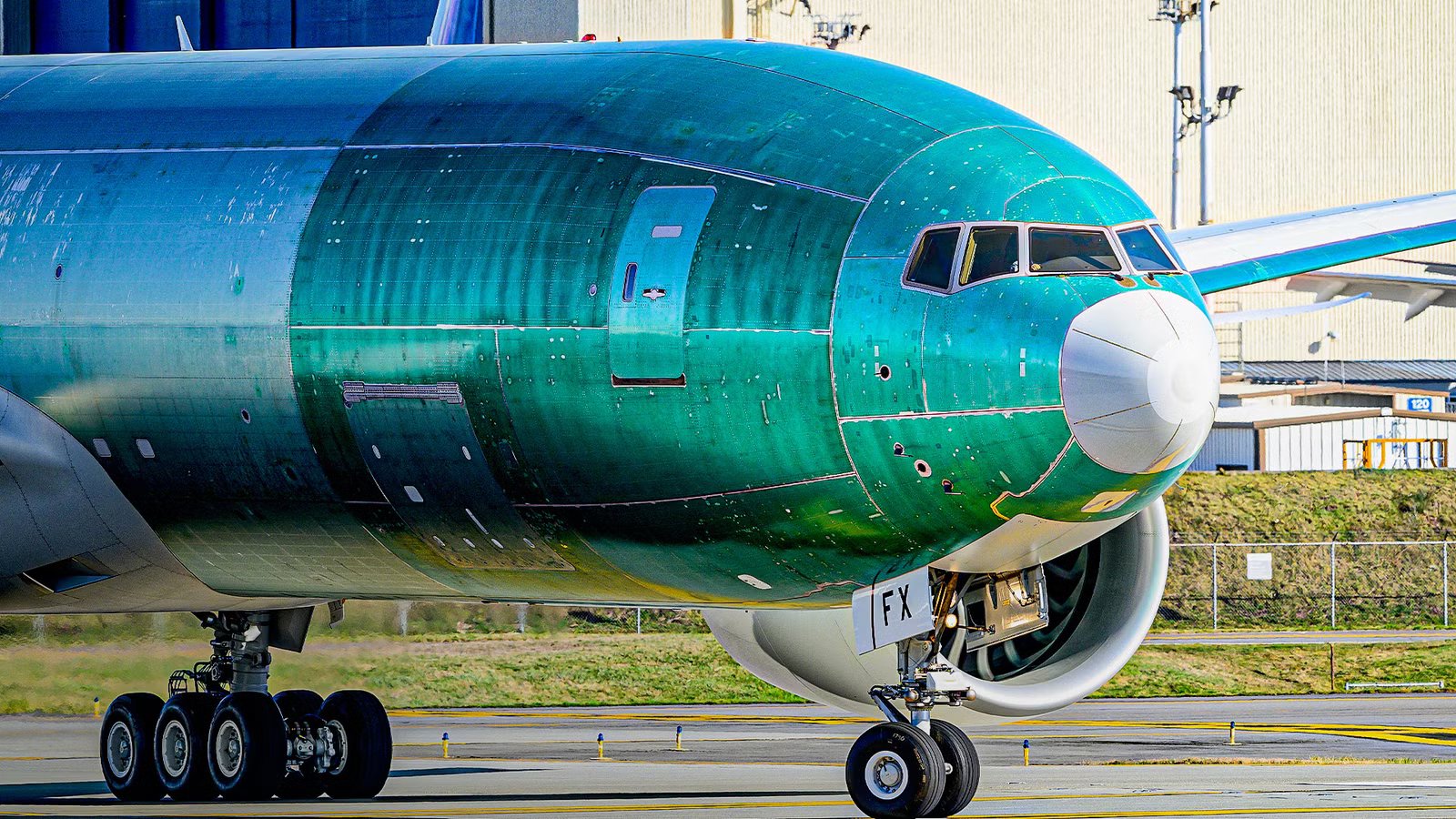
Have you ever looked at a train hauling a massive, windowless airplane body and wondered why it looked like a giant piece of military surplus? For decades, newly manufactured  Boeing fuselages, most notably the Boeing 737s traveling by rail from Kansas to Washington, have sported a distinctive matte green finish. This isn’t a stylistic choice by the manufacturer or a secret pre-livery for a specific airline. In actual fact, it is a vital industrial necessity that protects the aircraft long before it ever tastes jet fuel.
To truly understand why this is the case, this article takes a look into the harsh journey a plane takes before it is even assembled. These fuselages are exposed to the elements, industrial pollutants, and the physical rigors of long-distance transport. This article will clarify the chemical composition of this iconic coating, why it varies in shade across different parts of the plane, and how modern materials like carbon fiber are beginning to change the green landscape of aircraft manufacturing forever.
Protective Rather Than Visual

The short answer is that the green color is a dual-layered defense consisting of an anti-corrosive primer and a vinyl protective film. Boeing fuselages are primarily made of aluminum, with newer models like the 787 bucking the trend to feature composite materials. Aluminum is highly susceptible to oxidation and surface damage during the manufacturing process. While the primary protective agent is naturally yellow, the green tint is a deliberate result of adding carbon-based pigments to increase the durability and visibility of the coating.
In addition to the chemical primer, many Boeing 737 fuselages are wrapped in a thin, green-tinted vinyl film during their long-distance transit. This film acts as a second skin, protecting the expensive aluminum from debris, tree branches, and weather as the train carrying the components snakes through various climates across the United States. Without this layer, the metal would arrive at the assembly plant covered in tiny scratches that could lead to structural fatigue or corrosion later in the aircraft’s life.
The transition to this specific shade of green was driven by a need for UV protection. By mixing lamp black with the original yellow zinc chromate, engineers created a coating that acts like sunscreen for the metal. This ensures that the anti-corrosive properties do not degrade while the fuselage sits outdoors for weeks during the assembly and testing phases.
Keeping The Aircraft Safe

The intensity of the green you see on a Boeing fuselage isn’t governed by a single master formula. It can actually be attributed to the chemical necessity of UV protection, as well as the specific manufacturer of the component and the environmental regulations of the region where the part was born. A Boeing 737 is a combination of parts from around the world, and so one aircraft might display several different shades of green, ranging from a pale sage to a deep forest emerald.
While the anti-corrosive primer is naturally yellow, it is highly sensitive to sunlight. For components like the fuselage, which may sit on a railcar or an outdoor tarmac for weeks, engineers add lamp black to act as a permanent shade. The more lamp black added to the mix, the more UV-resistant the coating becomes and the darker the green appears. This is why interior parts, which are never exposed to the sun, are often left in their natural, yellow state.
In some historical cases, like the F4U Corsair of World War II, manufacturers even mixed in red pigments, resulting in a distinctively pink primer. This served as a visual quality control marker by using different colors for the first and second coats. This allowed inspectors to easily see if a section of the plane had been missed or if the coating was too thin. Today’s green serves a similar purpose, providing a high-contrast background that makes it easy for Boeing technicians to spot tiny scratches, dents, or crevice corrosion before the final layers of airline paint are applied.

Why Did Boeing Stop Developing Planes With Eyebrows?
Once deemed a useful feature, the eyebrow windows gradually lost their utility.

Aviation experts and maintenance engineers view the green primer as the unsung hero of a fleet’s longevity, marking a significant shift from the silver age of aviation.  American Airlines was the industry outlier for a significant period of time, opting for polished aluminum rather than paint to save an estimated 1,200 lbs on larger airframes. However, Boeing engineers have long maintained that the cost of constantly buffing and waxing bare metal to prevent crevice corrosion actually outweighs the fuel savings provided by the lighter weight. Experts note that a polished plane requires meticulous care every 90 to 120 days, a labor-intensive cycle that most modern airlines find economically unsustainable.
The view shifted definitively in 2013 when American finally transitioned to a painted silver livery and the arrival of the Boeing 787 Dreamliner was the final signal for the unpainted look. The Dreamliner is primarily made of composite materials, which look like a dull, dark grey in their raw state. These materials make it difficult to achieve a uniform chrome shine across the entire aircraft. To maintain a consistent brand identity across a fleet of both metal and composite jets, experts say that a uniform coat of paint is the only logical solution.
In addition, the high-visibility green primer is essential for pre-flight integrity. It provides a stark, contrasting background that makes it significantly easier for inspectors to spot hairline cracks, oil leaks, or damaged rivets that might be obscured by a mirrored surface. Objectively, while a painted aircraft might be visually more appealing, one that is primed has the ability to highlight every flaw, thus ensuring no flaw goes amiss.
Other Alternatives?

While the green primer and vinyl combination is the industry standard for Boeing, it is not the only way to protect an aircraft during its infancy. Some might wonder why airlines don’t simply use a clear coat to show off the high-tech aluminum or perhaps a different color altogether. The primary reason for avoiding clear coats is that they do not possess the same ability to block out UV radiation. Without those pigments, the sun’s rays would penetrate the coating and cause the aluminum to oxidize underneath, leading to a milky or cloudy appearance that would require the entire aircraft to be stripped and treated again.
Another alternative often discussed is painting the aircraft black or a darker military grey from the start. However, this introduces significant thermal challenges. At a cruising altitude of 30,000 feet, the outside temperature is roughly -40°C, but on the ground in a place like Phoenix or Dubai, a dark-colored fuselage can absorb enough solar radiation to reach temperatures that could warp internal components or significantly increase the load on the cabin’s air conditioning systems. White or light-grey paint, which is often applied directly over the green primer, remains the most efficient option for keeping the skin of the aircraft cool.
Finish Type | UV/Corrosion Protection | Weight Impact | Maintenance Cost |
Green Primer | High (via lamp black) | Minimal | Low (Temporary/factory only) |
Polished Metal | Low (Needs constant wax) | Lowest (-1,200 lb) | Highest (Buffing every 90 days) |
Standard White | High | Moderate (+600-1,000 lb) | Lowest (Standard washing) |
Dark Livery | High | Moderate | High (Fading/thermal stress) |
Finally, the green process stands in stark contrast to how modern composite aircraft, like the Airbus A350 or Boeing 787, are handled. Carbon fiber does not corrode like aluminum, meaning these next-gen planes do not require the iconic green zinc-chromate defense. Instead, they are often seen in the assembly hangar sporting a dull, matte white or grey factory finish. This highlights that the green look is a specific solution for a specific material, that being aluminum, and as the industry moves further into the age of composites, the sight of a green fuselage may eventually become a nostalgic relic of 20th-century metallurgy.

What Determines An Aircraft’s Lifespan?
When delivered from the manufacturer, an aircraft has an intended lifespan, which is not measured in years but by pressurization cycles.
Shift To Safer Materials

While the green coating is a structural lifesaver, it has historically carried significant health and environmental risks. The primary drawback of the traditional green primer is its chemical base of hexavalent chromium. This substance is a known carcinogen, and for decades, factory workers involved in the application and stripping of zinc chromate faced heightened risks of lung cancer and tissue ulceration. Due to these dangers, modern aviation has seen a massive push toward chrome-free primers. These newer versions often result in a lighter, more minty green, or even a greyish-beige, which can sometimes lead to confusion among observers used to the classic forest green of older Boeing models.
Another exception occurs with alclad aluminum. Many modern Boeing aluminum sheets are manufactured with a thin layer of pure aluminum bonded to the high-strength alloy core. This pure layer naturally forms a corrosion-resistant oxide, providing a baseline level of protection. Some might argue that the green primer is redundant on alclad surfaces; however, the risk of crevice corrosion is so high during a 2,000-mile train journey that Boeing refuses to skip the green defense.
Method | Primary Color | Material Focus | Key Benefit |
Zinc Chromate | Green/Yellow | Aluminum Alloys | Superior UV/corrosion defense |
Polished Alclad | Mirror Silver | Clad Aluminum | Weight savings (1,200 lb) |
Composite Finish | Matte Grey/White | Carbon Fiber | Corrosion-proof by nature |
Finally, there is the risk of primer degradation if an aircraft sits in the assembly queue for too long. While the lamp black provides excellent UV protection, it is not infinite. If a fuselage is delayed for months due to supply chain issues, as seen during the recent 737 MAX groundings, the green coating can begin to chalk or fade. This requires the manufacturer to perform a re-prime or a deep chemical wash before the final livery can be applied, adding significant labor costs and potential delays to the delivery schedule.
How Much Longer Will The Green Last?

The distinctive green hue of a Boeing fuselage is a sophisticated, multi-layered shield that preserves the structural integrity of the aircraft before its first flight. By combining the anti-corrosive properties of zinc-based primers with the UV-blocking power of lamp black, Boeing has created an industrial sunscreen that allows aluminum components to survive a 2,000-mile cross-country transit and weeks of outdoor assembly.
The era of the green fuselage also serves as a bridge between the silver age of polished metal and the future of composite aviation. Seeing a green jet on a railcar or a tarmac is a rare look at the bare structure of an aircraft, revealing the meticulous level of chemical and physical protection required to keep a metal tube safe at 35,000 feet.
The specific shade of green may continue to shift as the industry moves toward non-toxic, chrome-free alternatives like zinc phosphate. Furthermore, as aircraft like the 787 Dreamliner and 777X incorporate more composite parts, the green look will become increasingly rare, reserved only for the remaining aluminum sections of the airframe. Ultimately, whether it is forest green, minty sage, or eventually a new composite grey, these factory finishes remain the most critical layers of defense in the history of modern flight.

![Historic: Air Canada Launches 1st Flights On These 2 New Transatlantic Routes [Map]](https://dailynewsnblog.com/wp-content/uploads/2026/06/air-canada-boeing-787-8-taxiing.jpg)