dailynewsnblog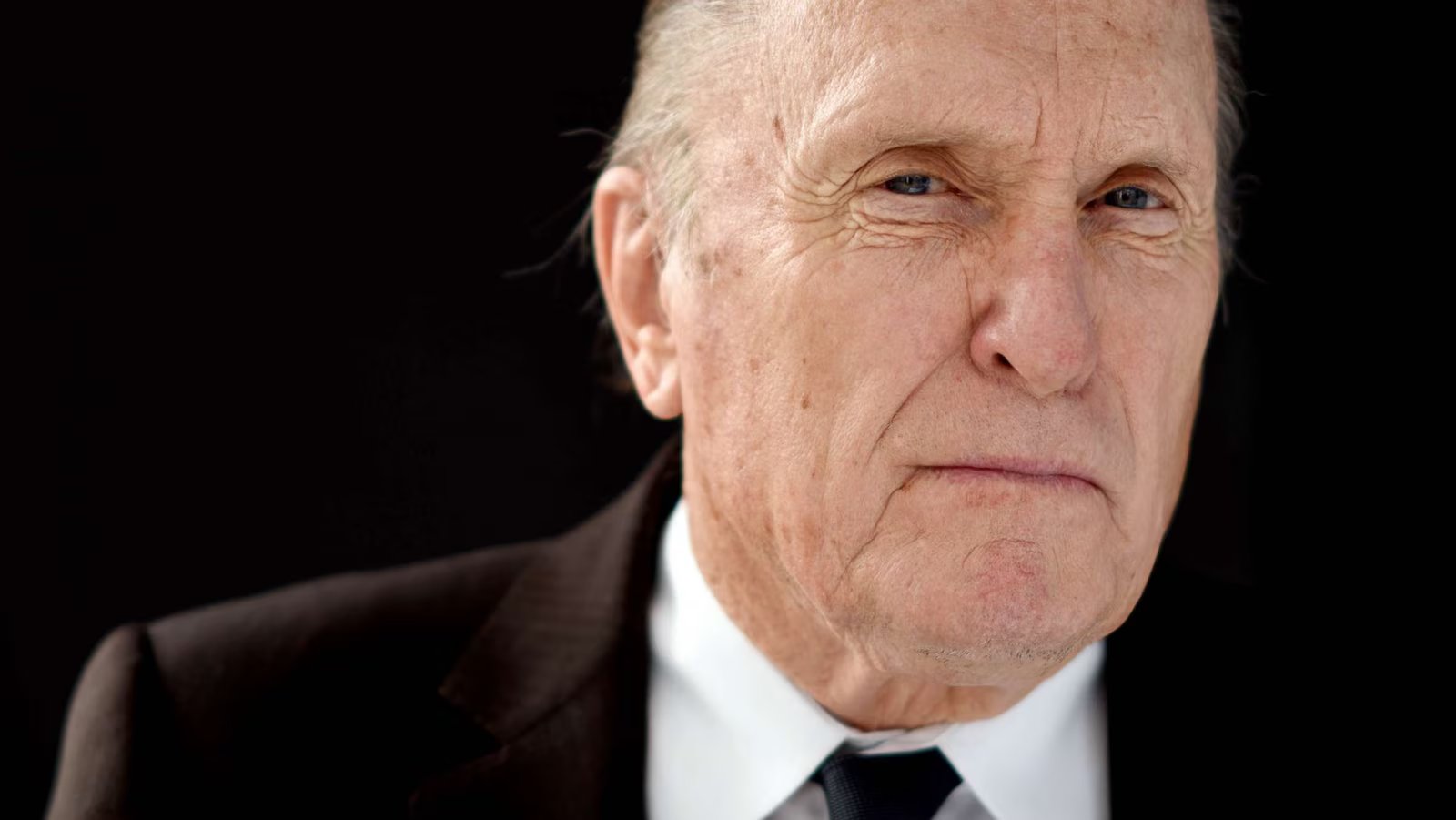
Robert Duvall, the Academy Award-winning actor known for roles in some of American cinema’s greatest films, including “The Godfather” and “Apocalypse Now,” has died at age 95.
“Yesterday we said goodbye to my beloved husband, cherished friend, and one of the greatest actors of our time. Bob passed away peacefully at home, surrounded by love and comfort,” read a statement posted on the actor’s official Facebook page by his wife, Luciana.
A statement from Duvall’s representative confirmed the actor’s death, reading in part, “Academy Award winning actor Robert Selden Duvall passed away peacefully in his home in Middleburg, Virginia the evening of Sunday, February 15, 2026 with his wife Luciana Duvall by his side. He was 95.”
“In keeping with Duvall’s wishes, no formal service will be held,” the statement continued. “Instead, the family encourages those who wish to honor his memory to do so in a way that reflects the life he lived by watching a great film, telling a good story around a table with friends, or taking a drive in the countryside to appreciate the world’s beauty.”

Actor Robert Duvall poses for a portrait during the 87th Academy Awards nominee luncheon at the Beverly Hilton Hotel, Feb. 2, 2015 in Beverly Hills, Calif.
Jeff Vespa/Getty Images, FILE
Duvall brought a signature naturalism to the roles he played, an unmannered style that infused his myriad characters with a calm intensity – a counterpoint to his self-confessed often hot-tempered on-set disposition – and earned him a reputation as one of his generation’s finest actors. Beginning with his memorable film debut as Boo Radley in 1962’s “To Kill a Mockingbird,” in which he didn’t utter a word, Robert Duvall went on to appear in more than 90 films over the next seven decades, working with some of Hollywood’s most celebrated filmmakers and performers.
Duvall shared the screen as the outlaw Ned Pepper opposite John Wayne in 1969’s “True Grit,” originated the role of Maj. Frank Burns in Robert Altman’s 1970 dark comedy “M*A*S*H,” and starred in the title role in “Star Wars” creator George Lucas’ 1971 directorial debut, “THX 1138.” Duvall also played Corleone family consigliere Tom Hagen in Francis Ford Coppola’s “The Godfather” and “The Godfather Part II” opposite his acting hero, Marlon Brando, and had a pivotal role the ruthless network VP Frank Hackett in the acclaimed 1976 media satire “Network.”
As the shirtless, cowboy hat-wearing Lt. Col. Bill Kilgore in Coppola’s 1979 Vietnam War epic “Apocalypse Now,” Duvall delivered the film’s most oft-quoted line: “I love the smell of napalm in the morning.” Four years later, Duvall won the Academy Award for Best Actor for playing Mac Sledge, a recovering alcoholic country music star attempting to make amends in “Tender Mercies.”
Other career highlights included playing cynical sportswriter Max Murphy in the 1984 Robert Redford baseball fable “The Natural”; NASCAR crew chief Harry Hogge opposite Tom Cruise and Nicole Kidman in the 1990 action hit “Days of Thunder”; Sgt. Martin Prendergast, the retiring LAPD officer who spends his final day on the job pursuing Michael Douglas’ unhinged character in 1993’s “Falling Down”; and a criminal court judge accused of murder who’s defended by his estranged son, played by Robert Downey Jr., in the 2014 legal drama “The Judge.”

Robert Duvall and Tommy Lee Jones in a still from the television miniseries “Lonesome Dove,” on March 30, 1988.
CBS Photo Archive/CBS via Getty Images
Of all his many celebrated acting roles, however, Duvall repeatedly said his favorite was that of retired Texas Ranger Augustus “Gus” McCrae in the 1989 TV Western miniseries “Lonesome Dove,” which Duvall called “The ‘Godfather’ of Westerns'” in a 2021 interview with Stephen Colbert. The series was one of several TV projects in which Duvall starred. Others included playing the title role in 1992’s HBO film drama “Stalin,” for which he won a Golden Globe – his fourth lifetime win – and the 2006 AMC Western miniseries “Broken Trail,” which earned Duvall a Primetime Emmy Award for Outstanding Lead Actor, in addition to another for producing the series.
“Time teaches you a lot of things. It gets a little easier as you get older,” Duvall, then 72, told ABC News’ Charlie Gibson in 2003, reflecting in his craft. He went on to quote a line from his beloved “Lonesome Dove” character, Gus McCrae: “The older the violin, the sweeter the music. Maybe that applies somewhere.”
Robert Selden Duvall was born in San Diego, California, on Jan. 5, 1931, to Mildred, an amateur actress, and William, a rear admiral in the United States Navy, as the middle son of three boys. His family soon moved to Annapolis, Maryland, home of the U.S. Naval Academy, where Duvall spend most of his youth. Despite his father’s wish that he enroll in the Academy, Duvall graduated from Principia College in Elsah, Illinois with a degree in drama in 1953, after which he enlisted in the U.S. Army and was honorably discharged two years later.
Duvall moved to New York following his military discharge and used the GI Bill to enroll in the famed Neighborhood Playhouse School of Theatre. During this same time, Duvall roomed with a fellow struggling actor who was a recent transplant from California, Dustin Hoffman, and also befriended Hoffman’s California acting classmate, Gene Hackman. Following his graduation two years later, Duvall worked mostly in local and regional theater before making his television debut in 1959 in the anthology TV drama series “Armstrong Circle Theatre.”

Robert Duvall as Arthur “Boo” Radley in a promotional portrait for “To Kill a Mockingbird,” 1962.
Silver Screen Collection/Getty Images
More TV roles followed – in all, Duvall made some 50 guest appearances though 1969 in hit TV shows including “Route 66,” “Naked City,” “The Twilight Zone,” “The Untouchables,” “The Fugitive,” “The Outer Limits” and more. He also made his Broadway debut in “Wait Until Dark” in 1966, one of only two such appearances he made, the second being in the original Broadway cast of playwright David Mamet’s celebrated work, “American Buffalo.”
At the same time, Duvall began building his film resume, making his big-screen debut in the now-classic Robert Mulligan-directed 1962 film adaptation of Harper Lee’s 1960 novel “To Kill a Mockingbird.” Duvall played the reclusive Boo Radley in a single scene, opposite fellow Neighborhood Playhouse alumnus Gregory Peck in his Oscar-winning role as attorney Atticus Finch. A handful of modest film roles followed until Duvall landed the featured role of the outlaw Ned Pepper in the 1969 John Wayne Western classic “True Grit.”
That role opposite one of cinema’s living legends raised Duvall’s Hollywood profile. Bigger film roles quickly followed, including that of the repressed, by-the-book Maj. Frank Burns in the 1970 box office smash “M*A*S*H,” the success of which inspired the long-running TV series of the same name. Duvall’s most memorable film role to that point, however, came two years later, when Francis Ford Coppola cast him as Corleone family consigliere Tom Hagen in “The Godfather,” a role Duvall reprised in 1974’s “The Godfather Part II.” His work in “The Godfather” earned Duvall his first Academy Award nomination.

Robert Duvall as Tom Hagen and Marlon Brando as Vito Corleone in 1972’s “The Godfather.”
Everett via Shutterstock
Including “The Godfather” and “The Godfather Part II,” Duvall appeared in five films directed by Coppola in five years, beginning with the 1969 drama “The Rain People,” 1974’s “The Conversation” opposite his old friend, Gene Hackman, and ending with his Oscar-nominated role as Lt. Col. Bill Kilgore in Coppola’s 1979 Vietnam War epic, “Apocalypse Now.”
Duvall worked steadily for the remainder of his life. He earned his third Oscar nod for 1980’s “The Great Santini,” and his first win three years later playing washed-up country singer Mac Sledge in 1983’s “Tender Mercies,” written by Pulitzer Prize winner Horton Foote. The latter also won an Academy Award for the film – his second win, the first being for adapting Harper Lee’s “To Kill a Mockingbird,” Duvall’s motion picture debut.

Robert Duvall in his Oscar-winning role as country singer Mac Sledge in 1982’s “Tender Mercies.”
Keystone/Getty Images
Asked by ABC’s Chris Connelly in 2014 if winning an Oscar changed his life, Duvall was succinct: “I became more recognizable in airports. That’s about it.”
In total, Duvall was nominated for seven Academy Awards, the final three for his performances in 1997’s “The Apostle,” which he also wrote and directed; 1998’s “A Civil Action,” co-starring with John Travolta as a corrupt corporate attorney; and 2014’s “The Judge.” His nomination for “The Judge,” at age 84, then made him the oldest actor ever nominated in the Best Supporting Actor category, until Christopher Plummer, at age 86, was nominated three years later for “All the Money in the World.”

Robert Duvall as Lt. Col. Bill Kilgore in the 1979 Vietnam War epic “Apocalypse Now.”
Paramount Pictures/CBS via Getty Images
Other notable later films in which Duvall appeared include “The Handmaid’s Tale” in 1990, 1996’s “Sling Blade,” 1998’s sci-fi action thriller “Deep Impact,” “Crazy Heart” in 2009 – this time with Jeff Bridges playing a down-on-his luck country singer – and as a shooting range owner in the 2012 Tom Cruise hit “Jack Reacher.”

Robert Duvall backstage at the 56th annual Academy Awards show, April 9, 1984 in Los Angeles, Calif. Duvall won the Best Actor Oscar for “Tender Mercies.”
Bob Riha Jr/Getty Images, FILE
In addition to his Oscar, Emmy and Golden Globe wins, Robert Duvall won a BAFTA and a Screen Actors Guild Award, the former for “Apocalypse Now” and the latter for “A Civil Action,” as well as dozens of other critical and popular award nominations and wins. He was also awarded the National Medal of Arts by then-President George W. Bush in 2005.
“Well, you hang out with young people. I can learn from them; they can learn from me,” Duvall answered when Connelly asked him how he kept working into his eighth decade. “I think that’s what keeps me going, at least.”
“The day will come when they definitively wipe the drool and you call it quits,” Duvall added. “Until that time comes, you try to live life to the fullest.”
Duvall was married four times, most recently in 2005 to Luciana Pedraza, who survives him. He had no children.