dailynewsnblog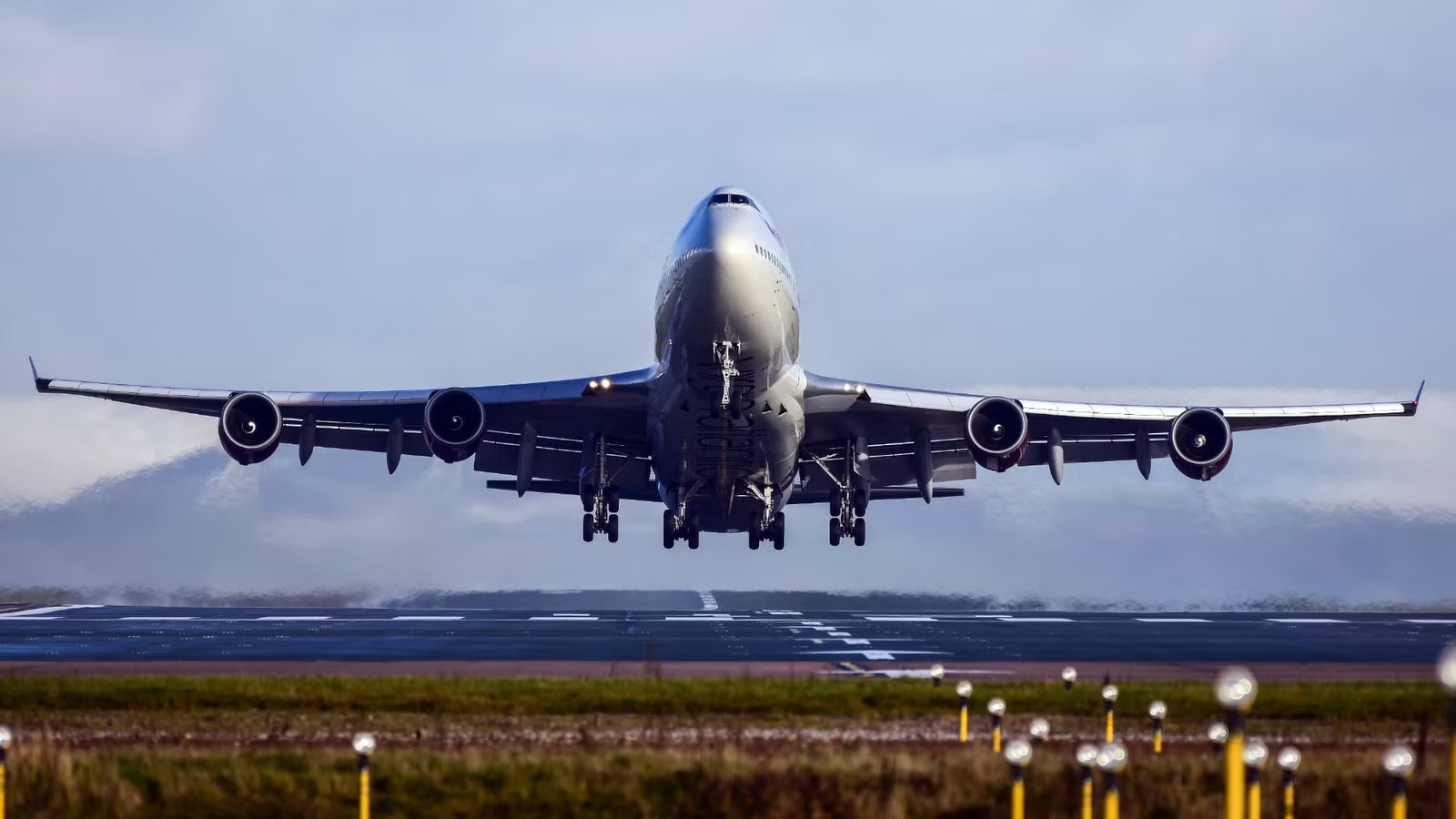
From the passenger’s perspective, a takeoff can feel straightforward. You check in, go through security and some shops, before you walk down the jet bridge, settle into your seat, and eventually feel that familiar surge of thrust as the aircraft accelerates. However, behind those moments, there is a carefully choreographed sequence of preparation, checks, cross-checks, briefings and calculations taking place, all driven by one unrelenting master: the clock.
I’ve been flying long haul for 32 of my 44 years in aviation. During that time, technology has transformed the flight deck. We’ve moved from paper charts to iPads, from clipboards to integrated onboard information systems. But despite all the digital sophistication, the core process from check-in to gear-up has hardly changed. Standard Operating Procedures or SOPs remain the backbone of everything we do.
Everything revolves around STD: Scheduled Time of Departure. Airlines are obsessed with OTP, or On Time Performance, but for pilots, punctuality is not just about customer satisfaction or operational efficiency. It’s also about legal duty limits and safety margins. And that brings me back to the most powerful lesson I ever received as a young captain.
“Who’s In Charge Today?”

I remember my very first sector in the left seat during Command Training. I sat down in the captain’s seat beside the Chief Pilot, feeling proud, slightly nervous, and very aware of the significance of the moment in my career. He looked at me and asked calmly “who’s in charge today?” I smiled confidently and said “me.” He shook his head. “Nope.” I paused. “You?” Again, he shook his head. Then he raised his hand and pointed at the clock in the centre of the instrument panel.
“From now on,” he said, “this clock is in charge.” It was one of those deceptively simple lessons that stays with you for life. From that day forward, I planned every departure based on time. Not pressure. Not ego. Not assumptions. Time. I’ve passed that lesson on to every captain I’ve trained since.
Why Time Matters So Much

Aviation runs on accurate time planning. Particularly on long-haul operations with two pilots, flight duty hours are tightly regulated. For example, if we report for a 9:30 am flight and our maximum duty period that day is 13 hours, that must include one hour and 30 minutes of pre-flight preparation and 30 minutes of post-flight duties.
That leaves just 1 hour 30 minutes for taxiing, delays, holding patterns, or even the possibility of a diversion. There isn’t much slack in the system, so we check in at London Heathrow 1 hour and 30 minutes before STD.
STD – 1:30: The Crew Room

Most of the time, especially in large airlines, you may never have met the other pilot before. Long-haul fleets are big communities. A handshake, a quick introduction, and then straight into work. We log into our company iPads and download the flight plan prepared by our flight planning department. These teams are exceptional, producing hundreds of flight plans daily, but ultimately, we are responsible for the safety and commercial viability of our flight.
We upload the route into Jeppesen FlightDeck Pro and begin building a mental picture of the journey: routing, alternates, destination weather, en-route weather systems, forecast turbulence, and the position and strength of the jet streams. High-level jet streams can significantly affect flight time and fuel burn.
A favourable tailwind can shave minutes, even half an hour off a transatlantic crossing, and a strong headwind can do the opposite. If something doesn’t quite add up, we call flight planning. That dialog between pilots and planners is a key part of operational safety.
STD – 1:20: Cabin Crew Briefing

Next, we check with Dispatch to confirm where the aircraft is parked and whether it’s ready. Then we visit the cabin crew briefing room. On a widebody, that means 10 crew on an A330 or 13 on an A350. They are reviewing safety procedures, assigning onboard positions, and discussing any specific considerations for the flight. We introduce ourselves and brief them on the route, flight time, expected turbulence, and any operational issues that may affect the cabin.
For example, we might expect moderate turbulence over the North Atlantic: if so, they need to plan service accordingly. This moment sets the tone. A confident, calm crew briefing builds trust, as everyone knows their role, and everyone understands the plan. Then we leave the crew room together and walk to the aircraft, yes, just like in the movies, although without dramatic background music.
STD – 1:05: At The Aircraft

Once at the aircraft, the cabin crew disperse to conduct their checks. We head to the flight deck. Bags stowed. Seats adjusted. A quick word with the engineers, who brief us on any deferred defects listed under the MEL (Minimum Equipment List) or CDL (Configuration Deviation List). Most of the time, these are minor and have no operational impact, but we discuss each one. The aircraft is only accepted once we are fully satisfied.
STD – 1:00: Cockpit Preparation Begins

On the Airbus A350, we power up our Electronic Flight Bags. These link to the Onboard Information System, Airbus’s integrated touchscreen platform that contains documentation, performance tools, company manuals, and communication systems. Preparation is divided between CM1 (left seat) and CM2 (right seat). Each pilot conducts independent scans using structured checklists, and we cross-check each other constantly.
This is deliberate redundancy, as having two trained professionals independently verifying the same information dramatically reduces error probability. We review the technical logbook and discuss fleet-specific notices, Operational Engineering Bulletins (OEBs), and any Temporary Abnormal Behaviour advisories from Airbus. Only when we are satisfied with the aircraft’s serviceability do we digitally accept it.
STD – 0:55: Performance Planning

We obtain the ATIS, the airport weather information and calculate our MTOW (maximum take-off weight). At Heathrow, with two 3 km runways, we’re often able to depart at maximum weight: 290,000 kg on the A350-1000, 242,000 kg on the A330-900, and 233,000 kg on the A330-300. We send our planned weights, landing weight, crew numbers, and flight time to load control via ACARS, which is essentially an airborne telex system.

How A Single Flight Changed The Course Of My Life Forever: Introducing Captain Chris
From delivering newspapers to captaining long-haul flights, this pilot’s journey is one of perseverance. How did he overcome the odds?
STD – 0:50: PF & PM

Roles now shift from CM1/CM2 to PF (Pilot Flying) and PM (Pilot Monitoring). If the First Officer is flying, I’ll complete the external walk-around inspection. Walking around a 70-meter aircraft never loses its sense of scale. You’re checking tyres, landing gear, control surfaces, engine inlets, looking for anything noted in the MEL/CDL or anything out of place.
Meanwhile, the PF continues programming the flight management system: inserting route data, weights, and winds, and building a secondary flight plan for an emergency return. Passenger boarding also begins around this time.
STD – 0:40: Final Weights & Fuel

When boarding is complete, and the flight is ‘closed,’ we receive the Zero Fuel Weight. We calculate any fuel adjustments and send final uplift requirements to the refueller. Fuelling a widebody takes 20-30 minutes, so we’re usually partially fuelled already.

“I Missed His First Steps”: Captain Chris On The True Cost Of Life Spent At 39,000 Feet
Intercontinental flying isn’t all sunshine and roses.
STD – 0:20: The Departure Brief

This is one of the most important moments, as we may never have flown together before, but the departure briefing aligns our mental models. The PM briefs the taxi routing, runway, SID (Standard Instrument Departure), altitude constraints, noise abatement procedures, first cleared altitude, and minimum safe altitude within 25 miles.
The PF then covers threats and mitigations, weather, terrain, traffic, runway length, rejected take-off considerations, local procedures, and so on. The brief is collaborative, so, at any point, the other pilot can add local knowledge or recent experience.
STD – 0:10: Doors Closing

The Flight Service Manager confirms passenger numbers and requests door closure, and I make the welcome PA announcement. There is something special about that moment, with 400 people placing their trust in two pilots they’ve never met.

Captain Chris Reveals The Secrets To Beating Jet Lag
Captain Chris shares his personal strategies for staying one step ahead of jet lag.
STD: Pushback, Taxi & Take-Off

Pushback clearance received. Brakes released. We normally start one engine during pushback and taxi on a single engine to save fuel. The second engine is started at least five minutes before take-off to allow warm-up. Control checks and a short re-brief of the most important threats. The checklists are complete, and we line up. “Cleared for takeoff.” Thrust set. “100 knots.” “V1.” “Rotate.”
The PF eases the stick back, about three degrees per second, to achieve 12.5 degrees nose-up on the A350 or 15 degrees on the A330. “Positive climb.” “Gear up.” And suddenly, 290 tonnes becomes airborne. This entire process, the timing, the scans, the briefings, the cross-checks, is built on SOPs, as, when everything is standardized, anything abnormal immediately stands out.
Two pilots who may never have met can operate seamlessly together because the system is designed that way. Nothing is left to chance, and that is why, despite the complexity, despite the scale, and despite the weight, commercial aviation remains the safest form of travel in the world.

![Historic: Air Canada Launches 1st Flights On These 2 New Transatlantic Routes [Map]](https://dailynewsnblog.com/wp-content/uploads/2026/06/air-canada-boeing-787-8-taxiing.jpg)