dailynewsnblog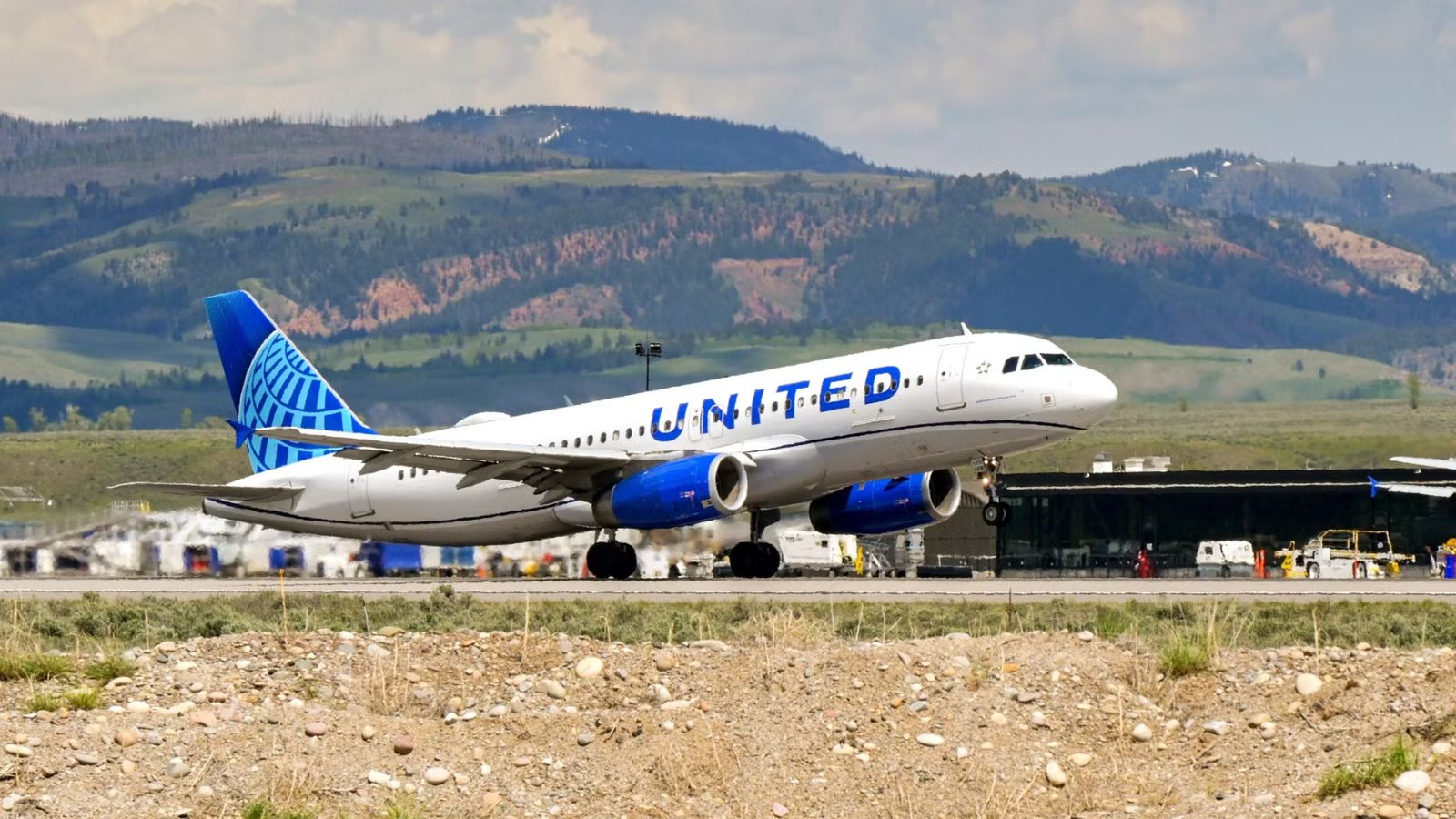
Many US airlines are now modernizing their fleet by switching to more efficient and sustainable jets.  United Airlines is not an exception and is currently accelerating a fleet modernization that will soon make one of its most familiar workhorses, the Airbus A320, a rare sight in its livery. But why this jet? Once a reliable staple of the domestic network, the A320ceo family is now showing its age against a backdrop of rising fuel costs, maintenance demands, and heightened customer expectations.
This is more than just a retirement story: it’s a shift in how United approaches capacity, efficiency, and consistency across its narrowbody operations. For aviation enthusiasts and frequent flyers, the news is notable because United’s A320s represent a significant part of its Airbus footprint, despite the airline’s image as a ‘Boeing airline.’
According to Planespotters.net, the carrier has 60 A320-200s in service and five parked, all with an average age of 26 years old, making them among the oldest active narrowbodies in the mainline fleet. Fleet records from ch-aviation show that many of the earliest deliveries date back to March 1995, with multiple examples having left service in 2025.
The Aging A320 Fleet

United’s A320-200s have been a common sight in the fleet for nearly three decades. With an average age of 26 years old, they are well into the late stages of a typical mainline narrowbody’s service life. Older narrowbodies like the A320ceo require more frequent maintenance checks, from heavy structural inspections to engine overhauls. United has already spent heavily to keep them flying, and CEO Scott Kirby told ch-aviation that the airline spent $100 million on engine work in 2024 alone, prompting the decision to retire 21 aircraft in 2025.
While Kirby didn’t specify the types in his interview, we can deduce that the A320 is one of the candidates, alongside the Boeing 757, as the oldest airframes reach between 25 and 30 years of age. As such, as reported by ch-aviation, United earmarked at least 17 of the oldest Airbus A320s in the fleet for retirement between August and October of 2025.
For United, the problem isn’t just technical reliability but opportunity cost. Every dollar spent keeping a 30-year-old A320 flying is a dollar not invested in a fuel-efficient, higher-capacity replacement. As the A321neo order stream accelerates, keeping these older aircraft makes less and less financial sense.
The Business Case for Replacement

Aircraft economics drive fleet decisions as much as mechanical limits. The A321neo offers a significant reduction in cost per available seat mile compared to the A320ceo, primarily due to its newer engines. The new aircraft carries more passengers, often 25–30% more in United’s configuration, while burning less fuel per seat, thanks to new-generation LEAP-1A engines, aerodynamic improvements, more sustainable solutions, and lighter materials.
The ‘United Next’ growth plan focuses on up-gauging. It means flying larger narrowbodies on core routes to spread costs across more seats. The A321neo fits perfectly, replacing two older A320s on some frequencies with a single higher-capacity, lower-CASM jet. Over hundreds of rotations per year, this shift produces millions in annual savings. As Simple Flying previously reported, United views the A321neo as its top domestic performer, so replacing an A320 with an A321neo doesn’t just save money.
|
Airbus A320ceo vs Boeing 757 vs Airbus A321neo – Comparative Specifications |
|||
|---|---|---|---|
|
Attribute |
Airbus A320ceo |
Boeing 757-200 / 757-300 |
Airbus A321neo / LR / XLR |
|
Typical United seats |
~150–160 |
176–204 (-200) / ~234 (-300) |
~190–220 |
|
Average age in United’s fleet |
26 years |
29.1 years (-200) / 23.5 years (-300) |
1 year |
|
Typical range |
~3,300 nm |
~3,915 nm (-200) / ~3,400 nm (-300) |
3,500–4,700 nm (XLR) |
|
Fuel burn per seat |
High |
High |
Low |
|
Key mission |
Domestic trunk, mid-haul |
Transcontinental, thin transatlantic |
Domestic trunk, long thin routes |
Indeed, it also creates room for growth without adding more flights into slot-restricted hubs like Newark or San Francisco. In addition, the A321neo LR and especially the XLR variants offer comparable range and capacity to the Boeing 757 but with far greater fuel efficiency. This makes them a wise choice for replacing the 757s on long or thin routes, as seen in the chart above. A similar replacement strategy was adopted by American Airlines as well.
Passenger Experience & Brand Consistency

Economics may drive replacement, but passenger experience also significantly influences the choice of replacement. The A321neo arrives factory-fresh with modern interiors, with larger Airspace XL overhead bins, full-color LED mood lighting, fast WiFi, and seat-back entertainment on most configurations. Retrofitting a 1990s-era A320 to this standard is expensive and incomplete; the underlying cabin dimensions and systems limit what can be done.
Passengers notice these differences. On a 2,000-mile domestic leg, the quieter cabin, improved lighting, and better tech of the A321neo create a tangible upgrade over an older A320. Consistency matters too. For example, when a traveler books a premium seat on United, they expect the same product whether they fly from Chicago to Denver or New York to Los Angeles.
By phasing out the A320s, United reduces product variation across its network. For loyalty program members and corporate accounts, this predictability is a selling point. The A321neo becomes a brand ambassador, reinforcing United’s premium domestic positioning while supporting operational efficiency.
The Boeing 757 Factor

The A320 retirement wave is happening alongside a similar story for the Boeing 757. Planespotters.net lists 35 757-200s (average age 29.1 years) and 16 757-300s (average age 23.5 years) in service, with five apiece in storage. According to ch-aviation, the 757-200 is the second-oldest fleet type in United’s mainline operation, behind only the Boeing 767-300ER in average age. This is, in fact, another aircraft to be replaced by newer and bigger jets, such as the Boeing 787 Dreamliner.
The 757 remains beloved for its performance, especially on ‘long and thin’ routes, but it is very fuel-hungry compared to new-generation narrowbodies. The A321neo LR and XLR close much of the capability gap while offering better per-seat economics and lower emissions. United’s A321neo deliveries will increasingly replace 757 capacity, particularly on transcontinental routes and select shorter transatlantic sectors.
This is a rare dual-fleet transition. United is effectively using the same Airbus type to replace two very different workhorses: the 150 to 170-seat A320 and the 180 to 240-seat 757. For network planning, this simplifies maintenance and training while introducing a modern, flexible airframe into multiple mission profiles.
Retirement Timing & Market Conditions

The decision to accelerate retirements in 2025 was partly economic and partly strategic. Kirby’s comments at the Barclays industrial event in early 2025 made clear that softer leisure demand and macroeconomic headwinds are shaping the near-term fleet plan.
Instead of flying marginally profitable old aircraft, United will ground or part out some of the costliest frames, generating a cash-positive effect, per ch-aviation. Fleet withdrawals will be phased, starting with the oldest A320s. Then, the 757-200s are also likely candidates for the early retirement list, although United has not confirmed specific tail numbers.
United has ordered hundreds of Airbus jets, including 50 A321XLRs and 130 A321neos. However, there have been some delays regarding the Airbus A321XLR model, and now, the aircraft is expected to enter service with United in the summer of 2026. That is why the retirements are expected to unfold in phases throughout the year and not overnight, aligning with deliveries so that routes remain fully served. This approach maximizes efficiency and avoids network disruption amid fleet turnover.
The Network United Is Building

Phasing out the A320s and older 757s is about reshaping the domestic and near-international network. Larger, more efficient narrowbodies let United consolidate frequencies while preserving or even growing total seats. This is vital in congested airports like Newark (EWR) and San Francisco (SFO), where slot constraints limit how many departures an airline can add. For passengers, the shift will mean a more consistent onboard product, more modern cabins, and fewer operational disruptions caused by aging aircraft.
For the airline, it’s a long-term play that supports its carbon-reduction goals, trims fuel burn per seat, and positions United to compete strongly against Delta and American, both of which are also renewing their narrowbody fleets. Ultimately, the retirement of the Airbus A320ceo fleet is a strategic step toward a more unified, efficient, and passenger-friendly United Airlines. The A321neo, along with the 737 MAX and the 787 Dreamliner for the long-haul, will define the airline’s flying experience well into the 2030s.
In a competitive US market, fleet modernization isn’t optional, it’s essential. United’s move away from the older jets toward the A321neo series reflects the industry’s trajectory: efficiency and passenger comfort in one high-capacity package.