dailynewsnblog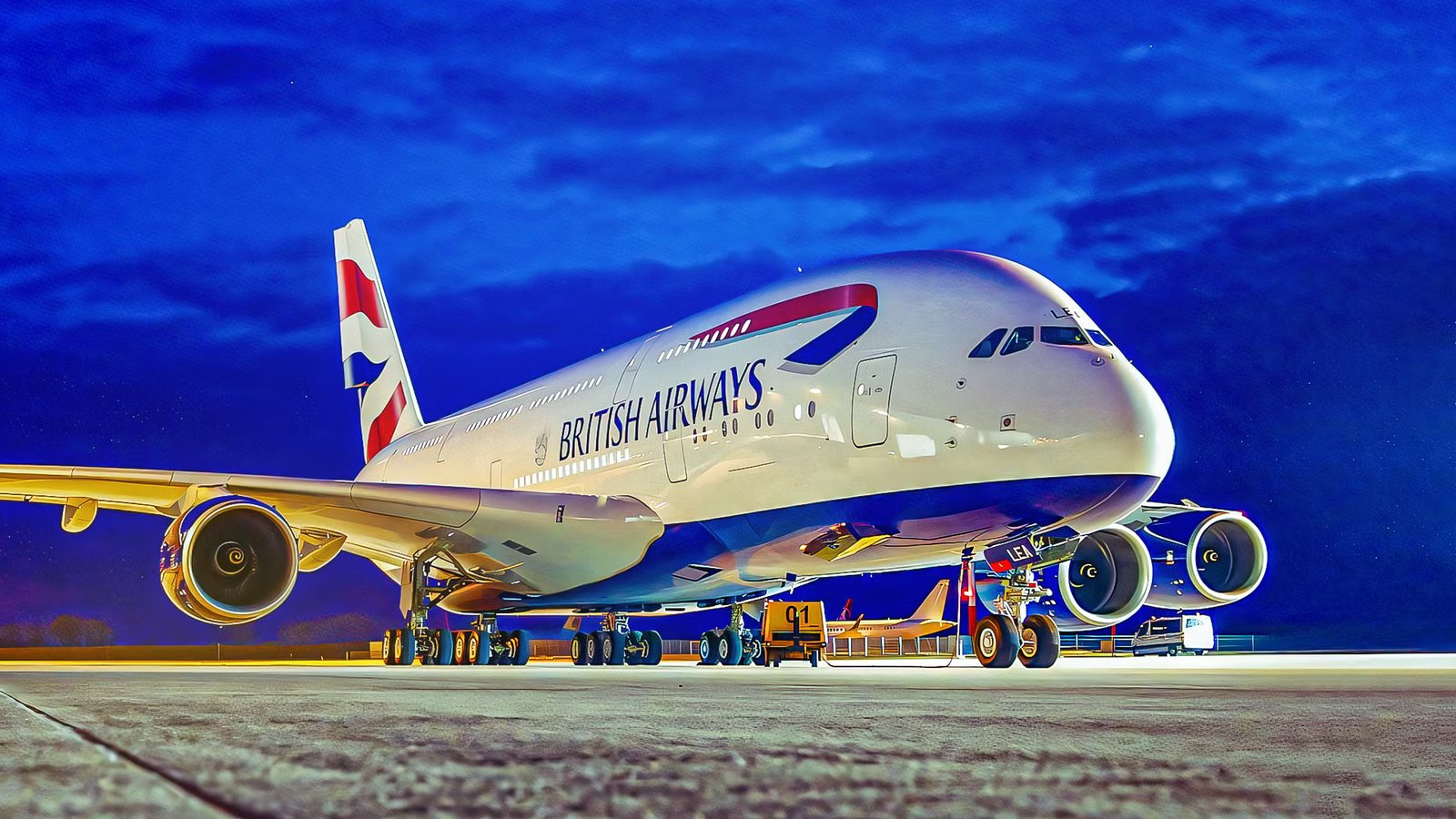
The Airbus A380 is the current icon of the  British Airways fleet, serving as a critical tool in the airline’s strategy at
  London Heathrow. In an era where many carriers have pivoted toward smaller, more fuel-efficient twin-engine jets, British Airways has doubled down on the world’s largest airliner. This guide explores why this 469-seat behemoth is not just a relic of the past but a vital asset for the carrier’s busiest 2026 routes, balancing extreme slot constraints with a surge in premium travel demand.
For British Airways, the A380 is the solution to a math problem that only Heathrow presents. As one of the most slot-constrained airports in the world, LHR offers almost no room for airlines to add more flight frequencies. To grow on flagship routes like Los Angeles or Johannesburg, British Airways cannot simply add another flight. Instead, it must make the existing flights bigger. The A380 provides a nearly 50% capacity boost over the Boeing 787, allowing BA to transport almost 1,000 passengers daily on a single rotation while using only one of its precious takeoff and landing slots.
Hectic Experience?

At London Heathrow, a single pair of takeoff and landing slots can be worth tens of millions of dollars. The airport has operated at 98% capacity for many years, so to combat this, British Airways uses the A380 to squeeze the maximum possible revenue out of every minute it spends on the runway. By deploying its fleet of 12 A380s on trunk routes, the airline effectively bypasses the physical limits of the airport, moving massive volumes of people without needing more tarmac space.
The reliability of these routes allow BA to fill the A380’s 469 seats consistently. While a smaller 787 might be more efficient on a half-empty flight to a secondary city, the A380’s seat-mile costs become highly competitive when it is flying at 90% or higher capacity. For a hub-and-spoke carrier like BA, the superjumbo acts as a funnel, gathering hundreds of passengers from across Europe and the UK and launching them across the Atlantic or down to Africa in one massive, efficient pulse.
This strategic reliance is even more apparent when looking at the 2026 schedule. According to aviation analytics company Cirium, British Airways has concentrated its A380 fleet on 7 core high-capacity routes where demand justifies the massive fuel burn of 4 engines. As YouTuber Paul Lucas notes in his review of the 14-hour journey to Singapore, the sheer scale of the operation can be “hectic”, but for a slot-constrained hub like Heathrow, there is quite literally no other aircraft that can move as many paying passengers per square meter of runway.
Two Decks, Two Configurations

While the A380 is designed to move hundreds of people at once, the physical layout of the aircraft allows British Airways to offer two very different economy experiences. The lower deck houses the majority of the 303 World Traveller seats in a standard 10-abreast configuration, creating the classic high-volume cabin feel. However, the upper deck offers a smaller, 104-seat economy section that many frequent flyers consider a significant upgrade over the main deck.
The primary advantage of the upper deck is the 2-4-2 seating arrangement, necessitated by the inward curvature of the fuselage. This layout is particularly beneficial for couples or those traveling in pairs, as it reduces the number of middle seats. Additionally, passengers in window seats on the upper floor gain access to side storage bins located between the seat and the wall. These bins are large enough to hold small bags or pillows, effectively widening the usable personal space at shoulder height.
Feature | Main (Lower) Deck | Upper Deck |
Seat Configuration | 3-4-3 (10-abreast) | 2-4-2 (8-abreast) |
Total Economy Seats | 303 | 104 |
Unique Feature | Standard widebody feel | Side storage bins (window seats) |
Noise Levels | Higher, near engines | Noticeably quieter |
Choosing the rear cabin on the upper deck also provides a psychological benefit. The upstairs economy section feels more private and quiet compared to the sprawling main deck. However, there is a trade-off. The galley is often audible from the final rows, and 159 passengers across premium economy and economy share only 4 bathrooms on the upper floor. This ratio of 1 bathroom for every 40 people is manageable but requires some planning during the morning rush before landing at Heathrow.

British Airways’ Longest Nonstop Routes With The Airbus A380 In 2026
The A380 performs an invaluable role on the carrier’s high-capacity, high-value routes.
No Real Alternative

Maintaining a fleet of 12 superjumbos today is no easy feat, and when compared to far more efficient twin-engined widebody aircraft, it may be hard to see why such a large aircraft is even relevant for use. The sheer scale of the A380 means that a single technical delay can displace nearly 500 passengers at once, creating a rebooking challenge that few other aircraft in the British Airways fleet can match. When an A380 is grounded, the airline often lacks a 1-for-1 replacement as the next largest jets, like the Boeing 777-300ER or Airbus A350-1000, fall short by roughly 140 to 200 seats. This capacity gap often forces BA to cancel flights entirely or scramble to find alternative routing for hundreds of stranded travelers.
Fuel economics also play a central role in the aircraft’s deployment. The 4 Rolls-Royce Trent 900 engines consume significantly more fuel than a modern 787-9. According to industry metrics, an A380 consumes approximately 3.16 liters of fuel per 100 kilometers per passenger, whereas a 787-9 is notably more efficient. To offset these high operational costs, the aircraft must maintain high load factors. This is essentially the percentage of seats filled. On a 14-hour trip from a hub like Singapore, the aircraft must be almost 100% full to remain profitable.
Technical aging is another factor becoming more prominent as these airframes enter their second decade of service. Reliability has become a sticking point, with nearly 4% of scheduled A380 flights for BA in recent peak seasons either canceled or swapped due to engineering issues. In-flight amenities also show signs of wear, with travelers occasionally encountering non-functional USB ports or aging entertainment screens. While the seats remain comfortable for long-haul journeys, the complexity of the A380’s systems requires intensive maintenance that often keeps aircraft in the hangar for months at a time.
Plenty Of Interesting Quirks

Navigating a 14-hour flight in World Traveller is as much a test of strategy as it is of endurance. On the British Airways A380, the experience begins with a rather intense boarding process. The aircraft is frequently 100% sold out on flagship routes like Singapore to London, so overhead bins fill rapidly. For those not in a priority boarding group, securing space for a carry-on can become a real scramble, even in the relatively private upper-deck cabin.
Once settled, the physical limitations of the 12-year-old seats become apparent. While the Recaro CL 3620 models are praised for their padding and comfort, the legroom is strictly standard at 31 inches of pitch. For taller passengers, the experience is further complicated by the entertainment system boxes located in the footwell of window seats, which can significantly restrict movement during an overnight haul.
Catering on these marathon routes follows a predictable, if sometimes uninspired, cadence. Passengers are typically served a main hot meal shortly after departure and a substantial breakfast roughly 1 hour before landing. While British Airways is often recognized for its high-quality curries on routes from the Indian subcontinent, the menu on other routes frequently defaults to British comfort staples like chicken casserole with mash or roasted chicken with gravy. The lack of digital or paper menus in economy means the chicken or beef choice remains a surprise until the trolley arrives.

Why Is British Airways Refitting Its Airbus A380 Cabins?
A major upgrade is coming to British Airways’ A380 fleet, but what surprises does the new first class cabin hold?
Time For A Change

As the A380 fleet enters its 2nd decade of service, British Airways has reached a critical pivot point for the aircraft’s future. For years, the aircraft was criticized for carrying an outdated business class product that lacked the privacy of modern competitors. However, 2026 marks the beginning of a multi-million-pound transformation aimed at keeping the aircraft in frontline service well into the 2030s.
The most significant change is the mid-2026 rollout of the Club Suite across the A380 fleet. This replaces the old layout with a 1-2-1 configuration, finally providing every business class passenger with direct aisle access and a sliding privacy door. This upgrade helps to align the A380 with the airline’s newer A350 and 777-300ER aircraft, ensuring a consistent premium experience regardless of the airframe.
Feature | Legacy Layout (Current) | New Retrofit (Starting Mid-2026) |
First Class | 14 Open Suites | 12 Enclosed Suites |
Business Class | 97 Club World (No Doors) | ~110 Club Suites (With Doors) |
Premium Economy | 55 Seats | 84 Seats |
Economy | 303 Seats | ~215 Seats |
The A380 has become a sort of mixing pot between the old and new worlds of aviation. While the un-refurbished aircraft still offer the nostalgic, quiet charm of the upper-deck economy cabin, the retrofitted jets will provide some of the most modern hardware in the sky. As the airline pushes toward 2030, the A380 is successfully transitioning from a relic of a previous era into a modern cornerstone of the London Heathrow hub.
Will Anything Compare To This Giant?

The Airbus A380 remains an outlier in a world increasingly dominated by nimble twinjets. For British Airways, it is a tool of pure necessity, serving as a high-capacity pressure valve for a hub that has no room left to grow. While the aircraft lacks the point-to-point flexibility of a 787, its ability to move nearly 500 people in a single takeoff ensures its place at Heathrow for the foreseeable future.
Those who secure a seat in the upper-deck economy section will enjoy one of the quietest and most private rides available, supplemented by the convenience of side-wall storage. However, the aging in-flight hardware and the logistical nature of boarding such a large crowd remain significant drawbacks. As the mid-2026 retrofits begin to introduce the modern Club Suite and a redesigned First Class, the fleet will finally start to shed its reputation for outdated interiors.
Ultimately, the A380 is really unlike anything else flying today. If you are flying one of the 7 core routes like Miami or Johannesburg, the A380 offers a level of stability and space that smaller aircraft simply cannot replicate. As long as London Heathrow remains at 98% capacity, this double-deck giant will continue to be the heavy lifter of the British Airways network, bridging the gap between an overcrowded present and a modernized future.

![6-Hour Flights: Southwest Airlines Launches Exciting New Route To Hawaii In August [Map]](https://dailynewsnblog.com/wp-content/uploads/2026/06/imua_one_departs_santa_barbara_-53981372594-_cropped.jpg)