dailynewsnblog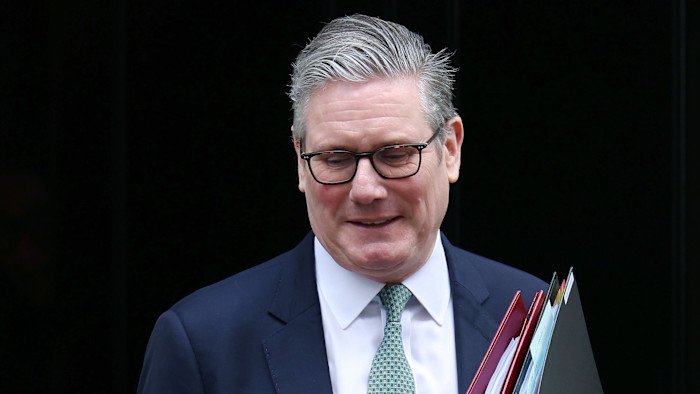
This article is an on-site version of the Free Lunch newsletter. Premium subscribers can sign up here to get the newsletter delivered every Thursday and Sunday. Standard subscribers can upgrade to Premium here, or explore all FT newsletters
Britain’s past decade has been a picture of political chaos.
Next week marks 10 years since then prime minister David Cameron announced a date for what he had earlier described as a “very simple” in-or-out referendum on the UK’s membership of the EU. (Voters and politicians are still debating what the ballot meant.)
When the Leave campaign won he jumped ship, leaving fellow Conservative Theresa May to define Brexit. She called an election to strengthen her mandate but achieved the opposite.
May left and Boris Johnson came in. He “got Brexit done” but succumbed to the Covid-19 “Partygate” scandal. Liz Truss followed, blew up the gilt market and left after 45 days in office. Rishi Sunak tried to steady the ship before Labour came to power with a promisingly large majority — which it has, so far, squandered with fiscal mismanagement.
Now, Sir Keir Starmer’s position appears unstable following revelations about the former UK ambassador to the US Peter Mandelson’s ties to the disgraced financier Jeffrey Epstein.
A steady drumbeat of cabinet and adviser reshuffles, leaks and policy U-turns have accompanied the prime ministerial churn.
Yes, economic shocks haven’t helped. But this has been a period of self-inflicted political failings, too. No recent British government has managed to retain the public’s trust for long: since Cameron, no UK prime minister has completed a full standard electoral term.

What’s driving this? Send your theories to freelunch@ft.com or via X @tejparikh90.
A lack of leadership skills is one factor. There have been countless examples across Westminster of weak strategy, poor communication and failures to confront trade-offs. Errors from previous governments then compound, weakening the inheritance of the next one.
Could the occupational backgrounds of UK politicians play a role? The new CBI president last week lamented the dwindling number of people in government with commercial business experience. For measure, political analyst Sam Freedman estimates that in the current crop of Labour MPs, there are more who have worked for the charity Save the Children than in the City.
That said, higher corporate representation in the previous Conservative governments didn’t exactly redeem them. A breadth of backgrounds and skillsets is what matters most.
That’s why Peter Allen, professor of politics at the University of Bath, reckons the rising number of career politicians — hailing from political parties, unions or lobby groups — could be contributing to Britain’s struggles.
“With career politicians, their route to parliament means that they often end up fighting the old battles of their former bosses rather than bringing fresh thinking to any challenges that might come next,” he says.

Geostrategist Tina Fordham of Fordham Global Foresight echoes this, noting that instead of “courage and imagination”, UK political leaders tend to rely on either “incrementalism or blame-shifting”.
But the problem goes beyond who’s in charge. “Public expectations of what the government can deliver are also out of step with economic reality,” says Fordham.
Other analysts point to a culture of oppositional politics, the unhelpful influence of advisers around the prime minister and an unhealthy obsession with Westminster drama in parts of the media.
In Britain’s defence, political churn has been present across the G7. There is also a risk of over-indexing on recent history.
“We’ve had several economic shocks and the population is agitating for change. Instability, in the form of changing leaders and trying to find new ideas, is an inevitable byproduct of that,” says Kallum Pickering, chief economist at Peel Hunt. “It’s just like running a temperature, which is a necessary, albeit uncomfortable, immune response to illness.”
Whatever is causing it, constant political upheaval has a price.
In the June 1 edition of this newsletter, I argued that the UK didn’t have a productivity puzzle. The causes of Britain’s weak underlying growth are well known and discussed ad nauseam. Why policymakers aren’t delivering is the bigger conundrum.
Instability undermines business investment, hiring and planning decisions, and absorbs the political bandwidth that could be used to address lacklustre growth. Supply-side growth initiatives require long-term thinking, battling vested interests and dealing with competing considerations. Ministerial churn is anathema to that. The lack of growth, in turn, makes the politics even harder.
(I recommend a recent Institute for Government report by Giles Wilkes, a former special adviser to May, which details how failures in governance undermine Britain’s ability to deliver on growth policy.)
Uncertainty and slow growth weaken the appeal of UK assets too. Pound sterling and British stocks have underperformed relative to peers over the past decade. Long-term UK government borrowing costs have remained elevated compared with other G7 nations, having come under frequent selling pressure thanks to fiscal mishaps.


For all the turbulence, Britain remains attractive. London remains the leading European destination for foreign direct investment. The country’s strengths in finance, university research, tech and life sciences are draws. Cheap assets add to the allure. And Starmer, for now, still heads up a government with a sizeable majority several years out from an election.
“What’s striking to me is that UK gilts do not carry a risk premium that is meaningfully different from other developed markets,” says Ed Al-Hussainy, fixed-income portfolio manager at Columbia Threadneedle Investments. Indeed, interest rate cuts and a drop in Britain’s uniquely high inflation rate this year could also buoy the economy and reduce UK bond yields.
Still, the past decade shows that Westminster keeps finding a way to squander advantages and openings.
Businesses and investors don’t want incompetent leaders. But, as the recent turmoil has shown, there is also a growing sense that the tipping point for destabilising a British government can be reached too easily.
If the carousel keeps spinning, global capital will stop hoping for renewal and increasingly price in the UK’s penchant for self-destruction.
Food for thought
Was there a silver lining to the European energy crisis? This study reckons so.
Recommended newsletters for you
The AI Shift — John Burn-Murdoch and Sarah O’Connor dive into how AI is transforming the world of work. Sign up here
Unhedged — Robert Armstrong dissects the most important market trends and discusses how Wall Street’s best minds respond to them. Sign up here