dailynewsnblog
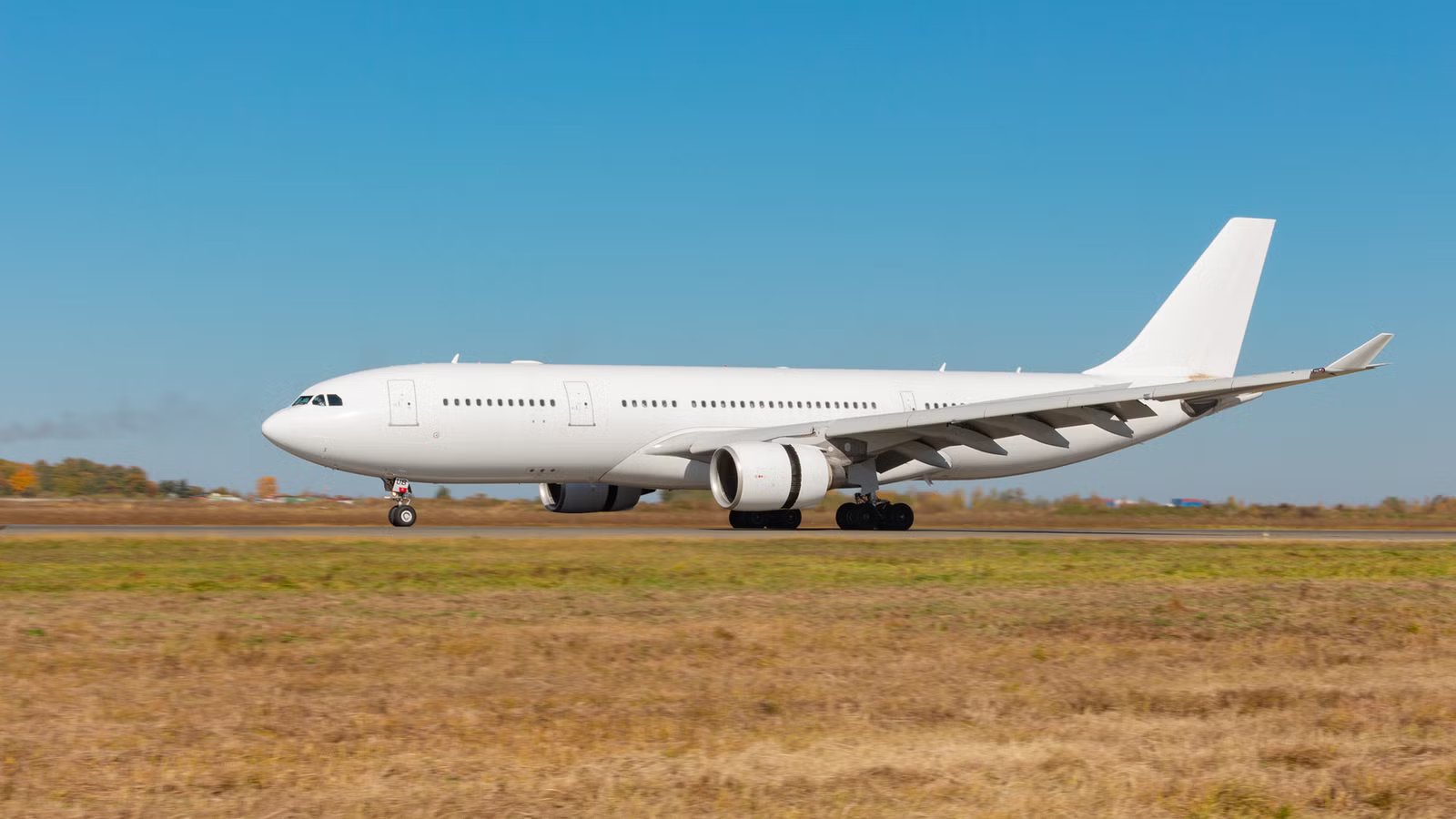
Boeing’s next-generation freighter, the 777-8F, is shaping up to be one of the most anticipated cargo aircraft of recent decades. Designed to replace aging four-engine freighters like the Boeing 747 and build on the success of the current 777F, the 777-8F promises long range, high payload, and significantly improved fuel efficiency. For cargo carriers in the US and across the world, the aircraft’s arrival could not come at a more critical time.
While production of the Boeing 777-8F has already begun, its entry into service depends heavily on the broader 777X program. Boeing has now provided a clearer timeline, with the 777-9 passenger aircraft expected to enter commercial service in early 2027 and the 777-8F following roughly two years later, in early 2029 (notably before the smaller 777-8 passenger variant). Let’s take a closer look…
Introducing The Boeing 777-8F

Boeing dominates the global freighter market, supplying more than 90% of the world’s dedicated freighter fleet. Its current production lineup includes the 737-800BCF, 767-300F, and the highly successful Boeing 777F, with each aircraft filling a specific niche, from regional express operations to ultra-long-haul intercontinental freight.
When it arrives, the Boeing 777-8F will sit at the very top of this hierarchy. Boeing has designed the aircraft as the most capable twin-engine freighter ever built, offering near-747 payload capability with significantly lower fuel burn and emissions. According to the US manufacturer’s data, the 777-8F can carry 31 main-deck pallets, matching existing 777 freighter layouts while enabling smoother integration into current cargo fleets.
The Boeing 777-8F is also designed to operate within existing airport infrastructure. Despite its massive wingspan, the aircraft’s unique folding wingtips allow the 777-8F to operate from the same facilities currently used by the 777F. This minimizes the need for costly airport upgrades and helps airlines deploy the aircraft flexibly across global networks.

The Aircraft Replacing The Boeing 767 In Cargo
The most likely candidate to replace the 767 freighter is the 777-8F, the freighter variant of the upcoming and long-delayed 777X.
Which Cargo Carriers Have Ordered The Boeing 777-8F?

Boeing launched the 777-8F back in 2022, with Qatar Airways Cargo as the launch customer. Since then, the freighter has attracted strong interest from major cargo operators seeking a long-term replacement for both older 777Fs and retiring 747-400Fs. The latest data from ch-aviation shows that Boeing has so far recorded more than 60 firm orders for the 777-8F, from the likes of Cargolux, Lufthansa Cargo, China Airlines, ANA Cargo, and Silk Way West Airlines. These orders account for a substantial portion of Boeing’s total freighter backlog and reflect the broader trend that while global passenger demand can fluctuate, for air cargo demand continues to grow and is essential to modern trade and e-commerce.
The largest orders for the Boeing 777-8F are outlined in the table below:
Ranking | Airline | Boeing 777-8F |
|---|---|---|
1 | Qatar Airways Cargo | 34 |
2 | Cargolux | 10 |
3 | China Airlines | 8 |
4 | Lufthansa Cargo | 7 |
5 | All Nippon Airways | 2 |
6 | Silk Way West Airlines | 2 |
In July 2025, Boeing officially commenced production of the 777-8F, beginning with wing component manufacturing at its Everett facility. This milestone marked the transition from design and planning into physical aircraft construction, representing a significant step after years of development work on the wider Boeing 777X program. However, because the 777-8F shares engines, wings, and systems with the passenger 777-9, its production and certification timelines remain closely linked to the passenger aircraft’s progress.
The Aircraft’s Long-Awaited Entry Into Service

Boeing’s original projections envisioned the 777-8F entering service around 2027, but that timeline has since shifted due to certification delays and regulatory scrutiny following the Boeing 737 MAX crisis. The US manufacturer now expects the 777-9 passenger aircraft to enter service in 2027, following certification from the Federal Aviation Administration (FAA), and this aircraft will be the first member of the 777X family to fly commercially, setting the stage for subsequent variants.
In a recent interview posted to YouTube, Boeing indicated that the 777-8F will follow approximately two years later than the 777-9, placing its entry into service in early 2029. Importantly, this means the freighter will arrive before the 777-8 passenger variant, underscoring Boeing’s prioritization of cargo demand.
This sequencing makes strategic sense, as freighters typically face fewer cabin-related certification hurdles, but still depend on the same core airframe and systems approvals as their passenger counterparts. Once the 777-9 clears certification, Boeing can leverage that progress to accelerate final testing and approval of the freighter.

The Airbus A350F: What Can We Expect?
The A350F is set to make its first flight this year, with entry into service early next year.
Competition From Boeing 777-300ER Converted Freighters

One of the most interesting dynamics shaping the Boeing 777-8F’s future is the rise of converted 777-300ER freighters. As airlines retire aging long-haul passenger aircraft, many 777-300ERs are being converted into cargo aircraft, and they offer some notable advantages.
Because the Boeing 777-300ER is slightly longer than the 777-8F, converted versions can actually carry marginally more volume. This has led some observers to question where the 777-8F fits in a market that already has a high-capacity converted option, and the answer lies in weight, performance, and efficiency.
While converted Boeing 777-300ER freighters may offer more cubic space, the 777-8F is purpose-built. It features a significantly higher maximum takeoff weight, stronger floors, and optimized cargo systems that allow it to carry heavier payloads over longer distances. In real-world operations, that means more flexibility when hauling dense cargo such as machinery, automotive parts, or industrial components.
Additionally, the Boeing 777-8F benefits from new-generation General Electric GE9X engines, advanced aerodynamics, and improved fuel efficiency. Compared to converted aircraft, it delivers lower operating costs per ton-mile and significantly reduced emissions, which is an increasingly important factor as environmental regulations tighten worldwide.
Replacing The Boeing 747F

Perhaps the strongest argument for the Boeing 777-8F’s relevance is the ongoing retirement of Boeing 747 freighters. Hundreds of 747-400Fs and earlier variants remain in service today, but many are approaching the end of their economic lives. The 747’s unique combination of payload, range, and nose-loading capability made it indispensable for decades. However, four-engine aircraft are increasingly expensive to operate, and airlines are under growing pressure to reduce fuel burn and emissions.
The Boeing 777-8F is designed to replace much of that 747 cargo capacity, offering comparable payload with far better economics. But the scale of the 747 retirement wave means no single aircraft type will be sufficient, and converted 777-300ER freighters will absorb part of that demand, particularly where volume matters more than weight. The 777-8F, meanwhile, will operate heavy-lift, long-range services that demand maximum structural payload and performance. In other words, the market does not have to choose between converted 777s and the 777-8F – it needs both.

How Much Does A Boeing 777X Cost?
A few hundred million must be spared to acquire a brand-new Boeing 777X.
Entry Into Service In Early 2029

With the 777-8F now expected to enter service in early 2029, airlines are able to plan. Cargo operators can continue acquiring 777Fs and converted freighters in the near term, while positioning the 777-8F as a long-term fleet cornerstone.
For US cargo hubs, the aircraft’s arrival will support long-haul transpacific and transatlantic trade lanes, particularly as e-commerce, pharmaceuticals, and high-value manufacturing continue to drive demand for fast, reliable air freight. The timing also aligns with regulatory realities, as new emissions standards taking effect later in the decade make next-generation aircraft like the Boeing 777-8F essential for sustainable fleet renewal.
While delays are never welcome, the revised timeline reflects a more realistic, certification-driven approach, and helps to ensure that the Boeing 777-8F enters service fully compliant and ready to meet the demands of global cargo operators.
If we take a look at the wider Boeing 777X program, one of the aircraft’s standout features is its composite wing, the longest ever built for a commercial airliner, equipped with folding wingtips. These allow the aircraft to use standard airport gates while benefiting from exceptional aerodynamic efficiency in flight.
The Boeing 777X comes in two passenger variants: the 777-8 and 777-9. The Boeing 777-9 is the larger model, optimized for long-haul high-capacity routes, while the slightly shorter 777-8 focuses on longer-range services. Both variants benefit from new General Electric GE9X engines, the largest and most fuel-efficient commercial aircraft engines ever produced, cutting fuel burn, noise, and emissions compared to earlier 777s. Meanwhile, inside, passengers enjoy a wider cabin, larger windows, higher ceilings, and modern lighting, creating a more spacious feel.
To date, Boeing has received more than 500 orders for the passenger 777X, with  Emirates set to be by far the largest operator of the type. The carrier, based at
  Dubai International Airport (DXB), has a staggering 270 777Xs on order, followed by Qatar Airways with 90. The largest passenger airline customers are shown in the table below:
Ranking | Airline | Boeing 777-8 | Boeing 777-9 | Total |
|---|---|---|---|---|
1 | Emirates | 35 | 235 | 270 |
2 | Qatar Airways | – | 90 | 90 |
3 | Cathay Pacific | – | 35 | 35 |
4 | Singapore Airlines | – | 31 | 31 |
5 | British Airways | – | 24 | 24 |
6 | China Airlines | – | 23 | 23 |
7 | All Nippon Airways | – | 20 | 20 |
8 | Lufthansa | – | 20 | 20 |
9 | Korean Air | – | 20 | 20 |
10 | Air India | – | 10 | 10 |