dailynewsnblog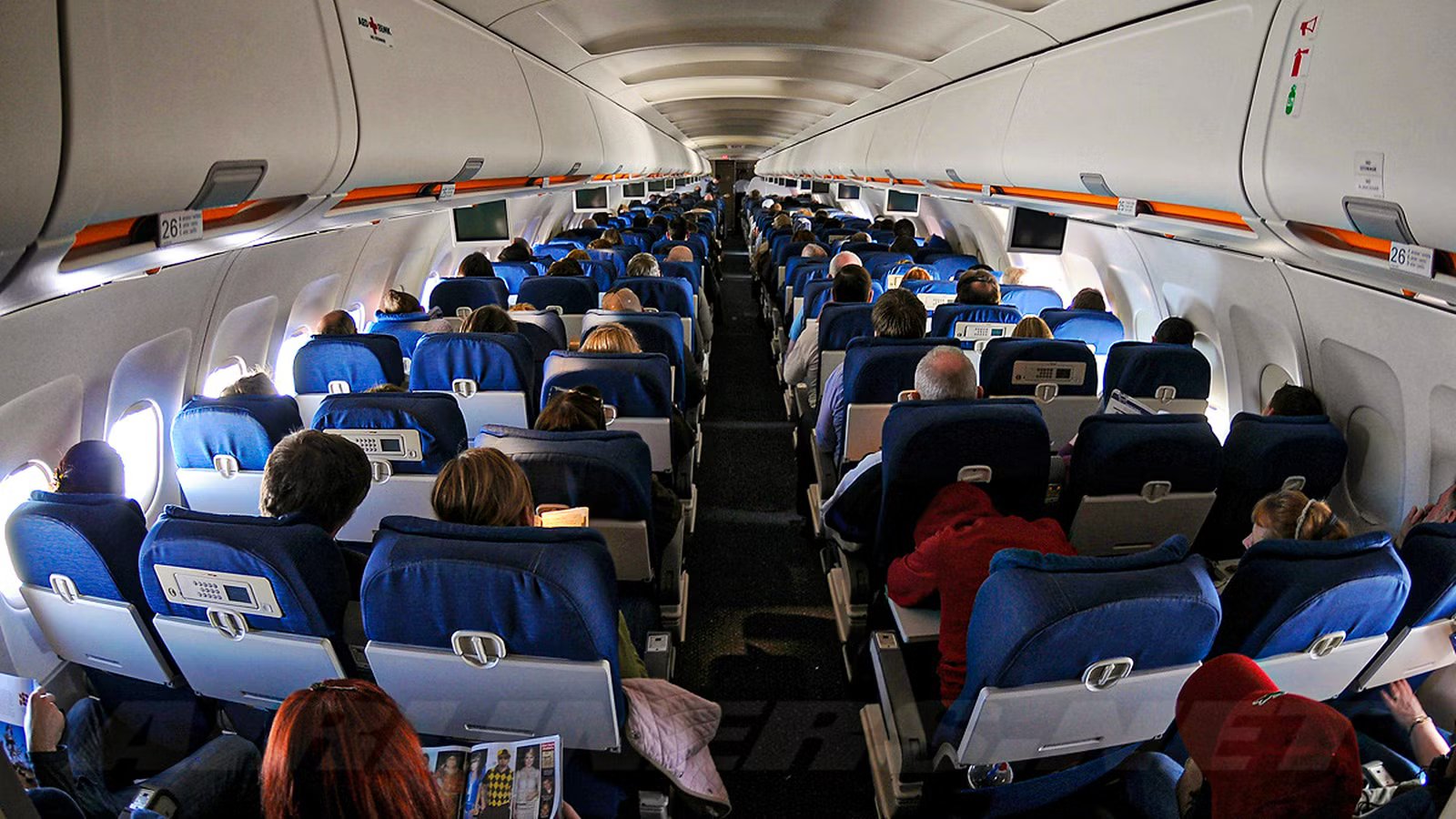
Some passengers are saying that flying is becoming unbearable due to airlines’ ever-squeezing more and more space. While this is often an emotionally appealing argument, it does come with some issues. Airlines (typically) have little control over seat widths, and passengers are, on average, getting heavier. At the same time, seat pitch has contracted as airlines cater to passengers’ demands for the cheapest possible fare.
What many passengers are really saying is that low-cost flying is becoming unbearable, as there are plenty of upgrade options on almost every flight that are bearable. Still, the CEO of  United Airlines, Scott Kirby, seems to agree with the complainers. He has been a critic of the low-cost, no-frills airline model and questioned its viability, saying it is “an interesting experiment” and that it has “failed.” His comments were in the context of US carriers, although one could imagine what Ryanair’s retort might be. Here is what to know about why some passengers think flying is becoming unbearable.
Passengers Say Flying Is Becoming Unbearable

In December 2025, Fox News reported, “More and more travelers are taking to social media to share the uncomfortable experiences they’ve had sitting in cramped airplane seats — prompting renewed debate over airline seating policies and passenger etiquette.” It then described situations were passengers have posted videos and detailed accounts of times when they were “literally pressed against windows or armrests on fully booked flights.”
The report goes on to say some passengers report feeling trapped, panicked, or short of breath during flights where neighboring passengers encroached on their personal space and occupied more than their assigned space. US-based airlines typically have policies that say passengers must be able to sit within their own seat with the armrests fully down, and they are required to purchase a second seat or upgrade to a seat with more room.
However, some passengers complain that many airlines don’t really enforce this requirement. Southwest had stood out from other US-based airlines by offering extra seats for large passengers. But when larger passengers aren’t moved, Fox News writes, “On TikTok, users have posted videos describing feeling squeezed into their seats during flights and debating who bears responsibility when space becomes an issue.”
Market Forces Demand Low-Cost Airlines

On the one hand, it seems strange that passengers are complaining that they don’t have enough space. In recent years, airlines have been responding to two powerful trends in the industry. One is where passengers don’t want to splurge on the expense of business class, but are willing to pay for more than economy. These passengers want their experience to be comfortable, not luxurious. This has given rise to the explosion of premium economy around the world.
The other broad market trend has been for passengers willing to put up with discomfort, inconvenience, lack of good service, no meals, etc., in exchange for the cheapest possible fare. This has led to the emergence of low-cost and ultra-low-cost carriers. Ultra low-cost carriers offer the lowest fares, but it is “you get what you pay for.” Low fares are mostly achieved through high-density seating, which means cramming people in.
In the past, flying was much more comfortable in some respects, but it was also more expensive. Flying has gotten cheaper in real terms over time, partly thanks to the introduction of economy class. But passengers can still enjoy much of the comfort that airlines offered in the past by purchasing higher-class tickets. These seats are comparable in price to what flying used to be. Mainline airlines haven’t so much removed more comfy seats as they have introduced options for cheaper, less comfy ones.

The Interesting Hack One 6’4 Traveler Uses To Sit On A Southwest Airlines Flight
The viral TikTok video shone a spotlight on the larger issue of airline seat sizes.
Ryanair Preempts & Cashes In On Sardines

Ryanair’s marketing preempts complaints by embracing it. Its X (formerly Twitter) account is full of Ryanair teasing passengers that space will become more squeezed, it will make passengers stand upright, or make passengers pay to use the lavatory. Examples of posts include “reclining seats, coming never,” “the L in Ryanair stands for luxury.” Another example is Ryanair replying to a passenger tweeting in good-spirited annoyance that there was no window at the window seat. Ryanair jokingly replied, “another happy customer.”
While Ryanair’s marketing works well for the Irish and British customer base who love irony, banter, and humor, it might be less suitable in the US context. But Ryanair’s marketing is very clear and consistent: “You paid for this.” Or as it responded tongue-in-cheek to a video of a luxury dinner, “what passengers expect for €19.99.” Ryanair’s marketing is reminding passengers that they are choosing Ryanair only because it is cheap, and Ryanair is perfectly happy for its passengers to have a love/hate relationship with the airline.
Select airlines (per Ryanair, etc.) | Seat pitch (typical) | Seat width | Recline |
|---|---|---|---|
Ryanair | 29 inches | 15.5 inches (between armrests) | None |
Frontier Airlines | 28 to 31 inches | 17.4 to 18 inches | None |
Spirit Airlines | 28 to 29 inches | 17 inches (22 inches Big Seats) | None |
JetBlue | 32 to 33 inches | 17.8 to 18.4 inches | Limited |
While Ryanair’s whole brand image is poking fun at cramped seats, extra fees, and mildly disaffected passengers, US ultra-low carriers do what they can in a different cultural context without the Irish humor. The US’ ultra-low-cost carriers include Allegiant, Frontier, Spirit, Sun Country, and Avelo. Frontier’s CEO said in 2025, “the people that fly Frontier are not people that spill from (United). They are people that would have never flown (United) in the first place.“
Upgrade Options On Most Flights

As stated, passengers can upgrade to higher-class seats. In economy, there are the exit-aisle seats and bulkhead seats that offer more legroom. After that, airlines offer domestic business class or economy premium, or similar. Spirit Airlines offers its “Big Seats.” It should also be noted that it’s not quite true that airlines are squeezing the space more and more. There is a minimum seat pitch of 28 inches.
Additionally, exit limits and the regulations that demand airlines be able to evacuate all passengers in 90 seconds mean airlines can only pack people in so much. This is more relevant to the upcoming Boeing 777X. Even though it is a larger aircraft than the older 777-300ER, changes to its exits mean the maximum certified passenger load will fall from 550 to around 475.
Some airlines also permit passengers to book two seats. When flying on some ultra-low-cost airlines like Ryanair, this might only cost $20 on select routes. Delta Air Lines explains how passengers can book two seats and highlights that this can’t be done with Economy Basic due to seat assignment policies. Ryanair says, “Can I buy an extra seat for comfort? Yes. Firstly, purchase two full-fare flight tickets,” and then explains how to do it.

The Most Spacious Premium Economy Seats In The US Today
All three major airlines in the US offer competitive premium economy products.
Limited Seat Width Since The 1960s

After all this, it should be pointed out that airlines generally only have control of one dimension: seat pitch. Seat pitch is the distance between seats, aka legroom. Airlines have almost no ability to influence seat width. This is pretty much standard across the industry, with the A320 and Boeing 737 uniformly six-abreast seaters in economy. Meanwhile, the Boeing 777 is almost always seated ten-abreast, and the A350 is seated nine-abreast.
The low-cost carrier, French bee, does seat its A350s ten-abreast, and Japan Airlines does configure its long-haul Boeing 777s as nine-abreast, but these are rare exceptions. Whenever the topic comes to “passengers’ personal space is getting less,” it is not about seat width. The Boeing 737 interior cabin width has been unchanged since it was first developed in the 1960s, and the A320’s since it was designed in the 1980s. The exception here is the Boeing 777, which was commonly seated nine-abreast initially before airlines switched to ten-abreast.
The Boeing 737 was designed in the 1960s to be the minimum width needed to seat six-abreast. The A320 was designed twenty years later and is about seven inches wider, allowing passengers to have a little more room. The aircraft passengers can enjoy more width space on short flights in the Airbus A220 (formerly CSeries). It is a little narrower than the 737, but it is only five-abreast, which more than compensates. However, these aircraft are mostly limited to Delta, Breeze, and JetBlue in the United States.
People Have Gotten Bigger

In the Fox News reporting above, one of the main complaints was not the seat pitch (which the airlines do easily control), but the width, with passengers spilling into their personal space. In narrowbody aircraft, this was something decided by Boeing in the 1960s and Airbus in the 1980s. In this regard, the aircraft and airlines haven’t changed, but the passengers have.
Today, the average adult American male is around 30 pounds heavier than those of the 1960s (195 pounds or 88 kg). This is an 18% increase in body weight with a similar increase in women. In the 1960s, the average American man was around five feet and eight inches; today, the height has increased by an inch to five feet and nine inches. Flying is a game of inches, and the passenger base these aircraft were designed for has changed.
The biggest issue is the rise in obesity, as the weight gain has been uneven. On paper, airlines have a policy that larger passengers should purchase seats they can fit in, but this is difficult to enforce. It is also a sensitive issue, and an airline enforcing the policies may be accused of body-shaming. In theory, the solution is for passengers to book the seats they can fit in, but the real world is different. Additionally, airlines do offer solutions for passengers who don’t want to risk being squeezed. On Spirit Airlines, they are called Big Seats and are configured 2–2 or four abreast, providing both increased pitch and width.