dailynewsnblog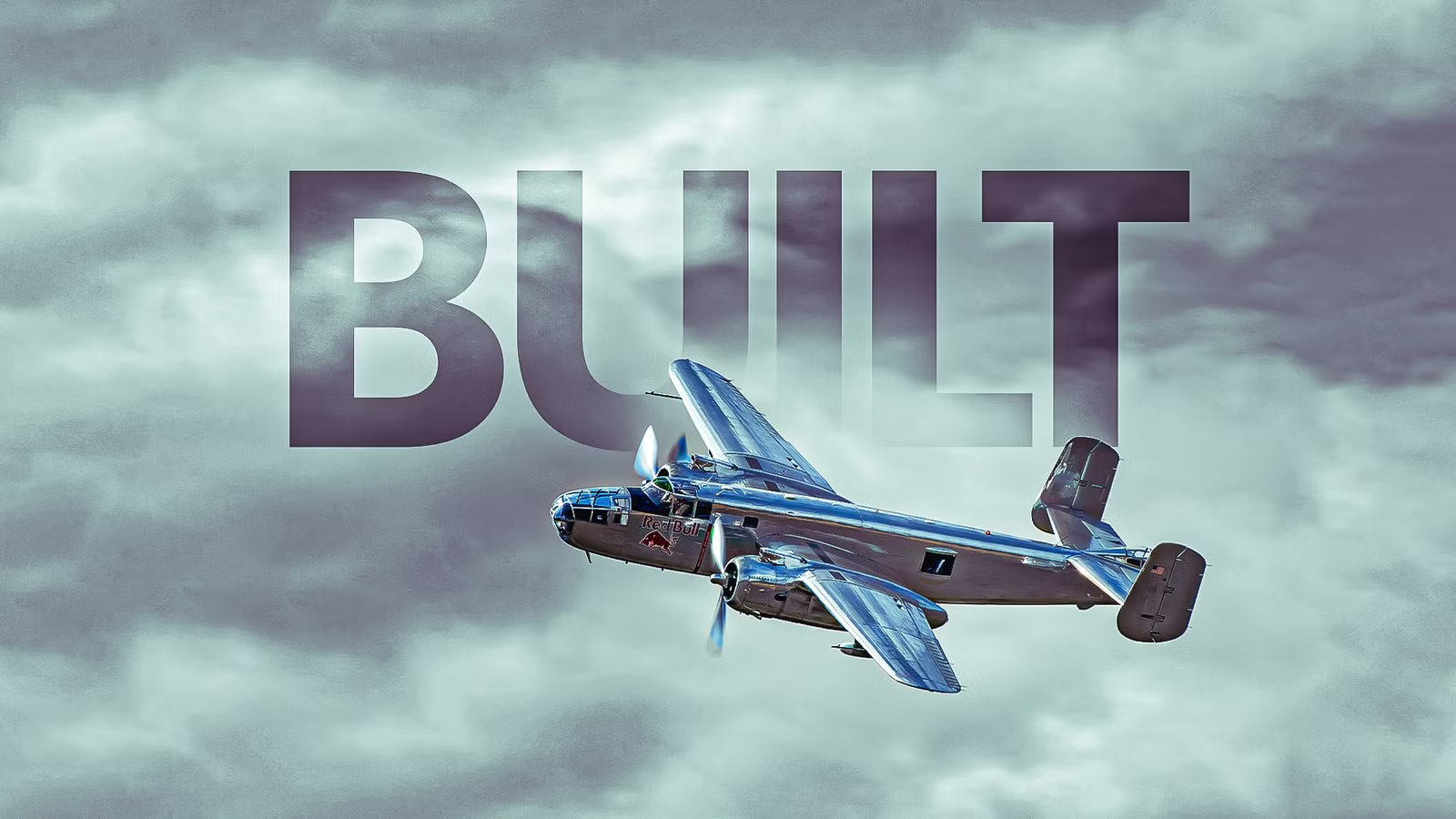
The North American B-25 Mitchell was the third most-produced strategic bomber of the Second World War. Between 1941 and 1945, the United States built between 95,000 and 100,000 bombers, and, including all variants and specially built models, a total of 9,816 B-25 Mitchell bombers were built during this time. The B-25J, configured for high-altitude level bombing, was the most prolific, with 4,318 made, followed by more than 1,400 units of the G and H gunship variants.
The US Army Air Corps took delivery of the vast majority of the B-25s that rolled off the assembly line, but the Navy and Marines also flew hundreds of PBJ-1 maritime patrol models. The Royal Air Force in the United Kingdom flew hundreds of Mitchell bombers, as did the Soviet Union, the Royal Australian Air Force, the Chinese Nationalist Air Force, the Free Dutch Air Force, and the Free French Air Force.
The Mitchell Goes To Battle

In the pre-war years, North American Aviation’s B-25 was a well-rounded medium bomber, but, by 1945, it was a heavily armed multi-role gunship with a specialization in strafing runs. The very first prototype flew in 1940 after the USAAC issued a requirement for a medium bomber that could carry 3,000 pounds of ordinance at 300 mph with a minimum range of 2,000 miles. Early testing revealed a tendency to ‘dutch roll,’ which yielded the iconic gullwing profile after the outer wing panels were flattened.
The B-25A had limited self-defense but already incorporated self-sealing fuel tanks and armor around the cockpit. The B-25B introduced power turrets on the top and bottom of the fuselage, including retractable and remote sighting features. Its tailgun was also a removable module. The B-25B was the variant that the famous Doolittle Raid used to execute its 1942 carrier-borne penetration strike against the Empire of Japan in Tokyo.
It wasn’t until the opening of the factory in Inglewood, California, and the introduction of the B-25C that the Mitchell would be mass-produced in large numbers. The primary Factory was in Kansas City, where the B-25D would be the first mass-produced variant to roll off that line. Between these two models, more than 3,800 in total would be delivered. Shifting combat requirements would see the next models introduce a host of new features and design changes.
The B-25 Gunships

The success of strafing runs in the European Theater to disrupt access supply lines and the demand from the US Navy in the Pacific Theater for similar aircraft types to attack shipping led to the development of gunship variants. The B-25G was introduced in 1943 for the ground attack and anti-shipping mission featuring a 75-millimeter cannon in the nose along with two forward-facing .50 caliber machine guns. A little over 400 of these would be produced.
The second gunship model, which would be delivered in far greater numbers, with over 1,000 rolling off the line. The B-25H featured a lighter cannon as well as an enormous increase in secondary firepower with eight more forward machine guns. This primary armament was complemented by waste and tail gun positions. The co-pilot position was even eliminated to save weight for more guns.
The final, and most numerous variant, the B-25J, was a hybrid of the earlier designs. It retained the co-pilot seat and was outfitted to perform high-altitude bombing off the line, but many were converted to specialized missions or environments at NAA modification centers. The ‘custom’ shops in Fairfax and other locations around the US reconfigured J models as gunships or reconnaissance planes, as well as adding equipment for conditions in the Arctic, desert, and other harsh theaters.
Doolittle’s Raiders And The B-25

The Doolittle Raid on April 18, 1942, was a watershed moment for NAA, as it was the first time in history that medium land-based bombers were launched from an aircraft carrier, a feat many engineers at the time thought was impossible. The B-25 was selected for the mission over other bombers because of its unique combination of short takeoff performance, high payload capacity, and stable low-speed handling.
To lift off from the 467-foot flight deck of the USS Hornet, the aircraft needed incredible low-speed lift. This is another key performance metric that led to the B-25’s selection, as its engines provided enough immediate thrust to get the heavy plane airborne at speeds as low as 70 mph. Elsewhere, another key feature of the Mitchell bomber that the Raiders chose it for was its tricycle landing gear configuration.
Indeed, although many bombers at the time were ‘tail draggers,’ the nose wheel gave the B25 a superior point of view on takeoff roll, which greatly helped the pilots of the Doolittle Raid. The B-25 was never designed to take off from an aircraft carrier, so, to make it happen, Jimmy Doolittle and his crews had to relearn how to fly. Specifically, they had to time their takeoff roll with the rise of the USS Hornet’s bow to ‘flick’ the plane into the air.

Flak-Bait: The US Army Air Forces WW2 Martin B-26 Marauder That Survived A Record +200 Missions
This B-26 Marauder survived an unprecedented number of missions over Europe.
The B-25’s One-Way Mission

To fly 650 miles to Japan and then another 1,100 miles to China, the B-25B Mitchells had to be stripped and rebuilt. The aircraft of the Doolittle Raid famously used black painted Broomsticks as stand-ins for absent machine guns, and the tail guns and the retractable ball turret on the lower fuselage were ditched to save weight. The highly classified Norden bomb site was also removed to prevent it from being captured in China, and an improvised site was fabricated instead.
Standard B-25s carried 646 gallons of fuel, so the Raiders added a 225-gallon rubber tank in the bomb bay, a 160-gallon leak-proof fuel bag in the crawlway, and a 60-gallon gas bag in the lower turret area. The crews even carried 10 extra 5-gallon cans of gas in the rear compartments. The navigator poured these into the ventral tank by hand mid-flight and then threw the empty cans out the window to reduce weight.
To avoid Japanese radar and fighter interception, the raiders flew ‘on the deck,’ at wave-top level. The B-25B had a range of about 1,350 miles, but the mission required Doolittle’s planes to fly at least 2,400 miles. Following the raid, NAA also installed larger permanent fuel tanks into the B-25C and D models, recognizing the need for transoceanic range.

How Many P-51 Mustangs Were Built?
The P-51 is an icon of the warbird era, but just how many of the legendary fighters were built?
NAA’s Lessons Learned

The raid taught NAA that the B-25 was an adaptable platform, and it led to the creation of NAA Modification Centers, where planes could be rapidly reconfigured for specific mission types right off the assembly line. The success of the raid shifted NAA’s focus away from high-altitude bombing, which eventually led to the gunship variants that traded glass noses for heavy cannons and machine guns.
This raid was a massive PR victory for NAA, and the B-25 Mitchell’s performance in the raid cemented it as a household name. Before 1942, the company was often overshadowed by giants like Boeing or Douglas, but the raid convinced the Pentagon to give NAA the status and resources needed to ramp up the P-51 and B-25 lines. However, the B-25 proved not be the most in-demand airframe in the NAA portfolio, even with its epic numbers.
Rather, the T-6 Texan trainer and the P-51 Mustang fighter were the highest-profile planes in the company’s lineup. Although there were no Mitchell bombers built at the factory in Dallas, Texas, the plant produced nearly 19,000 airplanes alone, giving it the highest output of the three major NAA facilities. Approximately 17,000 T-6s, a crucial trainer, were delivered while more than 15,000 units of the game-changing P-51 fighter rolled off the line.

A3D/A-3 Skywarrior: The US Navy’s 1st Twinjet Nuclear Bomber
The “Whale” was the largest plane to hit the deck when they took flight with US Navy in 1956 to form a formidable wing of the nuclear deterrent force.
North American And The Home Front

North American underwent a radical transformation from a relatively small manufacturer to an industrial titan during the Second World War, producing more than 40,000 aircraft for the war effort. Its output accounted for roughly 14% of all US aircraft manufactured during the conflict. In the 1930s, the company was steadily growing and maturing, establishing a small plant in Inglewood and successfully winning contracts in France and the UK for military aircraft.
Following President Roosevelt’s 1940 call for 50,000 aircraft per year, the aviation industry became the largest manufacturing industry in the world. The primary factory at Fairfax Airport in Kansas City was constructed with no windows or doors that allowed visible light out of the building to hide it from aerial surveillance. NAA originally planned to build B-29 Superfortresses in Kansas City.
When that contract was canceled in July 1942, the newly built high bay facilities were repurposed to dramatically increase B-25 production. By 1943, the plant was producing nearly four times as many aircraft as the previous year.
Beginning in early 1942, factories ran 24 hours a day, six to seven days a week. Following VJ Day, the B-25 contract was canceled on August 18, 1945. At that point, NAA had orders for 8,000 aircraft, but, within a few months, that number plummeted to just 24. The Kansas City plant completed a final 72 aircraft by October 31, 1945, before the facility was turned over to General Motors for automobile manufacturing.