dailynewsnblog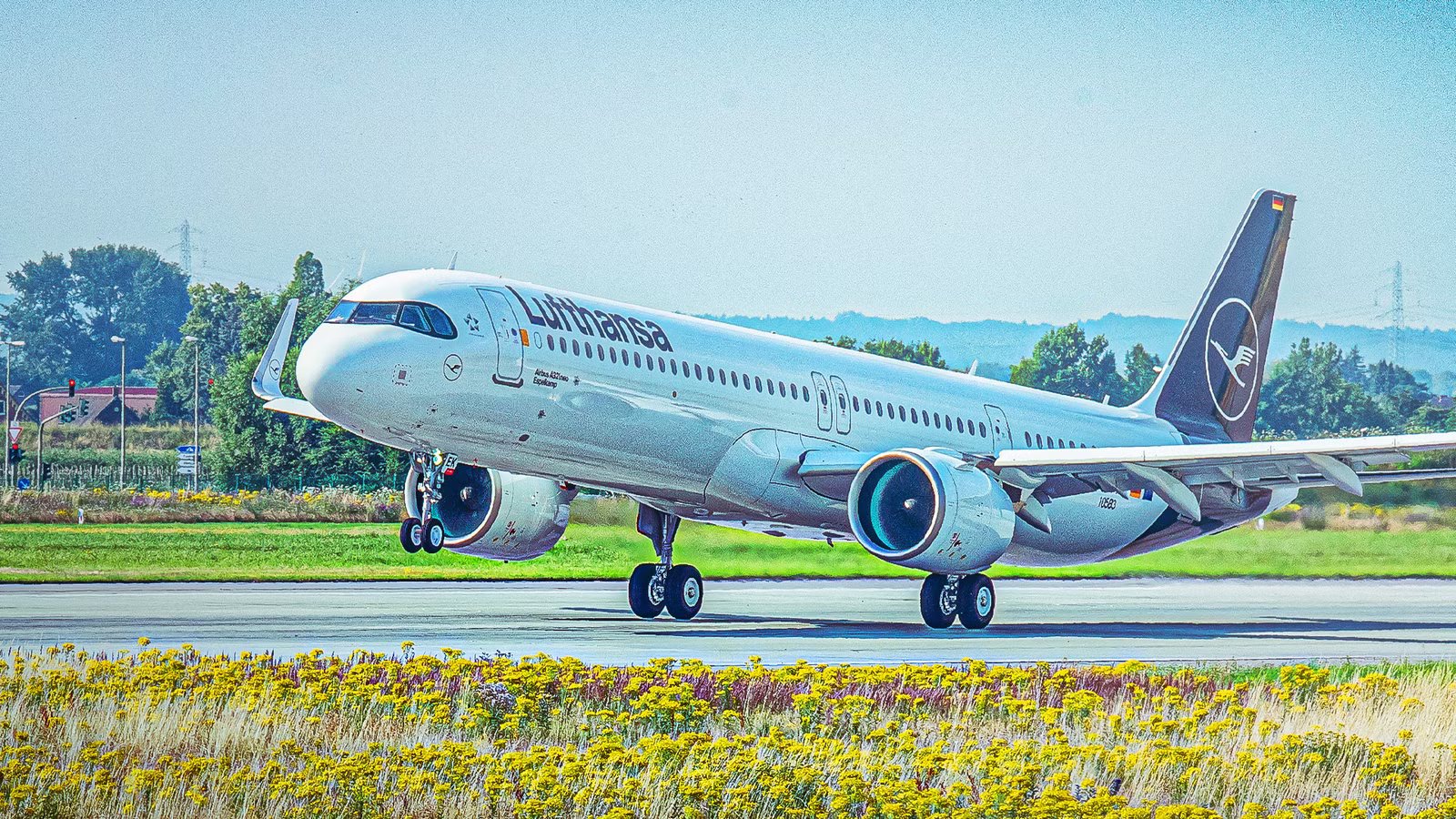
The Boeing 757 is quickly disappearing from the skies over America and many international airports as it is being widely replaced by the new Airbus A321neo. Designed for domestic travel arteries to secondary airports near hubs that lack mega-size runways, the 757 can operate on runways as short as 5,000 feet, which is rare for an aircraft with its range.
Nicknamed the ‘Flying Pencil,’ the  Boeing 757 is much vaunted for its performance. Veteran aviators and aviation enthusiasts are equally disappointed to see the ‘ overpowered jet’ gradually disappearing from the flight line around the world. This is one area in which the A321nwo falls short of its predecessor. Despite being much more economical and more comfortable, the newer Airbus simply doesn’t measure up to the pure power of the 757.
Military-Grade Powerplants

The 757 is notably ‘overpowered.’ It is powered by engines such as the Rolls-Royce RB211 and the Pratt & Whitney PW2000, each capable of producing up to 43,000 pounds of thrust. This enables it to take off swiftly, even when fully laden or at ‘hot and high’ altitude airports. The 757 was dubbed the ‘Pocket Rocket’ because it was developed with extremely powerful engines to outperform the tri-jet 727.
The C-17 is powered by four Pratt & Whitney F117-PW-100 engines, which are ruggedized military versions of the PW2040 found in the Boeing 757. This shared DNA enabled the C-17 to benefit from the 757’s proven reliability and massive thrust. Both aircraft prioritize high-lift capabilities when operating in harsh or constrained environments. The C-17 improved the 757’s approach by adding externally blown flaps and full-authority digital engine controls (FADEC), allowing it to land on runways as short as 3,500 feet.
The A321neo’s engines (CFM LEAP-1A or PW1100G), on the other hand, generate about 33,000 pounds of thrust, which is more suited for fuel sipping than for explosive takeoff power. Compared to the 757-200, the A321neo uses 20% to 30% less fuel per seat. When compared to outdated 757 fleets, it has even demonstrated a 65% improvement in fuel consumption per seat in certain high-density configurations. The cabin is much quieter for passengers thanks to the newer engines’ 50% noise impact reduction when compared to earlier models.
Boeing’s Overbuilt Wing

The 757 has a massive, ‘overbuilt’ wing with almost 50% more area and a longer span than the A321. It has a supercritical wing with an advanced flap system, which generates significant lift at low speeds. This enables shorter takeoff rolls and steeper, slower landing approaches. This large wing provides significantly more lift, resulting in much shorter takeoff rolls and lower approach speeds, particularly at hot and high airports.
|
Specification |
Boeing 757-200 |
Airbus A321neo |
|---|---|---|
|
Overall Length |
155 feet 3 inches (47.32 meters) |
146 feet 0 inches (44.51 meters) |
|
Wingspan |
124 feet 10 inches (38.05 meters) |
117 feet 5 inches (35.80 meters) |
|
Tail Height |
44 feet 6 inches (13.56 meters) |
38 feet 7 inches (11.76 meters) |
|
Fuselage Width |
12 feet 4 inches (3.76 meters) |
13 feet 0 inches (3.95 meters) |
|
Wing Area |
1,995 square feet (185.3 square meters) |
1,318 square feet (122.4 square meters) |
|
Max Thrust (per engine) |
43,500 pounds-force (193.5 kilonewtons) |
33,110 pounds-force (147.3 kilonewtons) |
|
Max Takeoff Weight |
255,000 pounds (115,680 kilograms) |
213,800 pounds (97,000 kilograms)* |
|
Maximum Range |
3,915 nautical miles (7,250 kilometers) |
4,700 nautical miles (8,700 kilometers)** |
|
Typical Cruise Speed |
Mach 0.80 (533 miles per hour) |
Mach 0.78 (521 miles per hour) |
A wing designed for short-field performance (such as the 757, which has 50% more surface area) is heavy and generates significant drag during long-distance cruise. Airbus chose a smaller, more efficient wing that uses less fuel on 95% of common airline routes, even if it necessitates longer runways for the remaining 5%.
While the standard A321neo has the same range as the 757, the specialized A321XLR (Extra Long Range) variant can travel up to 4,700 nautical miles (8,700 kilometers). This is more than the range of the 757-200 by approximately 100 to 700 nautical miles, allowing airlines to open ‘long and thin’ transatlantic routes that previously required much larger, more expensive widebody jets.

Why In The World Does Delta Still Fly The Boeing 757?
The aircraft is a key piece of the airline’s fleet.
The 757 Doesn’t Skip Leg Day

The 757’s massive eight-wheel main gear enables it to distribute weight more effectively on shorter, less reinforced runways. The 757 has a four-wheel ‘bogie’ or ‘truck’ on each main gear leg. Because it has eight main wheels, it has eight separate brake assemblies. This allows for much faster stops. The 757 gear is also notably long, sitting the aircraft higher off the ground than the A321neo.
Its tall gear is also a major advantage when operating at less-maintained regional airports. This height keeps the engines further from the asphalt, significantly reducing the risk of Foreign Object Debris (FOD) being sucked into the intake. The tall gear allows for a more aggressive rotation angle during takeoff without the rear of the fuselage hitting the runway, contributing to the aircraft’s famous ‘rocket’ climb performance.
The 757 has a lower Load Classification Number (LCN) than the A321neo because its weight is distributed over twice as many tires. Because the concentrated weight of an A321neo would cause the runways to crack or be damaged, it can operate at smaller or older airports with thinner, less reinforced runways. Pilot commonality with the rest of the A320 family, which is a major financial incentive for airlines, would have been destroyed if the A321 had been redesigned to accommodate such a powerful gear system.
Similar to the A320neo, the A321neo has a single-axle main gear, although it can support up to 40,000 pounds (18,000 kg) more weight. The A321neo may not be able to operate at some smaller airports with lower pavement ratings because of the increased pressure this places on the runway surface. Due to its roughly 23-foot (7-meter) longer fuselage than the A320neo, the A321neo is also far more vulnerable to tail hits during landing flare and takeoff rotation.

No Regrets: Why United Airlines Has Easily Kept Flying The Boeing 757
United and Delta have kept their aging 757s airworthy for years and years.
Stretching The Limit

Many of the ‘difficult’ small runways have been extended over decades of airport engineering. A highly efficient ‘people mover’ that fits 99% of runways worldwide is more in demand than a ‘niche’ short-field expert, according to Airbus. The A321neo needs longer runways for takeoff and landing since it is heavier than the A320neo base airframe, yet has a similar wing.
While the Airbus A321neo is the family’s high-capacity star, it is effectively a stretched version of the A320neo, resulting in many performance trade-offs. To acquire more passengers, the A321neo foregoes some of the agility and short-field capabilities of its smaller counterpart. The A321neo normally requires 8,000-9,000 feet at full weight, although the A320neo may regularly depart in around 6,400 feet.
Even with more powerful engines, the A321neo often has a worse thrust-to-weight ratio than the A320neo. Pilots frequently note that the A320neo seems like a ‘rocket’ by contrast. Both aircraft have virtually identical wing proportions; however, the A321neo weighs much more. This increased wing loading causes greater stall speeds and reduced aerodynamic margin at high altitudes.

The Airbus A321neo Sub Variants That No One Really Talks About
Here’s a look at how variants of the Airbus A321neo family differ from one another.
Commercial-Of-The-Shelf Synergy

The C-17 Globemaster III and Boeing 757 programs are prime examples of cross-sector collaboration. Both platforms were able to attain a degree of cost-effectiveness and operational readiness that would not have been feasible if they had not shared a fundamental engine architecture. By using a commercially derived engine for a military airlifter, the C-17 program was able to take advantage of the extensive supply chain and deep maintenance base that the massive 757 global fleet had already established.
Major airlines like United and Delta operated hundreds of 757s, so there was already a vast global infrastructure for technical know-how, specialized tooling, and spare parts. This commercial industrial base is used by the C-17 program to guarantee parts availability globally, including at civilian hubs, which is essential for a strategic airlifter.
Millions of flight hours amassed by the 757 fleet offered a plethora of information on the engine’s key components. This enabled the military to forecast component failures and improve maintenance cycles for the C-17, resulting in a 92% mission completion success rate, which is very high for a sophisticated combat aircraft.
Even after the 757 was phased out of production, the continued demand for C-17 engine maintenance kept specialized production lines and vendor networks operational. This industrial health assures that the remaining 757 and C-17 fleets (which are scheduled to operate until 2075) remain viable and cost-effective to maintain.

How The Airbus A321XLR’s Engines Still Pose A Problem To Performance
What could hold the A321XLR back from being a true replacement for the Boeing 757, and does it really matter?
The Airbus Advantage

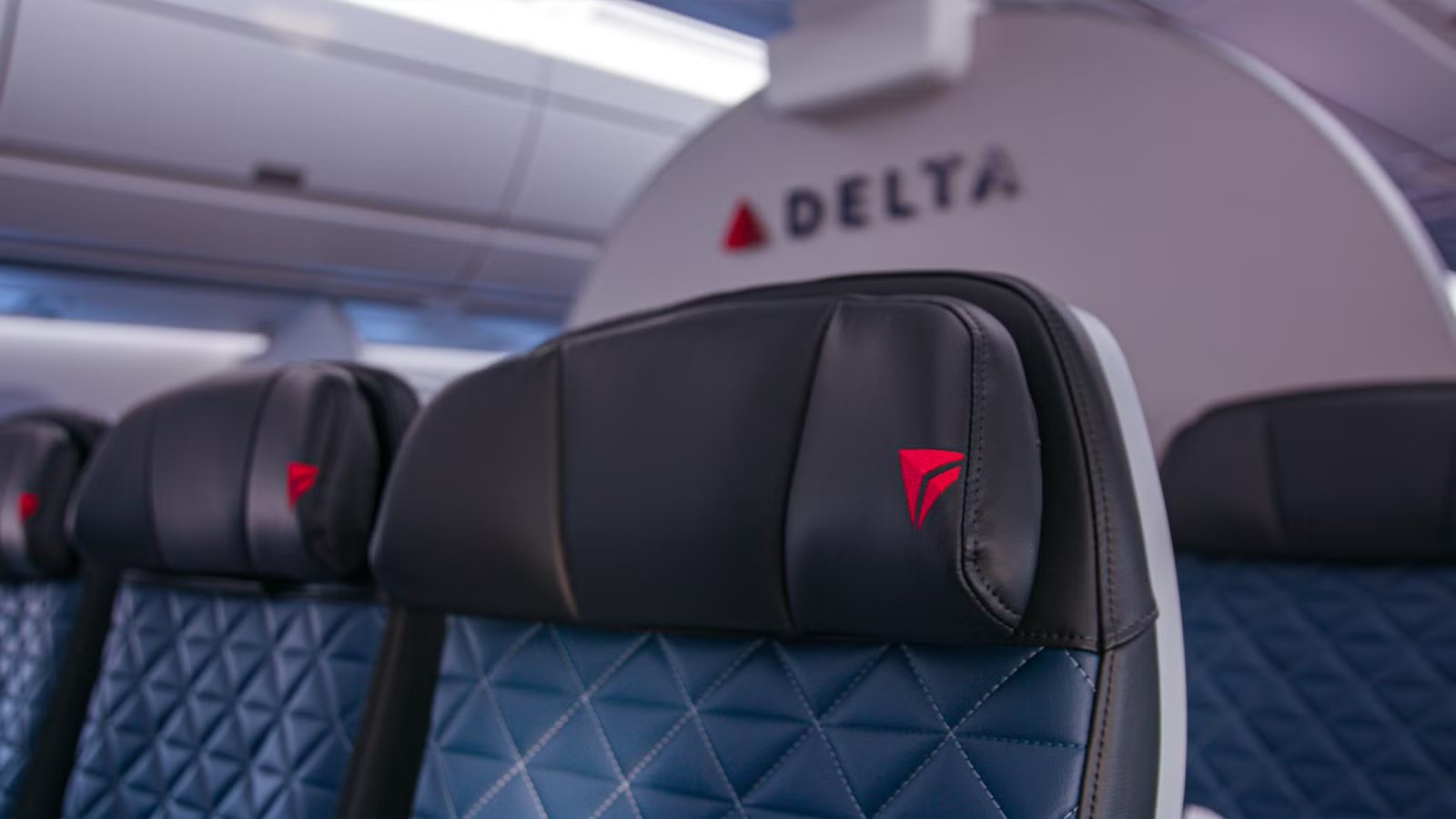
The Airbus A321neo is regarded as superior for contemporary airline operations due to its advantages in economy, technology, and passenger comfort, even though the Boeing 757 is the undeniable “rocket” for short-field takeoffs. Unlike older aircraft such as the 757, which typically maintain a cabin pressure altitude of 8,000 feet, the A321neo can maintain an altitude of about 6,000 feet. On lengthy flights, this lessens the intensity of jet lag, fatigue, and dehydration.
The Airbus ‘Airspace’ cabin of the A321neo boasts the biggest overhead bins in the single-aisle industry, as well as programmable LED mood lighting. The A321neo fuselage is about 7 inches wider (3.70 meters vs. 3.54 meters internally) than the 757. This allows for 18-inch wide seats in economy, as opposed to the smaller 17-inch norm on Boeing narrowbodies.
The A321neo’s larger belly compartment enables aircraft to transport standardized cargo containers (LD3-45W), making ground handling faster and more automated. The 757 is typically a ‘bulk-loaded’ aircraft, which means that luggage and cargo must be loaded by hand, making turnarounds more labor-intensive and slower.