dailynewsnblog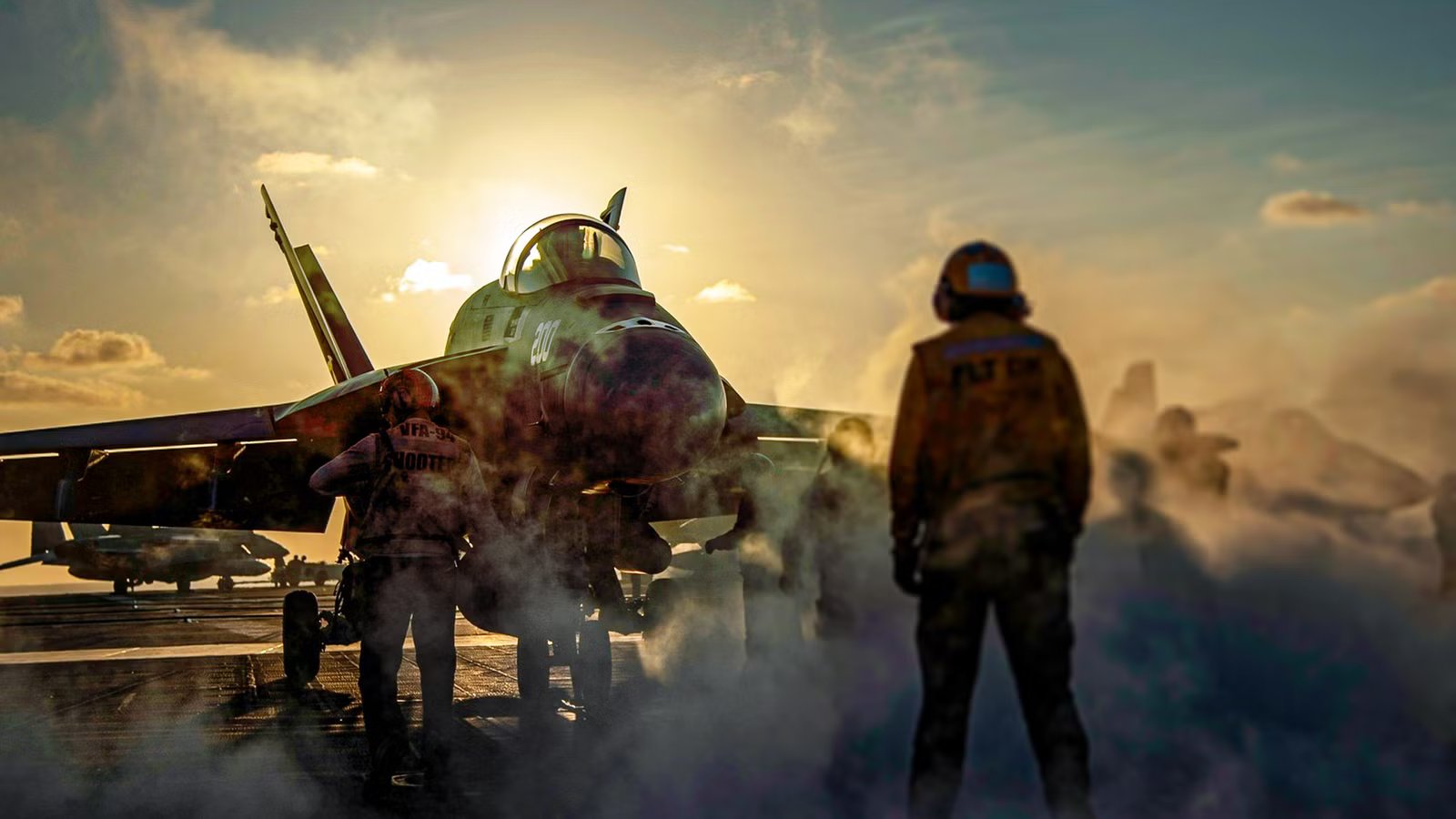
When it comes to projecting airpower, the United States Air Force, or more broadly, US military aviation, with the Navy, Marine, and Army divisions also included, is in a category of its own. This is achieved due to many factors, not just the quality and quantity of the fighter jets, but also by focusing on the basics. These basics are often considered boring, but they are essential to the way the USAF operates.
It is not possible to do justice to such a big topic in a single article, but it is possible to highlight some of the driving factors. The types of aircraft flown, their capabilities, and the number of fighter jets are all important. However, the fundamentals of a powerful air force start before a fighter jet is flown. This article will omit the fighter jets themselves and focus on the first principles behind them.
Strong Funding With Reasonable 1990s Funding

Perhaps the most fundamental issue is funding, as, without funding, nothing is developed, procured, improved, trained on, or deployed. While Europeans cashed in heavily on the so-called ‘peace dividend’ that followed the end of the Cold War, this was more muted in the US. Even so, there was a massive wave of cuts and cancellations across US programs that saw F-22 and B-2 numbers slashed, and the Navy’s McDonnell Douglas A-12 Avenger II canceled.
The peace dividend caused a massive fall in defense spending that forced many of the major defense contractors to merge in the 1990s to survive. McDonnell Douglas merged with Boeing, Northrop with Grumman, and Lockheed with Martin. This followed the 1993 ‘Last Supper.’ This was a pivotal Pentagon dinner where top industry CEOs were told by US defense officials that the post-Cold War era would mean budgets would be cut.
The resulting consolidations led to the ‘Big Five.’ Defense spending fell from over 5% of GDP to around 3.5%, but stabilized and rose somewhat after 9/11. As bad as this was, it was nothing compared to the utter collapse in funding seen in the post-Soviet Union and Soviet-aligned states. In 1989, Cuba had a combat fleet of around 200–300, but, today, after decades of almost no funding, the island is not thought to have any operational fighter jets.
Maintaining A Network Of Foreign Airbases

There are several pillars on which the US Air Force’s power stands, but, if you knock out any one of them, its ability to project power collapses. As stated, one of the key pillars is the world’s largest economy and significant funding, even if reduced after the Cold War. Another is the massive number of US allies around the world. Almost all the world’s air forces are designed for defending their homeland, and little else, but, by contrast, the USAF is primarily designed to project power.
Having foreign forward-deployed bases is critical. For example, without the use of Portugal’s Azores as refueling bases, the use of Iceland, the UK, Germany, and Spain as other refueling stops and permanent bases, the US Air Force would be hamstrung in flying its assets to the Middle East. Likewise, without allies in the Middle East like Bahrain, Jordan, the UAE, Turkey, and the UK’s Diego Garcia in the Indian Ocean, the Air Force would not have anywhere to base those assets.
The same is true of the Pacific with allies like South Korea, Japan, the Philippines, and Australia. While the UK has some forward air bases hosted in other countries and its external territories (as do a few other countries), the US’s permanent foreign bases and other airbases it is permitted to use are orders of magnitude greater. Without these bases, the USAF could not pivot from one theater to another as it does.

The 7 Most Remote Royal Air Force Bases & Their Strategic Roles
The RAF operates bases in the Atlantic and other locations beyond the British Isles.
Aerial Tankers: Flying Gas Stations

It is almost impossible to overstate how dominant the US Air Force is when it comes to tankers. By some estimates, the USAF possesses around 75% of all the world’s tankers, with most of the remainder operated by its allies. Without tankers, the USAF would not be able to ferry its forces quickly. For example, when Argentina received its ex-Danish F-16s, it had to ask the USAF to refuel them over the Atlantic.
Without tankers, ferrying aircraft often means taking much longer and circuitous routes to friendly airports for refueling, or fighter jets may even need to be sent by ship. The lack of refueling aircraft is possibly a contributing reason why Brazil received its most recent Swedish-built Saab Gripen E jets by ship. However, rapidly ferrying an air force around the world is only part of the issue.
USAF Facts & Figures (per US Air Force) | |
|---|---|
FY 2026 budget | Approximately $210 billion |
FY2026 Space Force budget (part of the Department of the Air Force) | Approximately $40 billion |
Number of aircraft (excluding trainers and UAVs) | Approximately 4,000 |
Number of combat aircraft | 2,718 |
Total military aircraft (including the Navy, Marines, and Army) | Approximately 13,000 |
Another issue is that fighter jets lack the range to conduct deep penetrating strikes using only internal fuel and drop tanks, and using drop tanks means the aircraft carries fewer munitions for its mission. As such, aerial refueling is imperative to extending the range of the fighter jets to have a reasonable combat radius. Without tankers, fighter jets are somewhat confined to defense or limited missions near the front from vulnerable forward bases.
The US Navy Supports The Air Force

While it can be said that the US Navy/Marines operate the world’s second most powerful air force in their own right, the Navy is also a major enabler for the Air Force. The US Navy is the most powerful in the world, and it is complementary to the Air Force’s efforts. Without the US Navy controlling the seas and transporting its supplies, the USAF would not be able to operate in distant theaters as it does now.
The USAF has an impressive fleet of C-5M and C-17 strategic airlifters, but most of the USAF’s sustainment comes from sea-lifted supplies. Most of the Air Force’s fuel, munitions, spare parts, ground support equipment, and base construction materials are brought by sea by the Navy. This comes from both the Military Sealift Command and commercial shipping under US protection.
The US Navy can also protect USAF forward airbases, allowing the Air Force to operate from more forward-deployed bases than it otherwise could. Navy Aegis destroyers provide ballistic missile defense of airfields, logistics hubs, and other vital forward Air Force infrastructure. It also provides ISR, target cueing, and early warning services to the Air Force. Carrier aviation can escort vulnerable bombers and tankers.

This Air Force Is The World’s Largest In Terms Of Pilots
The USAF commands the world’s largest pilot corps — 14,486 strong — and here’s how many aircraft they fly and how to join their elite ranks.
Special Mission Aircraft

The US Air Force maintains a huge array of special mission aircraft, which are vital enablers in making fighter jets safe and more effective. It has to be stressed that in a modern NATO air force, fighter jets are not solo knights: rather, they are nodes in a much larger system, and integration is one of the most important words and concepts.
The USAF operates AWACS aircraft like the E-3 Sentry, electronic warfare aircraft like the EA-37B Compass Call ( being replaced by the EC-130H Compass Call), reconnaissance aircraft like the RC-135 River Joint, U-2 Dragon Lady. It also has many other special-purpose aircraft like the E-9A Widget and E-11A. The F-35A is also extremely powerful in electronic warfare roles, while the Navy operates the dedicated electronic warfare EA-18G Growler.
Add in space-based assets and assistance from the US Space Force, and no other air force comes close to these capabilities. This enables the US Air Force to detect and target the enemy targets at a level none can match, and also means that the US Air Force can break through air defenses that would repel others. The lack of these EW aircraft with SEAD and DEAD roles means the Russian Air Force has been powerless to crack Ukraine’s air defense bubble even after four years of trying.
An Emphasis On Training

The US military is sometimes described as a logistics organization that also happens to fight. This is key, as, while some air forces, like those of Russia, like to parade and demonstrate mass and firepower, the US demonstrates that it can train, exercise, and deploy. Being powerful is not about how much firepower an air force has: rather, it’s about being able to effectively use it, and some air forces prefer to show off, while others prefer to train.
The power of the US Air Force is mirrored by allied air forces like those of the UK, France, and Australia, although on an order of magnitude lower. While the US Air Force’s fighter jets are advanced, the more fundamental factor driving that is the massive, industrial, and technologically advanced economy supporting it. In other words, the US Air Force’s power is also about the nation’s tech base, as the US Air Force has Silicon Valley, while others don’t.
One of the most underappreciated other factors is the vast number of trainer jets that the USAF possesses. The Air Force has around 1,000 trainer aircraft (mostly T-6 Texan IIs and T-38 Talons) , and it puts a huge emphasis on training and exercises, with the idea that an air force fights only as well as it trains. These are only some of the reasons why the US Air Force is so powerful. Fighter jets carrying out successful combat missions are essentially the coup de grâce.