dailynewsnblog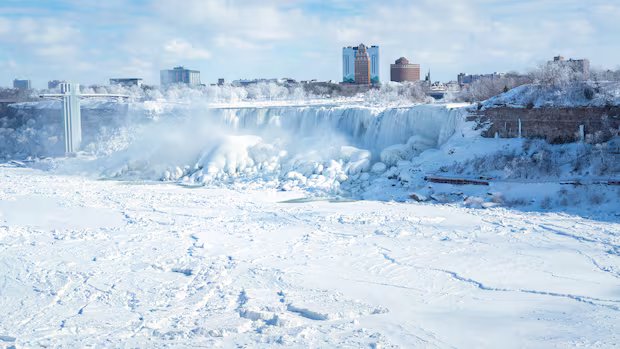

Listen to this article
Estimated 3 minutes
The audio version of this article is generated by AI-based technology. Mispronunciations can occur. We are working with our partners to continually review and improve the results.
In Niagara Falls, Ont., one benefit of this colder-than-normal winter has been the stunning ice formations formed as parts of the falls have frozen.
The Niagara Parks Commission’s Instagram account is full of pictures and videos submitted by members of the public showcasing the icy scene. Now, thanks to a contest by Niagara Parks, Niagara Falls Tourism and the City of Niagara Falls, a fantastic frozen falls photo or video could net you $5,000.
“Everyone is talking about the frozen Niagara Falls,” Mayor Jim Diodati said in a video Niagara Parks posted Friday morning.
From Feb. 20 to 25, contestants can submit entries to Niagara Parks, the organization said on its website. Winners will be announced in March, with cash prizes of $5,000 for first place, $2,500 for second and $1,000 for third. There are separate prizes for photos and videos.

(Niagara Parks)
Niagara Falls doesn’t actually freeze
On Friday morning, Niagara Parks CEO David Adames spoke with host Anis Heydari on CBC’s Metro Morning.
“I always say everyone should see Niagara Falls at different seasons,” Adames said. “What we’re seeing right now is Mother Nature at her best with over three weeks of sub-zero temperatures.”
Technically, Niagara Parks says on its website, Niagara Falls does not freeze.
“During particularly cold temperatures, the mist and spray begin to form a crust of ice over top of the rushing water, making it appear as though the Falls have in fact stopped. However, the water continues to flow underneath the sheets of ice.”
There was a period of 30 hours in March 1848 in which ice dammed the river and stopped its flow for about 30 hours, the parks commission said. Since 1964, an “ice boom” made of steel pontoons has stopped that from happening by holding ice back between Fort Erie, Ont., and Buffalo, N.Y.

Another interesting winter phenomenon is the ice bridge, which forms as ice freezes into a mass below the falls, growing up to 10 storeys tall, Niagara Parks said. In the 1880s, people started gathering on the ice, but that stopped after three people died in 1912.
Niagara Parks also notes that during the winter, 75 per cent of the water flowing from Lake Erie along the Niagara River is diverted for hydroelectricity before it reaches the falls.
For tourists and aspiring contest winners, Adames recommends viewing Niagara Falls from the pathway between Table Rock Centre and Clifton Hill and the Journey Behind the Falls or ziplining attractions.
The viewing platform at the Power Station tunnel is closed due to high water, he said, but Niagara Parks hopes to reopen it soon.