dailynewsnblog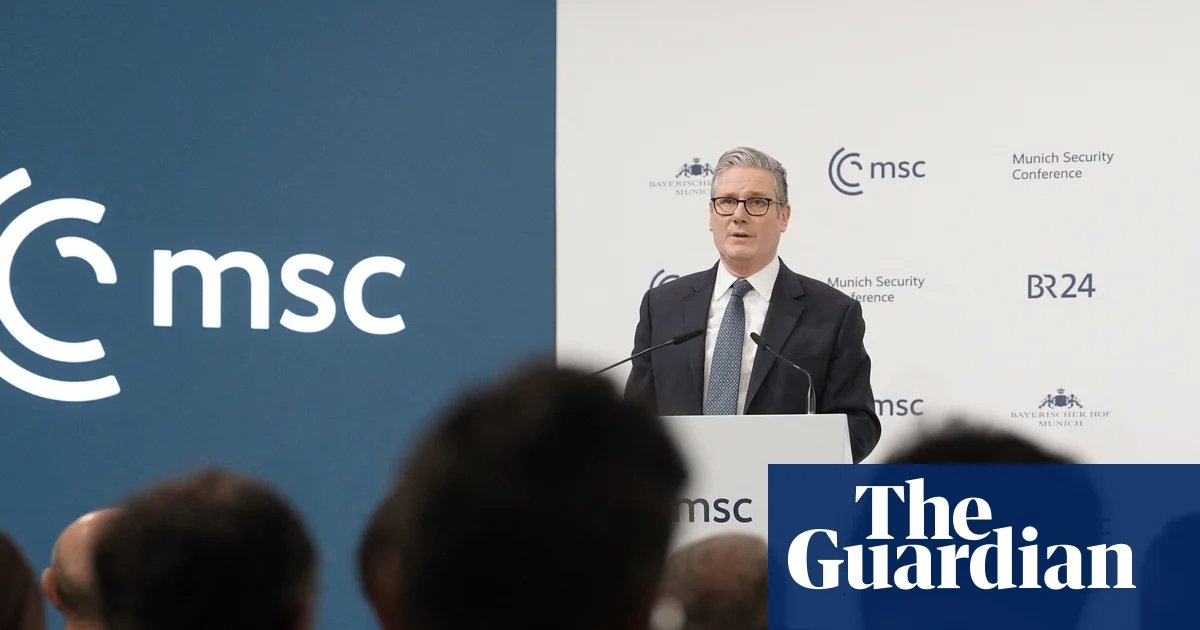
Keir Starmer said there was an urgent need for a closer UK defence relationship with Europe, covering procurement and manufacturing, so that the UK is at the centre of a stronger European defence setup.
In a rare visit to the Munich Security Conference, the British prime minister told the audience, to applause, “we are 10 years on from Brexit. We are not the Britain of the Brexit years.”
Starmer argued that the long-term threat posed by Russia and the need for Europe to take greater responsibility for its own defence requires the UK to integrate more closely on defence procurement with European allies.
The UK and France, often the country seen as the most resistant to non-EU states accessing the European defence market, are both keen to reopen talks about the UK joining Security Action for Europe, an EU rearmament scheme, after discussions stalled last year over the cost of entry for the UK.
France has insisted the high cost of the UK’s proposed membership of the scheme was not due to French pressure, but a result of European Commission calculations, in which France played no part.
Starmer is also examining the case for a European Defence Mechanism, which would be an intergovernmental instrument open to all European democracies, whether inside or outside the EU. Members of the proposed institution would finance joint procurement and joint assets across Europe.
The idea has been promoted by the Bruegel institute and more recently by the former UK foreign secretary David Miliband.
Starmer called Europe “a sleeping giant”.
“Our economies dwarf Russia’s more than 10 times over. We have huge defence capabilities, yet too often this adds up to less than the sum of its parts. Fragmented industrial planning and procurement have led to gaps in some areas and massive duplication in others,” he said, adding that the situation is “wildly inefficient and it harms our collective security. Now, the US security umbrella has allowed these bad habits to develop, but now we must break them.”
He added: “There is no British security without Europe and no European security without Britain. That is the lesson of history and is today’s reality as well. So together, we must rise to this moment. We must spend more, deliver more and coordinate more.”
The new normal was for Europe to take primary responsibility for its own conventional diplomacy, he said. “Rather than pretending that we can simply replace all US capabilities, we should focus on diversifying and decreasing some dependencies. We should deliver generational investments that moves us from overdependence to interdependence.
“We see the imperative, we see the urgency. We want to work together to lead a generational shift in defence industrial cooperation.”
He said he realised there was politics and trade-offs in moving closer to the EU single market, but “the status quo is not fit for purpose, and to me there’s no question where the national interest lies”.
He stressed that a closer UK-EU defence relationship did not imply any weakening of the UK-US relationship, or the strength of Nato.
He described Nato “as the most effective defence alliance we have ever known and we should never move away from it”, adding that the security and intelligence relationship with the US “was tight as it had ever been”.
Greater European defence autonomy does not herald a US withdrawal from Nato, he said. But Starmer added that European leadership needs to be more honest with their electorates about how the world has changed, and that the cost of defence will rise.
He insisted that he had emerged from his turbulent week in domestic UK politics stronger than at the start, saying that was a good place to be.
In reference to the rising popularity of other parties in the UK, Starmer said, “the peddlers of easy answers are ready on the extremes of left and right and they will offer their solutions instead. It’s striking that the different ends of the spectrum share so much. Soft on Russia, weak on Nato, if not outright opposed, and determined to sacrifice the relationships we need on the altar of their ideology.
“The future they offer is one of division and then capitulation. The lamps would go out across Europe once again.”