dailynewsnblog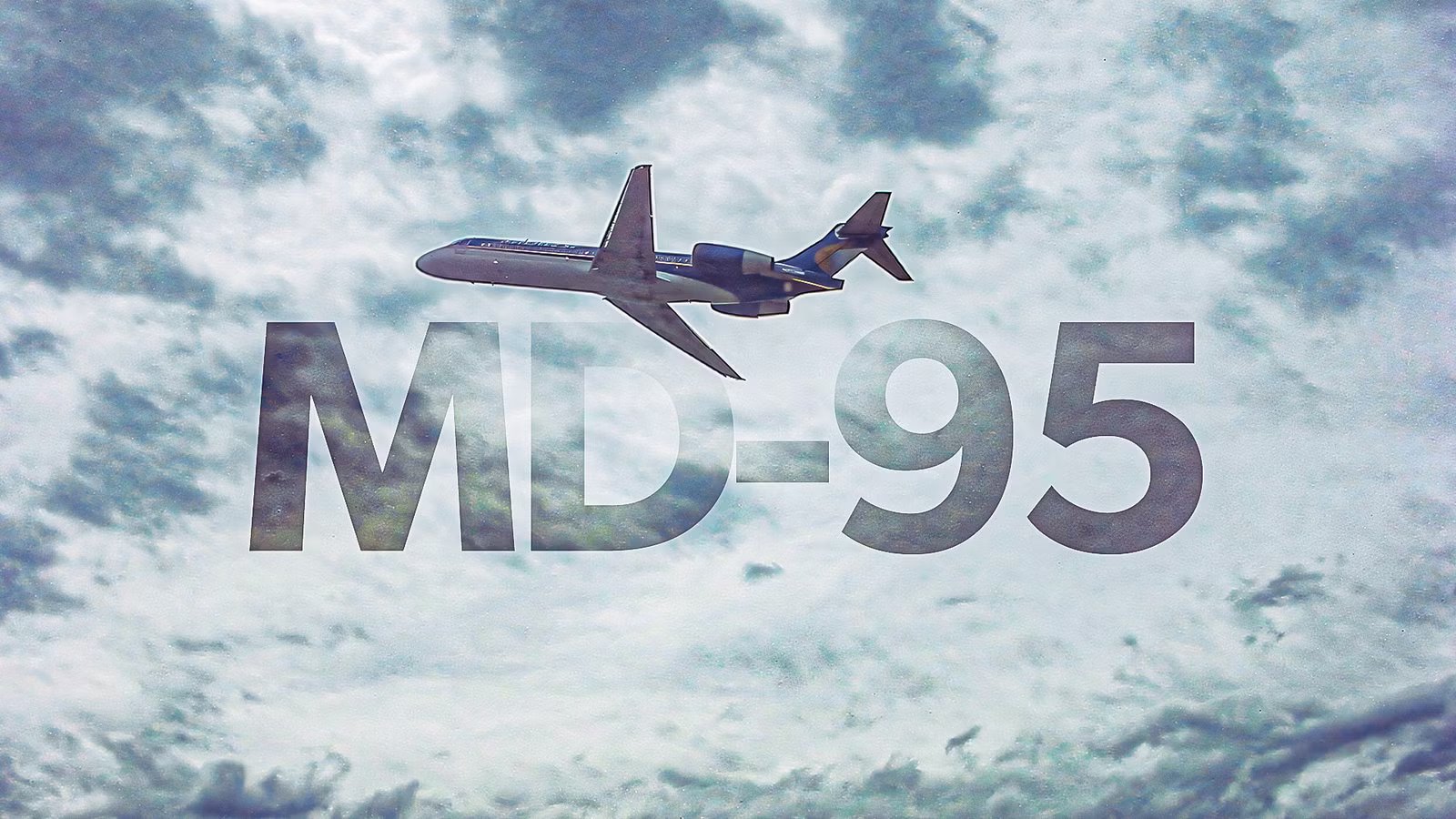
In the early 1990s, McDonnell Douglas envisioned a modern successor to its venerable DC-9 family, a nimble and fuel-efficient aircraft that would be carefully tailored for the 100-seat short-haul market. This vision took shape as the MD-95, a clean-sheet design that is aimed at filling a niche that larger jets like the Boeing 737 or the Airbus A320 were not optimized for. But by the time the type was ready to fly, the landscape of global aviation had significantly changed. In 1997, McDonnell Douglas was absorbed into Boeing, and the MD-95 program was carried into the Boeing portfolio, and it was quickly given a new name. Today, the jet is remembered by history as the Boeing 717.
Unlike the blockbuster jets produced by  Boeing that are now household names like the Boeing 747 or the Boeing 777, the Boeing 717 has served more of a quiet operational role. A combination of timing, competitive challenges, and shifting airline priorities meant that orders dried up, and, after just 156 jets were built, production ended in 2006. Yet the story itself did not end there. The Boeing 717 forged a quiet legacy with a handful of operators, with Delta Air Lines likely being the most important name. That carrier appreciated the aircraft’s rugged design, impressive economics on short-haul routes, and direct lineage back to the Douglas DC-9. In many ways, the journey of this model through history tells the story of ambition, corporate upheaval, and an aircraft that outlived expectations despite being largely forgotten by the flying public.
A Program That Emerged Before The Boeing-McDonnell Douglas Merger

The McDonnell Douglas MD-95 grew out of a long-standing effort to bring a newer version of the Douglas DC-9 to the market for the 100-seat niche without directly jumping to larger models like the MD-80 or the MD-90. The aircraft traces its roots to an early 1980s study for what many have referred to as the DC-9-90, when the project was dropped in favor of the company choosing to pursue the smaller and more efficient MD-87. Starting in 1992, McDonnell Douglas revived the idea as the MD-87-105 and then presented it publicly as the MD-95 at the Paris Air Show, positioning it as a modern replacement for older DC-9 aircraft.
This was a decisive development step that was made to help lock in a new-generation engine that could improve economics and cut noise over earlier-generation powerplants. The program’s commercial green light came in October 1995, when low-cost carrier ValuJet signed an order for 50 aircraft, which included purchase options for another 50 jets. The order was valued at over $1 billion at the time, and the carrier agreed to launch the BMW Rolls-Royce BR715 turbofan into service. ValuJet weighed the aircraft against competitors like the Airbus A319, Boeing 737-600, and Fokker 100. McDonnell Douglas reportedly won the deal after Airbus would not commit to certain break-even load-factor guarantees on the Airbus A319.
The deal also supported the notion that a Pratt & Whitney engine could have been cheaper, but that ValuJet was not willing to risk a commitment to this unproven powerplant. Even with a launch customer, orders for the type remained very thin, and the MD-95 had not entered full-scale production when Boeing acquired McDonnell Douglas on August 1, 1997. The still-developing program includes engineering work, supplier arrangements, and certification planning.
A Merger That Rocked The Aviation Industry As We Know It

US-based aerospace manufacturer Boeing elected to merge with McDonnell Douglas in what would go on to be one of the most influential transactions in the industry in the 20th century. The deal closed on August 1, 1997, after it was announced in December 1996, and it helped define the modern structure of the aviation industry. Originally structured as an all-stock transaction, it made McDonnell Douglas a Boeing subsidiary, while Boeing retained its name and much of the overall leadership structure. This new company would immediately become the market’s leader in both commercial and military aircraft development.
Boeing had now consolidated the industry’s best-selling large-jet lineup, especially when it comes to the Boeing 737, 747, 767, and 777. McDonnell Douglas’ initial contributions came in the defense space, especially from some notable programs like the F-15 Eagle, the F/A-18 Hornet and the AH-64 Apache. The manufacturer’s commercial line was somewhat small, and it still included the MD-11 and the in-development MD-95.
At this time, consolidation was widely seen as necessary, with airlines demanding lower costs and improved global support networks. Airbus was expanding, and US defense budgets were shifting rapidly after the Cold War. Diversification also mattered as military and space revenues could help cushion the variable cycle of aircraft orders from commercial airlines. Regulators cleared the deal, although European regulators scrutinized it extensively due to competitive concerns. In the years after closing, Boeing concentrated on its core jet families, and the MD-95 lived on mainly as the Boeing 717.

What Was The Point In Boeing Merging With McDonnell Douglas?
The main reason why Boeing wanted the merger and the decisions that led to the company’s current state.
A Program That Shifted In The Wake Of A Critical Merger

Following the 1997 merger between Boeing and McDonnell Douglas, the MD-95 underwent a high-profile rebranding to become what we know today as the Boeing 717. This makes it the only legacy McDonnell Douglas commercial aircraft to survive the merger. During the critical first five years following the merger, Boeing repositioned the aircraft to fill a specific gap in the 100-seat market, a niche that even the smaller 737-600 failed to fill.
The program gained immediate momentum with its first flight in 1998, followed by FAA certification and the inaugural delivery to AirTran Airways that followed in 1999. By the turn of the millennium, the Boeing 717 established itself as a regional workhorse, and it was praised for its quiet Rolls-Royce BR715 engines and exceptionally fast gate turnaround times.
However, the early success of the aircraft was threatened. The devastating industry-wide downturn following the September 11 attacks and Boeing’s internal hesitation to market a plane that competed with its flagship Boeing 737 family were both factors that limited orders. This meant that only a handful of carriers actually acquired the jet and put it into real operational service.
A Look At The Boeing 717’s Operational History

The Boeing 717’s operational life began as a straight-shooting short-haul workhorse, and the type entered airline service in October 1999 with AirTran Airways, with the aircraft aimed squarely at dense, high-frequency routes where demand existed for around 100 seats. Quick turn times mattered more than headline range. Through the 2000s, the jet built a small but loyal following, helped by its lineage from the DC-9 family and its modern engines.
The aircraft featured a cockpit and airframe package that airlines could run hard on multiple daily cycles. However, the jet never broke into the mass market, and production ended in 2006 once 156 aircraft had rolled off the assembly line. The jet’s second act is what makes it feel ubiquitous in a few places and functionally invisible pretty much anywhere else. After AirTran was absorbed into Southwest Airlines, the latter chose not to operate the Boeing 717 and instead arranged for Delta to take on the former’s fleet.
Delta’s first Boeing 717 flight was in October 2013, and the aircraft became a key tool for upgauging from smaller 50-seat regional jets on domestic spokes. As of January 2026, data provided to Simple Flying by aviation industry database ch-aviation lists 91 active Boeing 717 models. Hawaiian Airlines also maintains a smaller fleet of 19 Boeing 717s that are used for high-frequency flights between the state’s largest islands.

Why Did This Airline Choose Prague As Its First European Destination?
The Czech capital is an interesting fit for an airline more accustomed to US West Coast destinations.
Which Aircraft Will Succeed The Boeing 717?

In practice, the Boeing 717’s successor is less one airplane than it is a set of jets filling pretty much the same mission. As for Delta, the Boeing 717’s largest operator, the Airbus A220 is the cleanest heir, offering similar right-sized capacity for short-haul, high-frequency flying, but with modern efficiency and enough range and cabin flexibility to cover both class Boeing 717 routes and upgauged former 50-seat regional markets.
It is quite clear that Delta Air Lines is already planning to replace its Boeing 717 fleet with this type, as the carrier already operates dozens of A220s, making the transition operationally straightforward. In Hawaii, the replacement question is still open. Alaska Air Group, the current parent company of Hawaiian Airlines, has indicated that Hawaiian’s 19 high-cycle 717s need replacing and suggested that 737s would likely replace them.
However, it is quite natural to think that 100-130-seat models like the A220 or the Embraer E2 might be a more natural replacement. This matters because interisland flying is cycle-heavy, so that a jet optimized for that rhythm can likely beat out a larger model like a Boeing 737 on cost alone.
What Is Our Bottom Line?

At the end of the day, the Airbus A220 will likely fill the role that the Boeing 717 once played in the market. Nonetheless, that iconic model will certainly live on in history, especially for aviation analysts who admired the model’s reliability and unique ability to serve smaller markets.
The aircraft’s potentially successful commercial career was mostly cut short because of a merger that led Boeing to rethink strategic priorities. For industry old-timers, it is one of the few remaining relics of an era that no longer exists, one in which massive manufacturers were interested in small aircraft production.
Therefore, the aircraft’s lack of success can be derived from it appearing on the market at a rather unfortunate time. Despite this, the aircraft leaves behind an impressive reputation for reliability and operational capabilities.